Brutal heatwave: Death toll climbs to 143, actual numbers could be high
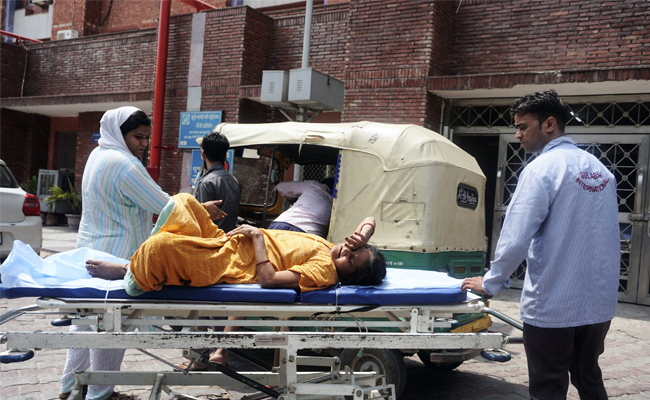
New Delhi (PTI): The prolonged heatwave sweeping large parts of the country has claimed more lives, with 143 recorded deaths and 41,789 people suffering from suspected heatstroke between March 1 and June 20 this year, Health ministry sources said on Friday.
However, the heatwave toll is expected to be higher than this as the data compiled under the National Heat-Related Illness and Death Surveillance by the National Centre for Disease Control (NCDC) does not have updated submissions from states.
Several health facilities are also yet to upload data on number of heatwave casualties.
According to the official data, on June 20 itself there have been 14 confirmed deaths due to heatstroke and nine deaths due to suspected heatstroke, taking the death toll in the March-June period to 143 from 114.
Uttar Pradesh is the worst-affected, having reported 35 deaths followed by Delhi (21) and Bihar and Rajasthan (17 each), according to the data.
Union Health Minister J P Nadda on Thursday asked officials to visit Central hospitals till the heatwave conditions persist to see if separate arrangements have been made for affected patients and also to assess the number of deaths due to heatstroke over the last few days.
Swathes of northern and eastern India have been in the grip of a prolonged
heatwave, increasing heat stroke casualties and prompting the Centre to issue advisory to hospitals to set up special units to cater to such patients.
Nadda on Wednesday directed that special heatwave units to be set up in all central government hospitals to cater to those falling ill due to the heat.
He also asked officials to ensure all hospitals are prepared for providing the best healthcare to the affected as he reviewed the situation across the country and preparedness of hospitals to deal with it.
Under the directions of the Union Health Minister, an advisory for State Health Department on 'Heat Wave Season 2024' has been issued by the health ministry.
"The country may observe above normal seasonal maximum temperatures in-line with the observed trend of summertime temperatures. To reduce health impacts of extreme heat, health departments must ensure preparedness and timely response," the ministry said.
The advisory asked state nodal officers under the National Programme for Climate Change and Human Health (NPCCHH) to start submitting daily the data on heatstroke cases and deaths and total deaths from March 1 besides reporting under Heat-Related Illness and Death Surveillance.
It called for maintenance of digital line list of heatstroke cases and deaths (suspected/confirmed) at health facility/hospital level in given formats and undertaking They have been asked to ensure dissemination of National Action Plan on Heat Related Illnesses (HRI) to all districts and strengthening of health systems preparedness for HRI.
It stressed on dissemination of early warning of heatwaves issued by the India Meteorological Department (IMD) and said forecast for the next four days should be disseminated to health facilities and vulnerable populations.
The advisory also directed for health facility preparedness for prevention and management of severe HRI and procurement and supply of adequate quantities of ORS packs, essential medicines, IV fluids, ice packs, and equipments to support management of volume depletion and electrolyte imbalance etc.
It also called for ensuring availability of sufficient drinking water at all health facilities, general cooling appliances in waiting and patient treatment area and their functioning and stressed that cases with suspected heatstroke should be rapidly assessed and actively cooled using standard treatment protocols.
"Coordinate with electricity distribution company/corporation for uninterrupted electricity supply to hospitals for constant functioning of cooling appliances. Adopt measures to reduce indoor heat and energy conservation in health facilities like cool roof/green roof, window shading, rainwater harvesting, solarization etc. Provide shade outside the health facilities in heat-prone regions," the advisory added.
Let the Truth be known. If you read VB and like VB, please be a VB Supporter and Help us deliver the Truth to one and all.
Man arrested with Rs 2.54-crore heroin in Mumbai

Mumbai (PTI): Police have arrested a man and seized over 500 grams of heroin worth Rs 2.54 crore in the illicit market from him in Mumbai, officials said on Friday.
The police's Anti-Narcotics Cell (ANC) made the drug seizure in Santacruz in the western suburbs. The operation was conducted by the Kandivali unit of the ANC on Thursday as part of a special crackdown against drug trafficking in the area, they said.
Acting on specific inputs, an ANC team conducted a raid in Santacruz (East) and intercepted a man. During a search, the team recovered 508 grams of high-grade heroin from his possession, an official said.
The seized contraband, a highly addictive, opioid drug derived from morphine, is estimated to be worth Rs 2.54 crore in the international market, he informed.
Following the seizure, a case was registered against the man under relevant sections of the Narcotic Drugs and Psychotropic Substances (NDPS) Act, 1985, and he was formally placed under arrest in the early hours of Friday.
The police are currently investigating the source of the drug and trying to identify the intended recipients of the consignment, he said.