Case registered over circulation of fake video of Chief Election Commissioner
Thiruvananthapuram (PTI): A case has been registered after a fake video of the Chief Election Commissioner related to the local body election in Kerala circulated on social media platforms, officials said on Saturday.
According to officials, Thiruvananthapuram City Cyber Police registered a case after the fake video was found during cyber patrolling operations on Friday.
Police officials said that the fake video propagating false information about the upcoming local body elections was traced to the X social media platform.
The fake post contained a fabricated photo and edited video of Chief Election Commissioner Gyanesh Kumar, officials said.
Police suspect that the same video was circulated on other social media platforms as well.
A case was registered against unknown persons under Bharatiya Nyaya Sanhita sections 197(1)(d) (to publish or make false or misleading statements), 340(1) (forged document or electronic record), 340(2) (dishonestly using a forged document or electronic record), and Information Technology Act section 66C (identity theft).
According to police, in the wake of the upcoming local body elections and the ongoing Special Intensive Revision (SIR) of the electoral roll in Kerala, cyber patrolling activities have been strengthened due to the possibility of circulating fake videos and misleading online content.
As part of it, several fake propaganda photos and videos circulated on various online platforms were removed in recent days.
Let the Truth be known. If you read VB and like VB, please be a VB Supporter and Help us deliver the Truth to one and all.
Karnataka Minister urges Centre to launch Bengaluru–Vijayapura express train
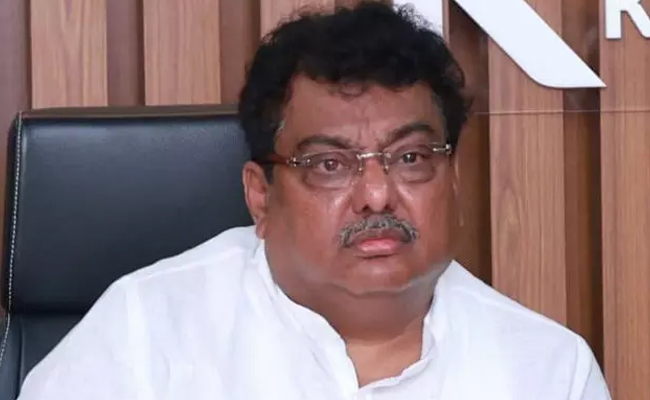
Bengaluru (PTI): Karnataka Infrastructure Development Minister M B Patil has urged the Centre to launch an express train service between Bengaluru and Vijayapura.
The demand comes following the completion of the 9.60-km double-line railway work between Alamatti and Wandal, which has been open for traffic since March 25, the Minister's office said in a statement on Wednesday.
"He has written a letter regarding this on March 30 to Union Railway Minister Ashwini Vaishnaw and Minister V Somanna," it said.
In the letter, Patil stated that the Alamatti–Wandal section, part of the Gadag–Hotgi double-line project, has now been completed. During an earlier meeting, it was mentioned that once this work was finished, an express train between Bengaluru and Vijayapura could be introduced. He has now requested that this be given priority.
He highlighted that thousands of people from Vijayapura and Bagalkote districts travel daily to Bengaluru for education, healthcare, administrative work, and business, and this train service would greatly benefit them.
According to him, currently, the train journey between the two cities takes about 15 hours, which is inconvenient.
He stressed the need to reduce this travel time to around 10 hours.
The minister also requested that trains departing from Bengaluru be given a limited stops upto Hubballi, and that trains proceeding to Vijayapura should be routed via the Hubballi and Gadag bypass lines.