Russian military hardware, spare parts for Indian military to be manufactured in India
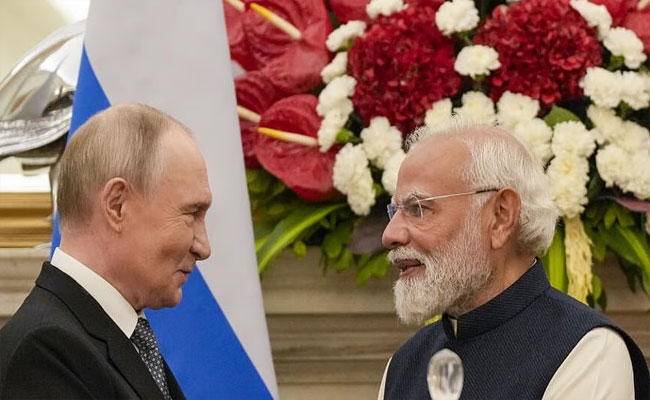
New Delhi (PTI): Russia agreed to encourage joint manufacturing in India of military hardware and spare parts for maintenance of Russian-origin arms and defence equipment.
Ways to bolster overall bilateral defence cooperation figured prominently during summit talks between Prime Minister Narendra Modi and Russian President Vladimir Putin on Friday.
It has been a long-standing grievance of armed forces that the supply of critical spares and equipment from Russia takes a long time, affecting the maintenance of military systems procured from that country.
"Both sides agreed to encourage joint manufacturing in India of spare parts, components, aggregates and other products for maintenance of Russian origin arms and defence equipment under Make-in-India programme through transfer of technology," a joint statement said.
ALSO READ: India, Russia explore cooperation on small modular reactors, floating nuclear power plants
It said both sides also agreed to set up joint ventures for meeting the needs of the Indian armed forces as well as subsequent export to mutually friendly third countries.
The joint statement said the India-Russia defence partnership is being reoriented to take up joint co-development and co-production of advanced defence technology and systems.
In their meeting on Thursday, Defence Minister Rajnath Singh and his Russian counterpart Andrey Belousov resolved to expand bilateral defence cooperation.
In the meeting, the Indian side showed keen interest in procurement of additional batches of S-400 missile systems from Moscow to bolster its combat prowess.
In October 2018, India signed a USD 5 billion deal with Russia to buy five units of the S-400 air defence missile systems, notwithstanding a warning by the US that going ahead with the contract may invite US sanctions under the provisions of Countering America's Adversaries Through Sanctions Act (CAATSA).
Three squadrons have already been delivered.
The S-400 systems played a crucial role during Operation Sindoor. India may also look at procuring the S-500 missile systems from Russia.
In the Modi-Putin talks, the two sides also agreed to continue jointly developing systems of bilateral trade settlements through the use of national currencies.
Additionally, the two sides agreed to continue their consultations on enabling the interoperability of the national payment systems, financial messaging systems, as well as central bank digital currency platforms.
Modi and Putin appreciated the ongoing intensification of the joint work on a free trade agreement on goods between India and the Eurasian Economic Union, covering sectors of mutual interest, the joint statement said.
They also directed both sides to intensify efforts in negotiations on a mutually beneficial agreement on the promotion and protection of investment, it said.
India and Russia also welcomed steps to ensure long-term supply of fertilisers to India and discussed the potential establishment of joint ventures in this area.
Let the Truth be known. If you read VB and like VB, please be a VB Supporter and Help us deliver the Truth to one and all.
CM Siddaramaiah alleges ‘criminal conspiracy’ in Sringeri recount, vows legal action
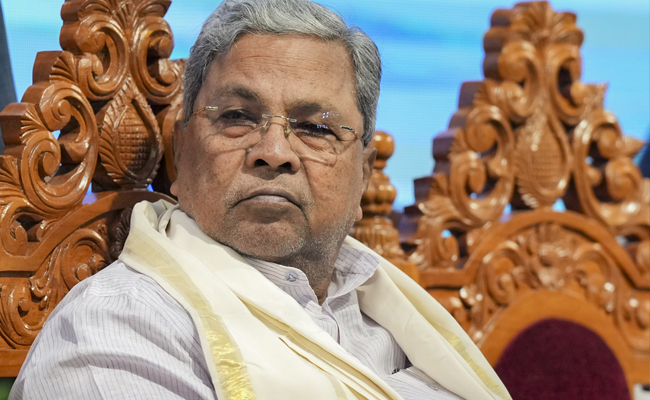
Bengaluru (PTI): Alleging a “criminal conspiracy” by BJP candidate D N Jeevaraj in the Sringeri Assembly poll recounting, Karnataka CM Siddaramaiah on Tuesday said the outcome was manipulated after valid postal ballot votes in favour of Congress leader T D Raje Gowda were tampered with during the recounting process.
Following a Karnataka High Court order on an election petition filed by Jeevaraj, challenging Raje Gowda’s election, the reverification and recounting were conducted on Saturday.
After the reverification and recount of postal ballots for the Sringeri Assembly constituency, votes polled in favour of Raje Gowda were reduced by 255, the returning officer said.
A report on the matter has been submitted to the Election Commission of India for further action, the officer added.
Congress leader Raje Gowda had won the 2023 Assembly polls from Sringeri by 201 votes, defeating his nearest rival Jeevaraj.
Addressing a press conference in Bengaluru, Siddaramaiah said the High Court had directed the recounting of postal ballots and that irregularities were noticed during the exercise conducted on May 2.
“This is a clear case of criminal conspiracy,” Siddaramaiah said, alleging that valid votes cast in favour of Raje Gowda were altered after being accepted by counting agents of all parties, including Congress, BJP, and JD(S).
He claimed that during the recounting of postal ballots, 255 votes were initially accepted as valid by all agents but were later tampered with by subordinate officials.
“There is a second mark on the votes polled in favour of Raje Gowda. They had accepted these as valid votes. Subsequently, another mark was made by officials. This is a clear case of criminal conspiracy,” he said.
When asked who was behind the alleged conspiracy, the CM replied, “It was hatched by Jeevaraj and others. It is planned.”
Siddaramaiah further alleged that the returning officer acted improperly by declaring the result despite the presence of an Election Commission observer during the recounting.
“Immediately after the counting, the returning officer announced the result. He should not have done so; this is against the law,” he said.
He pointed out that Raje Gowda had originally won by 201 votes, but after the recounting, the BJP candidate was declared the winner by 52 votes.
“The BJP has committed a criminal act of conspiracy. This is not vote chori but vote dacoity,” he alleged.
The CM said a police complaint had already been filed by Raje Gowda’s election agent, Sudhir Kumar, and emphasised the need for electoral integrity.
“We want transparency and free and fair elections. That is what our Constitution mandates,” he added.
Stating that the government would pursue legal remedies, Siddaramaiah said, “We are preparing an appeal challenging the returning officer’s announcement in a court of law.”
Responding to a separate query on elections in other states, the CM said there appeared to be an anti-incumbency factor in West Bengal, while results in Tamil Nadu were “surprising,” adding that Vijay’s party was emerging as the largest there.
Following the victory of party candidates in Bagalkote and Davanagere South, Siddaramaiah expressed confidence about future electoral prospects in Karnataka.
“Even in 2028, we will win the Assembly elections. We will come back,” the CM said.
Siddaramaiah added that he would order a forensic examination into the alleged tampering of postal ballots.