Caste census in Karnataka 'completely scientific', says former panel head, rebuts charges
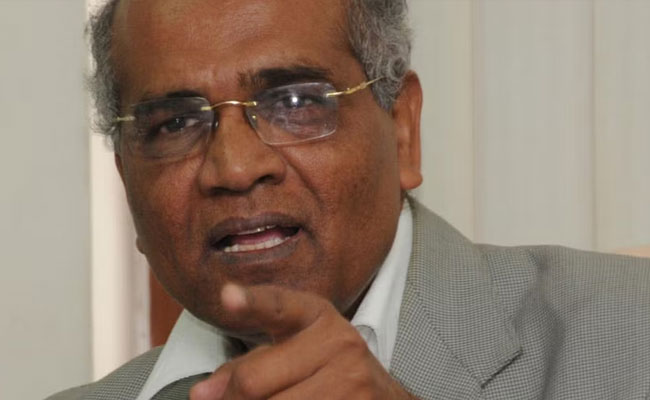
Bengaluru (PTI): Former Karnataka State Commission for Backward Classes Chairperson H Kantharaju, the architect of the state's Socio-Economic and Education survey, popularly known as the "caste census" on Thursday asserted that the exercise was "completely scientific", and rejected claims to the contrary.
He said everyone has the right to have their opinion on the survey, but commenting even before going through it is not right.
"Whether the survey is scientific or unscientific, it needs to be verified and decided. I will say that it is a complete scientific report, because we have worked on it, seen the process, and tried to reach every house. Calling it unscientific is not right," Kantharaju said.
Speaking to reporters here, he said, "One needs to go through the report before commenting. No one has seen it yet. Commenting without even having seen the report is pre-judging the matter. It should not happen. After verifying, if comments are made, then it is fine."
The then Siddaramaiah-led Congress government (2013-2018) in 2015 had commissioned the Social-Economic and Educational survey, at an estimated cost of Rs 170 crore in the state, the findings of which have not been made public yet.
The state Backward Classes Commission under its then chairperson Kantharaju was tasked with preparing a caste census report. The survey work was completed in 2018, towards the end of Siddaramaiah's first tenure as chief minister, but was not accepted or made public.
With pressure mounting on his government, from a certain section, to make public the state's survey, following the Bihar government releasing the findings of its caste survey recently, Chief Minister Siddaramaiah has said that a decision will be taken once he receives the report.
However, Karnataka's two dominant communities -- Vokkaliags and Lingayats -- have expressed disapproval about the survey, calling it unscientific, and have demanded that it be rejected and a fresh survey to be conducted.
Stating that during visits to every house for the survey, 55 questions were asked, Kantharaju said that caste was one of the factors, and religion was another one.
"Other information like assets, agricultural land holdings, whether it is irrigated, and several such related things, along with the address and other details were sought. We had sought all the possible information and data required to identify someone as backward. Information was sought based on the expert opinion," he said.
Noting that whether it is Vokkaliga or a Lingayat community or anyone else, they have the freedom to express their opinion, Kantharaju said, he cannot guess as to on what basis they made their comments, but in his opinion, one has to give their opinion on the issue, after proper verification.
"The work we have done is the property of the government. After the government accepts it, goes through it, holds discussions and publishes it, then commenting on whether the report is right or wrong, after going through it is fine.....if there are genuine mistakes, I will too accept. It is not that man cannot go wrong, no one is perfect," he added.
Karnataka State Commission for Backward Classes, under its current Chairman K Jayaprakash Hegde, is expected to submit the report to the government in the next couple of months.
But, the survey is mired in controversies even before the report is submitted to the government, amid deep divisions within ruling Congress, stiff opposition by the two dominant communities against its acceptance, and the survey's original "work-sheet" copy missing.
With strong disapproval from the politically-influential two communities, the survey report may turn out to be a political hot potato for the government, as it may set the stage for a confrontation, with Dalits and OBCs among others demanding for it to be made public.
Reacting to opposition to the survey done, Siddaramaiah said in the district headquarters town of Bagalkote on Thursday that no one knows what's in the report, but speculations are on about its content, it is not a good development.
"The report has not been submitted yet. Even before its submission, how can discussions regarding it start? No one knows what's in the report -- neither me, nor those opposing it. Once it comes, let's see, as one needs to know what's there in the report," he said.
Asked about Hegde's statement that the survey's original "work-sheet" copy is missing, the chief minister said, "I don't know. I will call Jayaprakash Hegde and speak to him."
To a question on JD(S) state president H D Kumaraswamy's alleged statement accusing him of trying to divide society with the caste census report, he said the former chief minister was commenting politically.
"Does Kumaraswamy know what's in the report? Have you asked him? Whether a former chief minister or a legislator or a common man, one needs to know what's in the report before commenting. Without knowing anything, accusing us of dividing society is nothing but a political statement," he said, adding that comments should be made based on facts.
Hegde on Wednesday clarified that the survey data is a hundred per cent intact and it is signed by the then Chairman, members and under secretary, and it is uploaded in the system and it is safe.
"What I have said in my letter (to govt) is that the original copy of the survey's work-sheet that the previous commission (under Kantharaju) had prepared is not there," he said, adding that the current commission has now finalised the report based on the data, and it is getting ready for submission.
Let the Truth be known. If you read VB and like VB, please be a VB Supporter and Help us deliver the Truth to one and all.
People are voting fearlessly in West Bengal this time: PM Modi
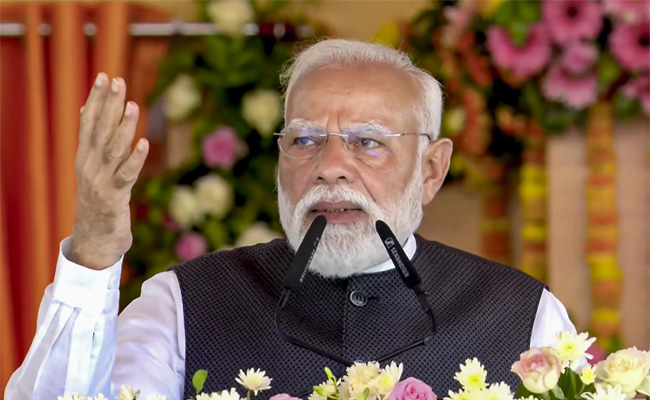
Hardoi (UP) (PTI): Prime Minister Narendra Modi on Wednesday said voters
are casting their vote in West Bengal this time in a "fearless atmosphere", which was unimaginable in the past six or seven decades.
He also asserted that the assembly poll results on May 4 will further strengthen the resolve of a developed India.
Voting is underway in 142 constituencies of West Bengal in the second and final phase of polling.
Addressing a gathering after the inauguration of the Ganga Expressway here, Modi said today marks an important day in the festival of democracy.
"Voting for the second phase is underway in Bengal, and reports indicate a massive turnout, with people stepping out in large numbers just like in the first phase. Images of long queues at polling stations are flooding social media, reflecting the enthusiasm of the people to exercise their democratic right," he said.
"What we are witnessing in Bengal today is unprecedented which was difficult to imagine in the past six to seven decades, a fearless environment where people are voting without fear," he said.
The prime minister said this is a powerful symbol of the country's Constitution and the strengthening of democracy.
"I express my gratitude to the great people of Bengal for being so aware of their rights and participating in large numbers," he said.
With several hours of voting still left, the prime minister urged the people of Bengal to continue participating in this democratic festival with the same enthusiasm.
Modi said in the recent Bihar Assembly elections, the BJP and NDA achieved a historic and decisive victory.
"Just yesterday, results of local body elections in Gujarat showed that the BJP secured victories in nearly 80 to 85 percent of municipalities and panchayats.
"The results on May 4 will further strengthen the resolve of a developed India and will infuse new energy into the pace of development of the country."
The first phase of polling for 152 seats -- out of the 294-member West Bengal assembly -- was held on April 23.
The counting of votes for assembly polls in Kerala, West Bengal, Puducherry, Assam and Tamil Nadu will take place on May 4.