Censor board asks ‘Phule’ to drop caste terms; Release delayed

Mumbai: The Central Board of Film Certification (CBFC) has directed the makers of Phule—a biopic on social reformers Mahatma Jyotiba Phule and Savitribai Phule—to remove several caste-related terms, following objections raised by Brahmin community associations.
The film, directed by Ananth Mahadevan and starring Pratik Gandhi and Patralekha in the lead roles, was initially scheduled to release on April 11, 2025, to mark Mahatma Phule’s birth anniversary. However, following the controversy, the release has been rescheduled to April 21.
The CBFC's directive includes the removal of terms such as ‘Mahar’, ‘Mang’, ‘Peshvai’, and ‘Manu’s system of caste’, which are considered 'sensitive'. The move comes after the Brahmin Federation, led by President Anand Dave, alleged that the film promotes casteism and portrays Brahmins in a negative light.
Dave argued that while the film highlights caste-based discrimination, it ignores the contributions of Brahmins who supported Mahatma Phule’s reform efforts. “The story is one-sided. We are not against showing the truth, but it should be inclusive. The film could stoke caste-based tensions,” he said.
Reacting to the objection, Nationalist Congress Party (SP) MLA and former minister Jitendra Awhad said on social media, “History cannot be erased, it can only be learned from. Whatever is shown in the movie Mahatma Jyotirao Phule is a historical truth—truth cannot be denied or altered. Among the social reformers of this country, the names of Mahatma Phule and Savitribai Phule stand at the forefront. What is true must be shown.”
Awhad added that those who supported Phules should certainly be acknowledged, but removing key historical facts would defeat the purpose of the film. “Filmmakers must not bow to pressure. Society moves forward by accepting and learning from the mistakes of history,” he said.
Director Ananth Mahadevan also responded to the controversy, defending the film's content. He said the biopic was made after extensive research, drawing from multiple books and historical sources. Mahadevan maintained that, like all filmmakers, he had exercised cinematic liberty, but ensured that the portrayal remained true to historical facts.
Let the Truth be known. If you read VB and like VB, please be a VB Supporter and Help us deliver the Truth to one and all.
Bhojshala case: Disputed structure built from remains of pre-existing temples, claims ASI
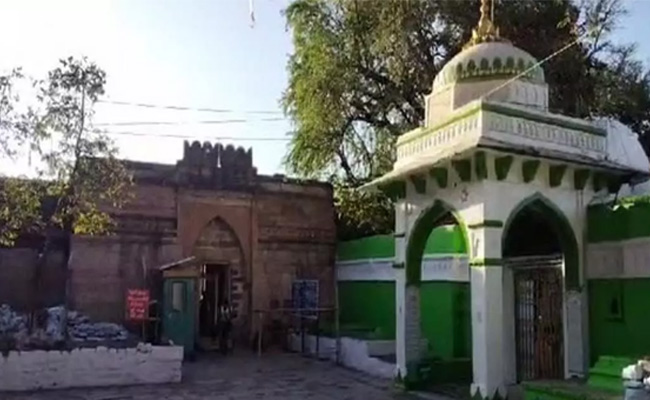
Indore (PTI): The ASI has told the Madhya Pradesh High Court that a massive structure dating back to the Paramara kings' rule existed at the disputed Bhojshala temple-Kamal Maula mosque complex, and the current structure was built from the remains of temples.
The Archaeological Survey of India (ASI) made the claim on Tuesday based on its 98-day scientific survey and over 2,000-page report.
The Hindu community considers Bhojshala a temple dedicated to Vagdevi (Goddess Saraswati), while the Muslim side claims the monument as the Kamal Maula Mosque. The disputed complex is protected by the ASI.
During the hearing before Justices Vijay Kumar Shukla and Alok Awasthi of the HC's Indore bench, Additional Solicitor General Sunil Kumar Jain, representing the ASI, presented a detailed account of the scientific survey conducted two years ago at the complex.
Referring to the ASI's survey report, he said, "Retrieved architectural remains, sculptural fragments, large slabs of inscriptions with literary texts, Nagakarnika inscriptions on pillars, etc, suggest that a large structure associated with literary and educational activities existed at the site. Based on scientific investigations and archaeological remains recovered during the investigations, this pre-existing structure can be dated to the Paramara period."
It can be said that the existing structure was made from the parts of earlier temples, based on scientific investigations, survey and archaeological excavations conducted, study and analysis of retrieved finds, study of architectural remains, sculptures, and inscriptions, art and sculptures, Jain said quoting the report.
Summarising the report, he also drew the court's attention to the fact that the archaeological study identifies that many architectural components, such as pillars and beams, were originally part of temple structures before being repurposed for a mosque.
"The evidence of this transition includes Sanskrit and Prakrit inscriptions that were damaged or hidden, alongside sculptures of deities and animals that were often mutilated or defaced," Jain contended.
The report also states that "all Sanskrit and Prakrit inscriptions are older than the Arabic and Persian inscriptions, indicating that users or engravers of the Sanskrit and Prakrit inscriptions occupied the place earlier".
In light of the Muslim side's earlier objections, the bench wanted to know why there were some discrepancies in the ASI's responses regarding the status of the disputed complex in the cases filed over the years.
The Additional Solicitor General argued that earlier studies of the complex involved only officials, while the current survey involved scientists and the use of advanced technologies such as Ground Penetrating Radar (GPR).
The hearing in the Bhojshala case will continue on Wednesday.
The high court has been regularly hearing four petitions and one writ appeal regarding the religious nature of the Bhojshala temple-Kamal Maula mosque complex since April 6.