Centre announces 27 per cent reservation for OBCs, 10-pc quota for EWS in medical, dental courses
New Delhi, Jul 29: The government on Thursday announced a 27-per cent quota for OBCs and 10 per cent reservation for the Economically Weaker Section (EWS) category in the All-India Quota (AIQ) scheme for undergraduate and postgraduate medical and dental courses from the current academic year, 2021-22.
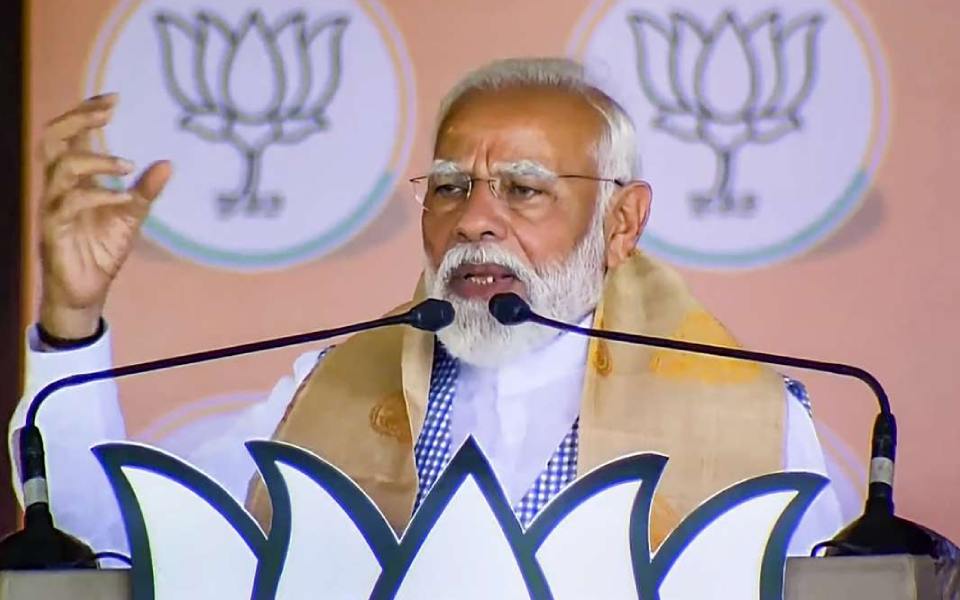
Hailing the "landmark decision" taken by his government, Prime Minister Narendra Modi tweeted: "This will immensely help thousands of our youth every year get better opportunities and create a new paradigm of social justice in our country."
Union Health Minister Mansukh Mandaviya also lauded the "historic decision".
"A historic decision has been taken by the government in the field of medical education in the country. Under All India Quota, 27 per cent reservation will be given to OBC students and 10 per cent to weaker income group (EWS) students in undergraduate/post graduate, medical and dental education," he said in a tweet.
The prime minister, at a meeting held on Monday, had directed the Union ministries concerned to facilitate an effective solution to this long-pending issue, a statement issued by the health ministry said.
"This decision would benefit nearly 1,500 OBC students in MBBS and 2,500 OBC students in postgraduation and also around 550 EWS students in MBBS and around 1,000 EWS students in postgraduation," it added.
"The present government is committed to providing due reservation both to the backward category as well as the EWS category. The Union government has now taken a historic decision to provide for 27 per cent reservation for OBCs and 10 per cent reservation for EWS in the AIQ scheme," the ministry stated.
OBC students from across the country shall now be able to take the benefit of this reservation in the AIQ scheme to compete for seats in any state. Being a central scheme, the Central List of OBCs shall be used for the purpose.
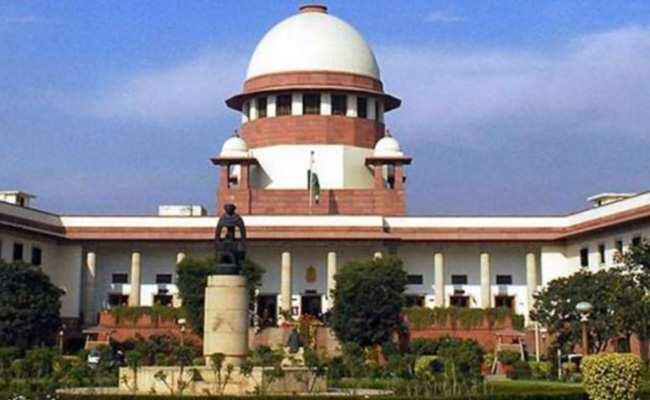
The AIQ scheme was introduced in 1986 under the Supreme Court's directions to provide for domicile-free merit-based opportunities to students from any state aspiring to study in a good medical college in another state.
The all-India quota consists of 15 per cent of the total available UG seats and 50 per cent of the total available PG seats in government medical colleges.
Initially, there was no reservation in the AIQ scheme up to 2007.
In 2007, the Supreme Court introduced 15 per cent reservation for the Scheduled Castes (SCs) and a 7.5-per cent quota for the Scheduled Tribes (STs) in the scheme.
When the Central Educational Institutions (Reservation in Admission) Act became effective in 2007, providing for a uniform 27 per cent reservation to the Other Backward Classes (OBCs), the same was implemented in all the central educational institutions such as the Safdarjung Hospital, the Lady Hardinge Medical College, the Aligarh Muslim University and the Banaras Hindu University. However, it was not extended to the AIQ seats of the state medical and dental colleges.
In order to provide benefits to students belonging to the EWS category in admission to higher educational institutions, a constitutional amendment was made in 2019, which enabled the provision of 10 per cent reservation for the category, the statement said.
Accordingly, the number of seats in the medical and dental colleges was increased over the next two years (2019-20 and 2020-21) to accommodate this additional 10 per cent EWS reservation so that the total number of seats available for the unreserved category does not reduce.
In the AIQ seats, however, this benefit was not extended so far, the statement said.
"Therefore, along with the 27 per cent reservation for OBCs, 10 per cent reservation for EWS is also being extended in AIQ seats for all the undergraduate/postgraduate medical/dental courses from the current academic year 2021-22.
"The above decision is the reflection of the government's commitment to provide due reservation for backward and EWS category students," it added.
The decision is also in sync with the significant reforms carried out in the field of medical education since 2014, the statement underlined.
Over the last six years, the number of MBBS seats in the country has increased by 56 per cent from 54,348 in 2014 to 84,649 in 2020 and that of PG seats has gone up by 80 per cent from 30,191 in 2014 to 54,275 in 2020.
In the same period, 179 new medical colleges have been established and the country currently has 558 (289 government and 269 private) medical colleges.
Let the Truth be known. If you read VB and like VB, please be a VB Supporter and Help us deliver the Truth to one and all.
Bihar: Over 150 children fall ill after consuming 'mid-day meal' in Saharsa
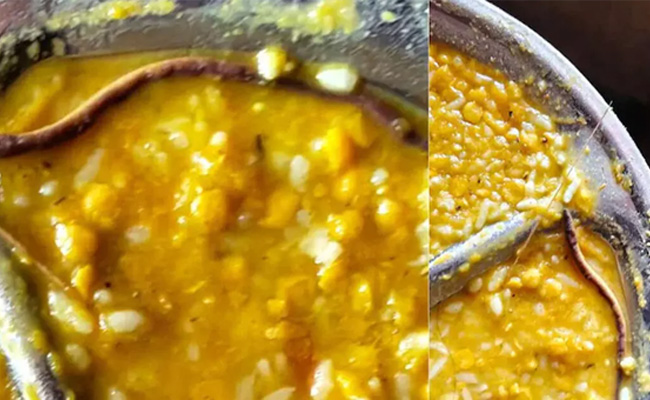
Saharsa (PTI): More than 150 children were taken ill after allegedly consuming food that was part of the mid-day meal in a school in Bihar’s Saharsa district, a senior official said on Thursday.
The incident occurred at a middle school in Baluaha village of the district.
The official said that 115 children were undergoing treatment at the Sadar Hospital, while around 50 students were admitted to Mahishi Public Health Centre.
“We received information that several children fell ill after consuming the mid-day meal in Baluaha. The children were initially treated at the primary health centre, but later, many were referred to the Sadar Hospital,” Saharsa District Magistrate Deepesh Kumar told reporters.
“According to doctors, the health condition of the children has improved, but they will be kept under observation for some time. There is no need to panic. Some kids are having mild fever. They are being treated accordingly,” Kumar said.
Meanwhile, family members of some children claimed that a snake was found in the container in which cooked pulses was stored at the school.
Of the 545 students present in the school, 200 had already eaten their meals by the time the snake was spotted, and later complained of stomach ache and vomiting, they said.
Regarding the claims, the DM said food samples have been collected from the school.
“We will be able to comment on this only after the results of the tested samples arrive,” he said.