Centre cancels FCRA registration of NGO named Centre for Financial Accountability
New Delhi: The Ministry of Home Affairs (MHA) has cancelled the Foreign Contribution Regulation Act (FCRA) registration of the Centre for Financial Accountability (CFA), an NGO that monitors and critically analyses the role of financial institutions and their impact on development, human rights, and the environment.
In a recent report, CFA highlighted the environmental hazards and increased health risks associated with additional projects sanctioned in a Special Economic Zone operated by the Adani Group in the Kutch region of Gujarat. The report warned of further environmental pollution and ecological degradation in the area.
Joe Athialy, Executive Director of CFA, told The Hindu that they had not yet received official orders cancelling the FCRA registration of CACIM (India Institute for Critical Action Centre in Movement), CFA's parent entity, but were informed online. Athialy suggested that the stated reason for the cancellation—incorrect financial filings for 2018 and 2019—was a pretext to suppress their critical work.
“We have been told that the cancellation is due to incorrect filings [of returns] for financial years 2018 and 2019. This may be just an excuse, as they had all the years to ask us to rectify the mistakes. We certainly believe that the work we did has contributed to this action,” Athialy said.
Athialy added that the government appears intent on silencing organizations critical of its actions but emphasized that CFA would continue its work through innovative methods, including domestic donations.
Earlier in January, the MHA cancelled the FCRA registration of the Centre for Policy Research (CPR), a prominent public policy research institution in New Delhi. Since 2015, more than 16,000 NGOs have had their FCRA registrations cancelled for various violations. As of Wednesday, there were 15,946 active FCRA-registered NGOs in India. The registrations of nearly 6,000 NGOs ceased to operate from January 1, 2022, due to non-renewal or refusal by the MHA.
Let the Truth be known. If you read VB and like VB, please be a VB Supporter and Help us deliver the Truth to one and all.
Congress using hijab issue to pacify minority anger, alleges Karnataka LoP R Ashoka
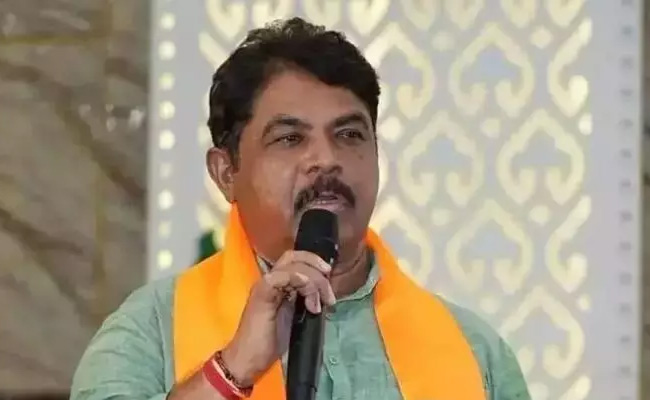
Bengaluru: Leader of Opposition in the Assembly R. Ashoka has accused the Congress government of using the hijab issue to placate what he described as discontent among minority voters after the Davanagere by-election.
In a post on X on Wednesday, Ashoka alleged that the state government, instead of addressing issues such as price rise, corruption, farmers’ distress and law and order, was attempting to retain its minority vote base by reviving the hijab issue.
Referring to the 2022 dress code introduced by the BJP government, which prohibited hijab in schools and colleges, Ashoka said the Karnataka High Court had upheld the policy and emphasised the importance of discipline in educational institutions.
He questioned the Congress government’s move to revisit the issue and asked whether setting aside the court-backed policy to benefit one community could be described as secularism.
Ashoka further alleged that while the government was willing to permit hijab, it continued to prohibit saffron shawls.
He accused the government of dividing students on religious lines rather than treating schools and colleges as spaces of equality.
Drawing a comparison with Mamata Banerjee’s government in West Bengal, Ashoka claimed that excessive appeasement politics had harmed the state and warned that the Congress in Karnataka could face a similar political response.
He said voters in Karnataka would teach the Congress a lesson for what he termed “vote-bank politics” and for compromising constitutional and judicial principles.