Centre says no death reported due to manual scavenging, activists decry govt response
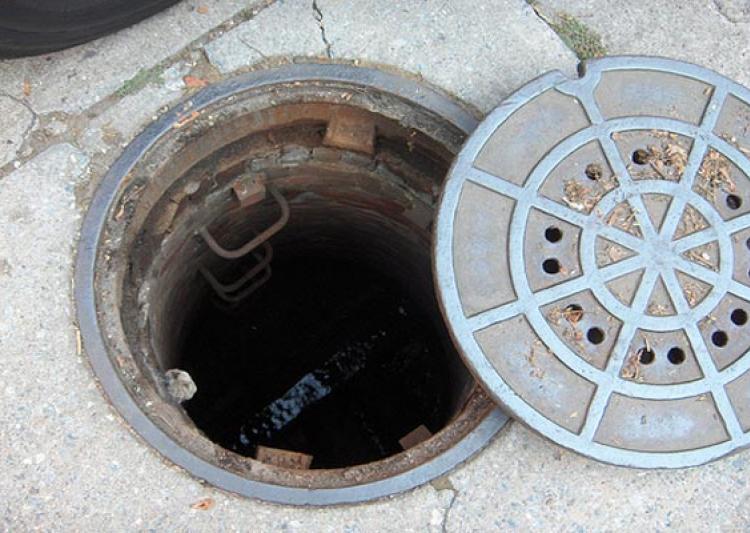
New Delhi, Jul 30: No death has been reported due to manual scavenging, the Union Social Justice and Empowerment Ministry has told Parliament, drawing sharp reaction from activists who said that those people were being robbed of dignity even in their deaths.
Manual scavenging is banned under the Prohibition of Employment as Manual Scavengers and their Rehabilitation Act, 2013.
In response to a question in the Rajya Sabha, Union Minister of State for Social Justice and Empowerment Ramdas Athawale has said 66,692 manual scavengers were identified.
However, on how many deaths of manual scavengers have been recorded, he replied, "No such deaths have been reported due to manual scavenging."
The government does not identify deaths due to manual scavenging and instead calls them deaths due to hazardous cleaning of septic tanks and sewers.
During the last session of Parliament, on March 10, Athawale had said, "No deaths due to manual scavenging has been reported. However, there have been reports of death of persons while cleaning sewers or septic tanks."
Activists have described the government's response as a complete lack of apathy.
Bezwada Wilson, the national convener of Safai Karmachari Andolan, an organisation working to eradicate manual scavenging, said the minister had himself admitted that 340 people died while cleaning sewers.
"Now, he is making a statement technically and thinking manual scavenging as dry latrines. So, he must mention in his statement very clearly that in dry latrines people may not die but here in septic tanks people die. The government is denying everything and in the same manner, he is denying deaths due to manual scavenging," he told PTI.
"It is not fair on the part of the government. When we kill these people we must have the courage to say that it is due to some kind of mistake that we are going to prevent. The government is denying the fundamental right of dignity to these people and is not even counting the deaths. It is a modern form of untouchability -- ignoring the life of a Dalit," Wilson added.
Sanjeev Kumar, the secretary of Dalit Adivasi Shakti Adhikar Manch, told PTI that the number of deaths is anyway underreported and the government denying it completely is highly condemnable.
"In Delhi alone, there have been so many such deaths. It is very sad that the government is not acknowledging their deaths. Those who lost their lives are being robbed of dignity even in their deaths," he said.
Let the Truth be known. If you read VB and like VB, please be a VB Supporter and Help us deliver the Truth to one and all.
Allahabad HC orders probe into 'reinstatement' of teacher in UP's Barabanki
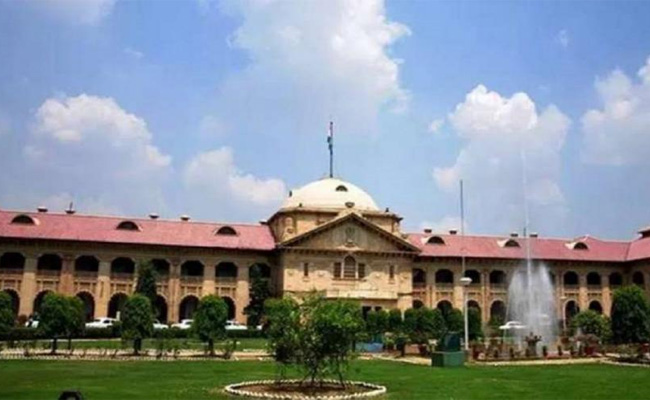
Lucknow (PTI): The Lucknow Bench of the Allahabad High Court on Friday ordered a probe by the special task force (STF) into alleged irregularities in the rejoining of a teacher at City Intermediate College in Barabanki, observing that the reinstatement appeared to be prima facie illegal.
The court also directed the recovery of the salary paid to the teacher during the disputed period.
A bench of Justice Rajeev Singh passed the order on a petition filed by the college management committee. The court expressed doubts over the roles of the District Inspector of Schools (DIOS), Barabanki, the college principal and the teacher concerned and hence, directed a detailed inquiry into the matter.
Taking note of alleged manipulation of records and misleading submissions, the court ordered the immediate transfer of the Barabanki DIOS to ensure a fair probe. It also directed the initiation of disciplinary proceedings against the then joint director of education of the Ayodhya division.
In its order, the court found that the teacher, Abhay Kumar, was initially appointed as an assistant teacher in 2018 but joined an Eklavya Model Residential School in Chhattisgarh as a lecturer in June 2024 without obtaining permission from the management. His subsequent request to retain the lien was rejected.
Despite this, he was allowed to rejoin the Barabanki College in September 2025 on the directions of the joint director of education and the DIOS, and was even paid the salary for October 2025. The court termed the rejoining "wholly illegal" and lacking any legal basis.
The bench also expressed concern over lapses in communication within the education department and directed the Uttar Pradesh chief secretary to ensure that official orders are communicated through email and WhatsApp as well, to prevent disputes.
The matter is next listed for hearing on May 28 when a compliance report is sought.