Centre sets up panel headed by former ISRO chief to reform exams, review NTA
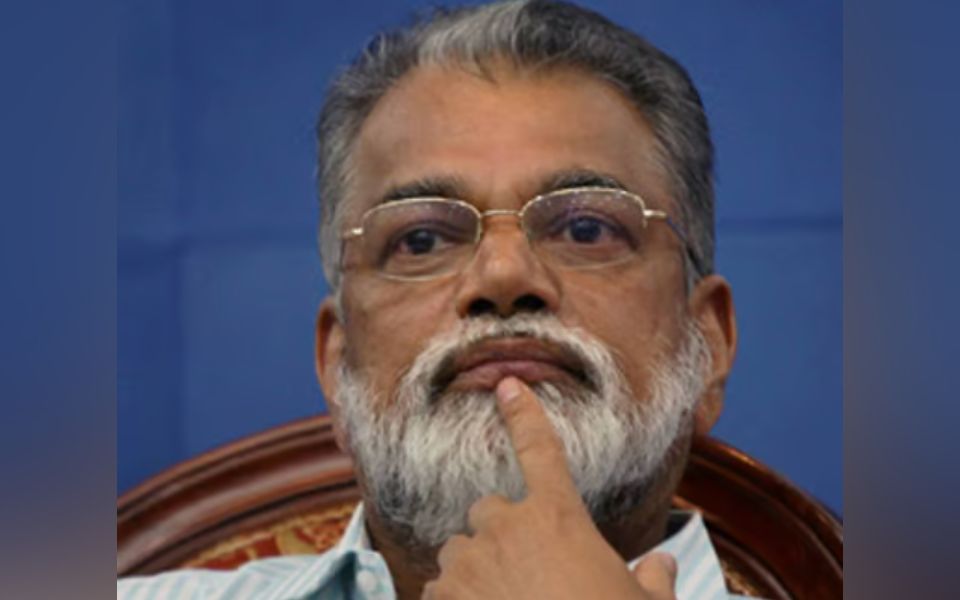
New Delhi, Jun 22: Amid a row over irregularities in competitive exams NEET and NET, the education ministry on Saturday notified a seven-member panel headed by former ISRO chief K Radhakrishnan to ensure transparent, smooth and fair conduct of examinations through the National Testing Agency (NTA).
"Transparent, tamper-free and zero-error examinations are a commitment. Setting up of the high-level committee of experts is the first of a series of steps to improve the efficiency of the examination process, put an end to all possible malpractices, strengthen data security protocols and overhaul and reform the NTA," Union Education Minister Dharmendra Pradhan said.
"Students' interests and their bright future will always be our government's top priority," he added.
The ministry's notification comes two days after Pradhan announced the setting up of the committee.
The panel will make recommendations on reforms in the mechanism of the examination process, improvement in data security protocols and the structure and functioning of the NTA. It is supposed to submit its report within two months.
The panel also includes former AIIMS Delhi director Randeep Guleria, Central University of Hyderabad Vice-Chancellor B J Rao, Professor Emeritus in the Department of Civil Engineering at IIT Madras K Ramamurthy, People Strong co-founder and Karmayogi Bharat board member Pankaj Bansal, IIT Delhi Dean of Student Affairs Aditya Mittal and Ministry of Education Joint Secretary Govind Jaiswal.
"The panel will analyse the end-to-end examination process and suggest measures to improve efficiency of the system and to forestall any possible breach. It will conduct a thorough review of the Standard Operating Procedures (SOPs) and protocols of the NTA, and suggest measures to strengthen these procedures and protocols along with monitoring mechanism to ensure compliance at every level," the Ministry of Education said in a statement.
The committee has also been tasked with examining the existing security protocols related to the setting of the papers and other processes for different examinations and making recommendations to enhance the robustness of the system.
The NTA, which is under fire over the lapses in the conduct of NEET and UGC-NET, is gearing up to conduct on Sunday a retest for the medical entrance exam for 1,563 candidates who were earlier awarded grace marks to make up for the loss of time at six centres.
While medical NEET is under scanner over several irregularities, including alleged leaks, the UGC-NET was cancelled a day after it was conducted as the ministry received inputs that the integrity of the exam was compromised.
Transparent, tamper-free and zero-error examinations is a commitment.
— Dharmendra Pradhan (@dpradhanbjp) June 22, 2024
Setting up of the high-level committee of experts is the first of a series of step to improve efficiency of the examination process, put an end to all possible malpractices, strengthen data security protocols… https://t.co/LDUe4udfXY
Let the Truth be known. If you read VB and like VB, please be a VB Supporter and Help us deliver the Truth to one and all.
Man arrested with Rs 2.54-crore heroin in Mumbai

Mumbai (PTI): Police have arrested a man and seized over 500 grams of heroin worth Rs 2.54 crore in the illicit market from him in Mumbai, officials said on Friday.
The police's Anti-Narcotics Cell (ANC) made the drug seizure in Santacruz in the western suburbs. The operation was conducted by the Kandivali unit of the ANC on Thursday as part of a special crackdown against drug trafficking in the area, they said.
Acting on specific inputs, an ANC team conducted a raid in Santacruz (East) and intercepted a man. During a search, the team recovered 508 grams of high-grade heroin from his possession, an official said.
The seized contraband, a highly addictive, opioid drug derived from morphine, is estimated to be worth Rs 2.54 crore in the international market, he informed.
Following the seizure, a case was registered against the man under relevant sections of the Narcotic Drugs and Psychotropic Substances (NDPS) Act, 1985, and he was formally placed under arrest in the early hours of Friday.
The police are currently investigating the source of the drug and trying to identify the intended recipients of the consignment, he said.