Centre's green panel gives nod to Dulhasti hydel power project on Chenab river
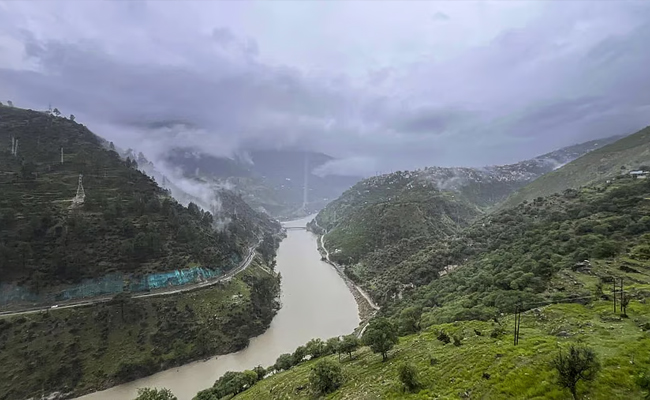
New Delhi (PTI): A panel under the Ministry of Environment has approved the 260-megawatt Dulhasti Stage-II hydropower project on Chenab river in Jammu and Kashmir's Kishtwar district, officials said on Saturday.
The clearance comes in the backdrop of India suspending the Indus Waters Treaty with Pakistan following the deadly Pahalgam terror attack in April this year.
The Expert Appraisal Committee on hydel projects accorded the approval during its 45th meeting earlier this month, paving the way for floating construction tenders for the run-of-the-river project, estimated to cost over Rs 3,200 crore.
ALSO READ: Death toll rises to 3 in helium cylinder blast near Mysuru Palace
According to the minutes of the meeting, the panel noted that the water of Chenab basin is shared between India and Pakistan in accordance with provisions of the Indus Water Treaty, 1960, and the project's parameters were planned in accordance with the treaty.
"However, the Indus Water Treaty stands suspended effective from April 23, 2025," the panel noted.
When the Indus Water Treaty was in force, Pakistan had rights over the Indus, Jhelum and Chenab rivers, and India over the Ravi, Beas and Sutlej. With the treaty now in abeyance, the Centre is pushing ahead with several hydroelectric projects in the Indus basin, such as Sawalkote, Ratle, Bursar, Pakal Dul, Kwar, Kiru, and Kirthai I and II.
Dulhasti Stage-II is an extension of the existing 390 MW Dulhasti Stage-I Hydro Electric Project (Dulhasti Power Station), which has been successfully operating since its commissioning in 2007 by National Hydroelectric Power Corporation Limited.
Under the plan, water will be diverted from the Stage-I power station through a separate tunnel measuring 3,685 metres in length and 8.5 metres in diameter to form a horseshoe-shaped pondage for Stage-II.
The project also includes a surge shaft, a pressure shaft, and an underground powerhouse housing two 130 MW units, resulting in a total installed capacity of 260 MW and an annual energy generation.
The total land requirement for the project is estimated at 60.3 hectares. This project will require 8.27 hectares of private land from two villages, Benzwar and Palmar, in Kishtwar district.
Let the Truth be known. If you read VB and like VB, please be a VB Supporter and Help us deliver the Truth to one and all.
For supporters, ''Thalapathy'' Vijay becomes ''Muthalamaichar'' Vijay

Chennai (PTI): As actor-politician Vijay-led TVK appeared inching towards the majority mark of 118 Assembly seats out of the total 234 segments in Tamil Nadu, celebrations by party workers and fans erupted across the state.
Amid chants of 'TVK' and 'Vijay,' party workers gathered outside the party headquarters at Panaiyur near here and distributed sweets and hailed the party founder as "Muthalamaichar (Chief Minister) Vijay, who continues to be popular as "Thalapathy (Commander, his film title)."
Meanwhile, visuals of Vijay's father Chandrashekar and some family members expressing joy and happiness appeared in some television channels. Vijay's party is leading in at least 108 seats out of the total 234 segments.