Chemistry has triumphed over poll arithmetic: PM on LS poll results
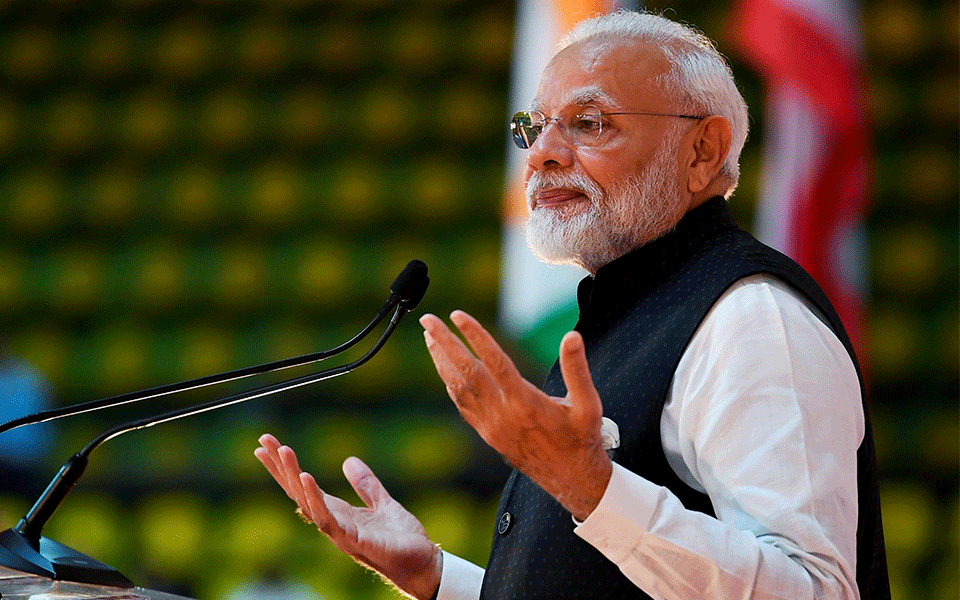
Varanasi, May 27: Prime Minister Narendra Modi Monday decried the "misconception" being created that BJP was a Hindi heartland party and said the Lok Sabha poll results testified to its victories across India, stressing "chemistry has triumphed over arithmetic".
"Political pundits are not aware that their thinking and logic is meant for the 20th century. Results show that beyond arithmetic there is chemistry and this time chemistry has triumphed over arithmetic," the Prime Minister told his electorate while thanking them profusely for their hard work and dedication.
Modi who will be taking oath as the prime minister for the second time on May 30, said the hat trick of victories in 2014, 2017 and 2019 - vis-a-vis the state - is no mean achievement for the BJP.
"For the country I am the PM, but for you I am your MP, I am your sevak," he told the Varanasi electorate, wondering how political pundits still consider his party as that of the Hindi heartland.
"There is no region where the BJP's poll percentage is not rising. We have government is Assam, getting elected in Ladakh yet political pundits say (our's is) Hindi heartland politics, this is a misconception that has been created," he said.
Thanking party workers profusely for braving the sweltering summer heat to reach out to the electorate and for ensuring that campaign goes on smoothly, Modi said the workers have passed the test with distinction.
Admitting that politics is about perception, Modi lamented that a wrong impression had been created about his party through lies and wrong logic.
"Because of this wrong awful perception, people do not like standing with us. But those creating bad and wrong perception can be defeated with the help of transparency and hard work. This is the strategy to trounce it," he said.
Stressing on coordination between the government and party organisation, he said, "the perfect synergy between the government and party organisation was a big power and the BJP has realised it."
"The Government makes policies while organisation makes ranniti (strategy). The synergy of niti (policies) and ranniti (strategy) is the mirror of sarkar and organisation and the country is getting its benefits," he said.
"Work and workers create wonders," he said, giving full credit for his victory to the workers at the grassroots level for creating awareness of his government's policies and programmes for the people.
Modi, who earlier in the day took part in the 'puja' at the Kashi Vishwanath temple in a thanksgiving for his party's landslide victory, also spoke about the dangers faced by his party in the form of "political untouchability".
"Take the cases of Kerala or Kashmir, Bengal or Tripura (these cases) it will not come in media. Some people have selective sensitivity. Hundreds of workers have been killed only for political ideology. In Tripura workers were hanged, in Bengal murders are still on, in Kerala too... perhaps in India only one political party has faced such killings. Violence has been given legitimacy. This is a danger before us," he pointed out.
Ambedkar and Gandhi had shunned untouchability but unfortunately, political untouchability is rising,...BJP workers were murdered," he said.
His remarks assumed significance. in the light of the killing of a BJP leader in Amethi in the first post-poll violence in Uttar Pradesh.
Amid such hatred, BJP's mantra remains 'Sabka Saath, Sabka Vikas' Modi said adding that unlike others, his party has not come under the pressure of vote bank politics which has "spoiled" democracy.
The prime minister said he was also grateful to his opponents who fought against him.
Stressing on the significance of Opposition in democracy, he said: "When others come to power, there is no sign of opposition".
He cited the example of Tripura where there was no Opposition during the 30 years of Congress government but "now that we are in government there is a 'jaandar and shandar vipaksh'. This is the spirit of democracy."
Thanking Uttar Pradesh for showing the way for India and strengthening the foundation of healthy democracy, the prime minister also spoke about his Kedarnath visit after the completion of polling.
"Since the people of Kashi had ordered me not to come here for a month after filing my nomination papers, I thought if not Baba in Kashi then (baba) elsewhere," he said, adding perhaps no other candidate is as satisfied or contented as he was (before the results are announced) and its reason was the confidence of Kashivasis.
Modi, who offered prayers at the Kashi Vishwanath temple here, visited the temple town four days after steering his party to a huge win.
The BJP won 303 out of the 542 seats in the Lok Sabha this time.
Earlier, BJP president Amit Shah said Modi has only shown a glimpse of development and Kashi will turn into an amazing city in the next five years.
In the city along with the prime minister for thanking the electorate and party workers for the landslide win in the recent Lok Sabha elections, the BJP president said what a difference had come in Kashi of 2014 and today.
Hinting at the SP-BSP-RLD alliance, he said some media was predicting Modi will not get clear majority but the party successfully gave a call for working on achieving 50 per cent vote share.
Both Shah and UP Chief Minister Yogi Adityanath, in their speeches here, focused on the "gruelling" campaigning Modi undertook in the run up to the general elections.
Let the Truth be known. If you read VB and like VB, please be a VB Supporter and Help us deliver the Truth to one and all.
Bihar: Over 150 children fall ill after consuming 'mid-day meal' in Saharsa
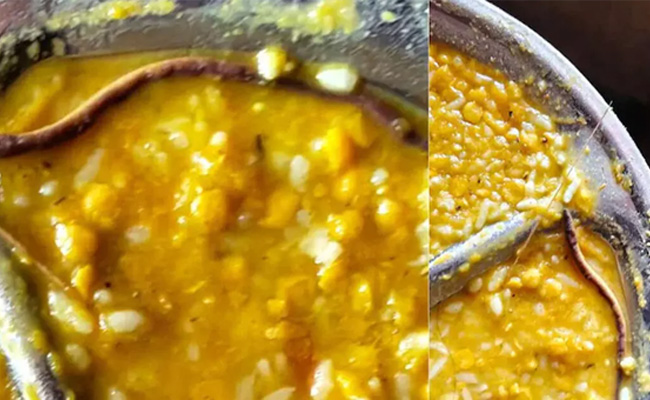
Saharsa (PTI): More than 150 children were taken ill after allegedly consuming food that was part of the mid-day meal in a school in Bihar’s Saharsa district, a senior official said on Thursday.
The incident occurred at a middle school in Baluaha village of the district.
The official said that 115 children were undergoing treatment at the Sadar Hospital, while around 50 students were admitted to Mahishi Public Health Centre.
“We received information that several children fell ill after consuming the mid-day meal in Baluaha. The children were initially treated at the primary health centre, but later, many were referred to the Sadar Hospital,” Saharsa District Magistrate Deepesh Kumar told reporters.
“According to doctors, the health condition of the children has improved, but they will be kept under observation for some time. There is no need to panic. Some kids are having mild fever. They are being treated accordingly,” Kumar said.
Meanwhile, family members of some children claimed that a snake was found in the container in which cooked pulses was stored at the school.
Of the 545 students present in the school, 200 had already eaten their meals by the time the snake was spotted, and later complained of stomach ache and vomiting, they said.
Regarding the claims, the DM said food samples have been collected from the school.
“We will be able to comment on this only after the results of the tested samples arrive,” he said.