Chhattisgarh: Efforts on for 3rd day to save 11-yr-old boy stuck in borewell
team of robot specialists reaches spot
Janjgir(PTI): More than 45 hours after an 11-year-old boy fell into a deep borewell in Chhattisgarh's Janjgir Champa district, rescue teams were making hectic efforts on Sunday to save him, officials said.
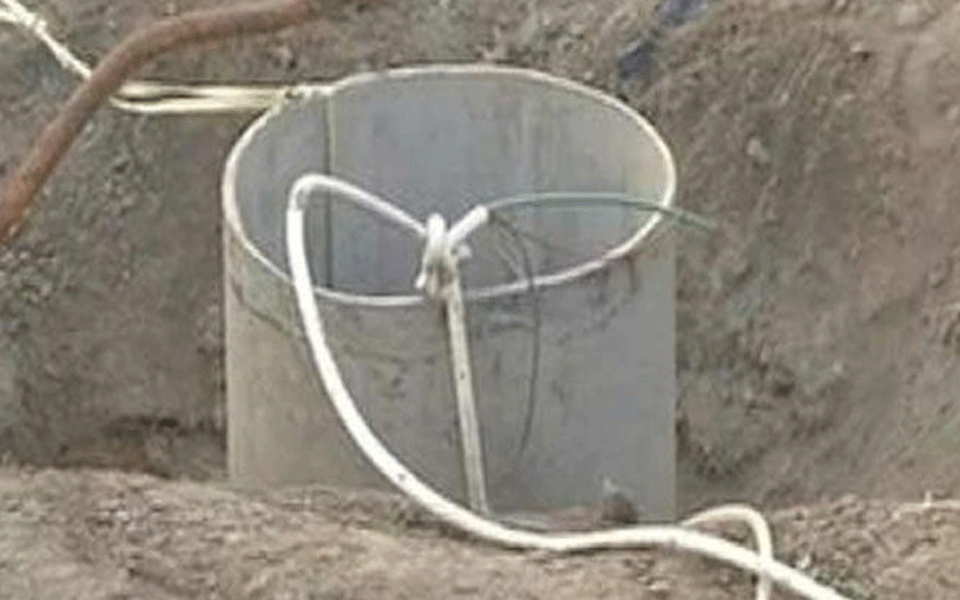
The boy is conscious, they said, adding that a team of robot specialists from Gujarat has reached the spot and efforts are being made to pull out the child, who is stuck at a depth of about 60 feet in the abandoned borewell.
The boy, Rahul Sahu, fell into the unused 80-feet-deep borewell, located in the backyard of his house in Pihrid village in Malkharoda development block around 2 pm on Friday while he was playing there, officials said.
The rescue teams, comprising over 500 personnel, including officials of the National Disaster Response Force (NDRF) and the Army, have been working tirelessly, using ultra-advance machines and vehicles to evacuate the child safely, they said.
As per the latest information, a parallel pit, being dug since Friday evening, is nearing its final stage. A tunnel will then be created which will enable rescuers to reach the borewell and evacuate the child.
A team of robot specialists from Gujarat has also reached the spot and efforts are also being made to pull out the child safely with the help of a robot, officials said.
Health officials have been constantly monitoring Rahul's condition through cameras. He is conscious and showing movement. He was given a soft drink and banana in the wee hours of Sunday and provided juice this morning. A pipe has been installed for oxygen supply in the borewell, a government statement said.
We are hoping that we will be able to rescue the child by late afternoon, a district administration official said.
Over 500 personnel, including from the NDRF, a four-member Army team, more than 150 policemen and 15 personnel of the State Disaster Response Force (SDRF), have been engaged in the rescue operation, which began at 4 pm on Friday, officials said.
There is some water inside the borewell where the child is trapped and the NDRF personnel are trying to drain it out with the help of a vessel tied to a rope. Even the child has been helping in the water draining exercise, as per the government statement.
Chief Minister Bhupesh Baghel is in touch with officials and constantly taking updates about the operation.
Baghel also spoke to Rahul's family members over phone and assured them that every possible step would be taken to save the child.
District Collector Jitendra Shukla and Superintendent of Police Vijay Agrawal were at the spot since Friday evening.
The CM has also directed all district collectors and SPs that borewells should be covered in order to prevent such incidents.
Let the Truth be known. If you read VB and like VB, please be a VB Supporter and Help us deliver the Truth to one and all.
Real Madrid fines Valverde and Tchouaméni half a million euros each for altercation
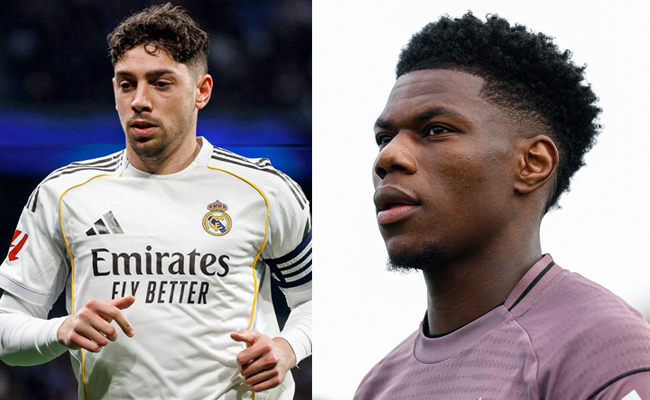
Barcelona (AP): Real Madrid slapped players Federico Valverde and Aurélien Tchouaméni with half-a-million-euro ($588,000) fines on Friday for their altercation during practice.
The massive fines came a day after the midfielders tussled when the team trained. Valverde said in a post on social media on Thursday that no punches were thrown. But Valverde knocked his head on a table and he suffered a small cut that required a brief hospital visit.
On social media, Valverde initially called it a “meaningless fight” with a teammate and said “everything has been blown out of proportion."
His employers, however, considered it a significant enough breach of team discipline to nail both Valverde and Tchouaméni with fines that bite even the bank account of a top soccer player. The half-a-million euro penalties reflect the reputational damage the club was enduring in a chaotic end to a disappointing season.
In a statement, the 15-time European champion said its disciplinary action was concluded after both players expressed to the club “their complete remorse for what happened and apologized to one another.”
Madrid added they also apologized to their teammates, the coaching staff and club supporters, as well as showing their willingness to accept whatever disciplinary action the club deemed “opportune.”
Tchouaméni was back training with Madrid on Friday, two days before they play at Barcelona in a clasico. Madrid has to win otherwise Barcelona will be crowned La Liga champion.
After being notified of the fine, he posted a public apology to the club and its fans on social media.
“What happened this week in training is unacceptable,” Tchouaméni wrote. "I say this while thinking about the example we are expected to set for young people, whether in football or at school.
“Above all, I am sorry for the image we projected of the club.”
Valverde was not at practice due to the head knock.
Both players are set to play in the World Cup next month, with Tchouaméni playing for France and Valverde for Uruguay.
Chaotic end to a poor season
===================
The run-in between the players, who for seasons have played side by side in Madrid's midfield, came after they argued this week in previous training sessions. But tempers boiled over on Thursday. Spanish media was rife with reports that the players previously disagreed over the club's decision to let coach Xabi Alonso go after just months on the job.
It was not the only altercation involving Madrid players during training this week. Álvaro Carreras confirmed he was in a “minor” incident with a teammate. Spanish media said he and fellow defender Antonio Rüdiger got into a scuffle.
Álvaro Arbeloa, the coach who was promoted from Madrid's reserve team when Alonso was fired in January, will face tough questions on what went wrong inside the changing room when he gives a press conference on Saturday ahead of the clasico at Camp Nou.
Madrid is facing a second consecutive campaign without a major trophy amid rumors in the Spanish media that club president Florentino Pérez is considering bringing back Jose Mourinho to straighten out his underperforming team.