Chhattisgarh train accident: Death toll rises to 11; bodies retrieved from wreckage
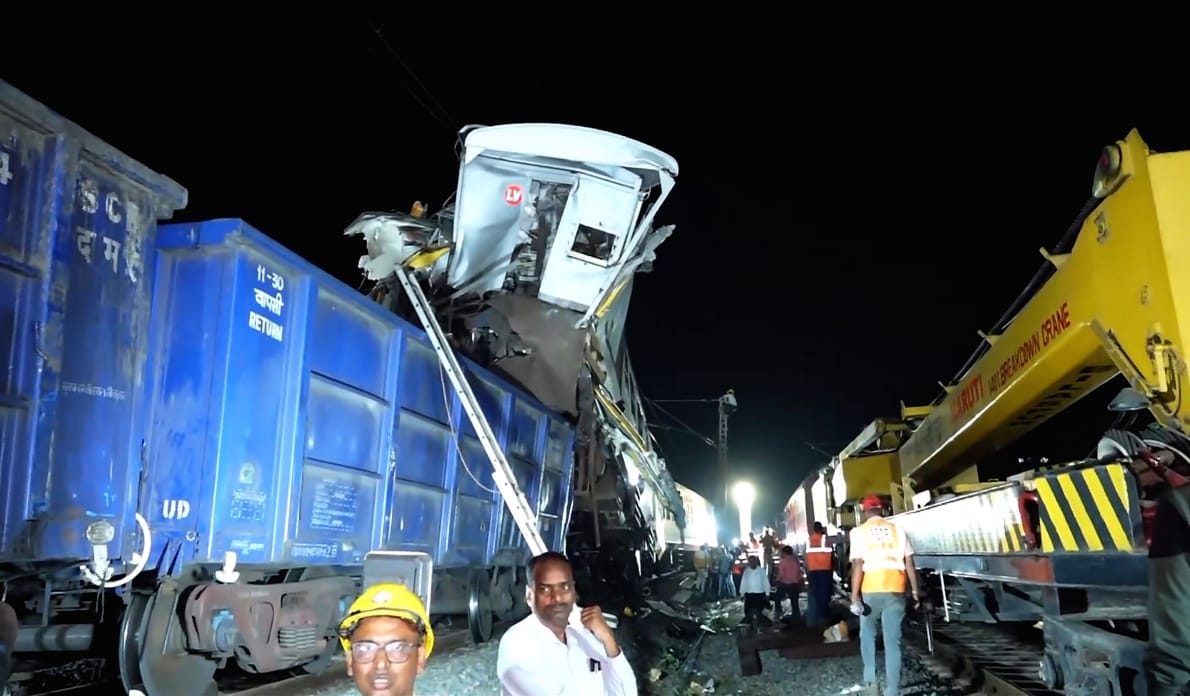
Bilaspur (Chhattisgarh) (PTI): The death toll in the collision of a passenger train with a goods train near Bilaspur railway station in Chhattisgarh has gone up to 11, officials said on Wednesday.
Rescue personnel had to toil for hours, cutting through the mangled coach of the passenger train, as several bodies were badly trapped in the wreckage, a railway official said.
The incident occurred around 4 pm on Tuesday when the MEMU (mainline electric multiple unit) passenger train was heading to Bilaspur from Gevra (in neighbouring Korba district).
The affected line was restored on Wednesday morning, the officials said.
"Eleven persons, including six women, have lost their lives, and 20 others were injured in the accident," a statement issued by the Railways said.
After the incident, the railway administration immediately launched relief and rescue operations. The injured persons were being provided with proper medical treatment at nearby hospitals, it added.
The impact of the collision was so severe that a coach of the passenger train ended up on top of a wagon of the cargo train, the railway officials said.
The rescue and restoration work on the affected line was completed by 5.30 am on Wednesday, facilitating the train movement, they said.
The injured passengers have been shifted to Apollo Hospital and Chhattisgarh Institute of Medical Sciences (CIMS) in Bilaspur.
Of the 11 deceased, five have been identified as passenger train local pilot Vidya Sagar (53), Lovkush Shukla (41), Ranjeet Prabhakar (in his early 40s), Shila Yadav (25) and Priya Chandra (21), the officials said.
Four women and two men among the deceased are yet to be identified, they said.
The 20 injured include nine women and a 2-year-old boy. Assistant loco pilot of the passenger train, Rashmi Raj (34), train manager (guard) Ashok Kumar Dixit (54), and guard of the goods train Shailesh Chadra (49) were among those hospitalised, according to the officials.
Those injured in the incident have been provided with an ex gratia of Rs 50,000 each as an advance relief amount, an official statement said.
The railway administration maintained continuous contact with hospitals and ensured medical treatment, transportation, and necessary support for each affected person, it said.
Senior railway officials were monitoring the situation and taking all necessary steps to ensure the speedy recovery of the injured, it added.
"The passenger train hit the stationary goods train from behind at a speed of 60 to 70 kmph after overshooting a red signal," a senior railway official said.
"It is now a matter of investigation as to why the loco pilot jumped the red signal and failed to apply the emergency brakes in time, even though the goods train was within visible distance," the official said.
The passenger train rammed into the brake van with such force that it was badly mangled. After the collision, half motor coach of the passenger train climbed onto the wagon next to the brake van, the official said.
The manager (guard) of the goods train jumped out of the brake van - the last coach of the goods train - at the last moment and sustained minor injuries, the official added.
The railway authorities announced a compensation of Rs 10 lakh each to the kin of the deceased and Rs 5 lakh to the seriously injured persons, while those who sustained minor injuries will receive Rs 1 lakh assistance, an official statement said.
A detailed inquiry into the incident will be conducted at the level of the Commissioner of Railway Safety (CRS) to ascertain the cause and recommend necessary corrective measures, it said.
Chhattisgarh Chief Minister Vishnu Deo Sai expressed grief over the accident and announced a compensation of Rs 5 lakh to the kin of each of the deceased and Rs 50,000 each to the injured persons.
Let the Truth be known. If you read VB and like VB, please be a VB Supporter and Help us deliver the Truth to one and all.
VP, PM greet civil servants on Civil Services Day
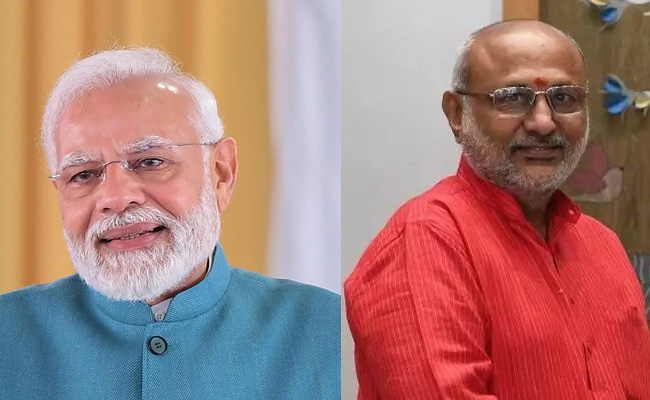
New Delhi (PTI): Vice President C P Radhakrishnan and Prime Minister Narendra Modi on Tuesday greeted civil servants on the occasion of Civil Services Day and said it is time to further strengthen the resolve to work towards good governance and nation building.
The Vice President said as the enduring pillar of India's administrative framework, the efforts of the civil servants in strengthening governance and delivering public services are of immense significance.
The prime minister said from the grassroots to policy-making, the efforts of civil servants touch countless lives and contribute to India's progress
"On the occasion of Civil Services Day, I extend my warm greetings to all civil servants and convey my sincere appreciation for your dedication and exemplary service to the nation," Radhakrishnan said in a post on X.
ALSO READ: 5.2-magnitude quake jolts Manipur
He said the theme for this year, "Viksit Bharat: Citizen-Centric Governance and Development at the Last Mile", aligns with the vision of Viksit Bharat 2047 and underscores the Government's commitment to transparent, accountable, and citizen-centric governance, with a strong emphasis on last-mile delivery and inclusive development.
"Let us all celebrate the day and continue to work collectively towards building an inclusive and developed India," he said.
The Vice President will deliver the keynote address at the Civil Services Day celebrations at Vigyan Bhawan here on Tuesday.
In his message, Modi greeted all civil servants on Civil Services Day and said this is an occasion to further strengthen the resolve to work towards good governance and nation building.
"May our civil servants continue to serve with excellence, compassion and innovation, upholding the highest standards of duty," he said.
The prime minister said service to the nation is the foundation of a 'Developed India'.
"On the glorious occasion of Civil Services Day, let us reaffirm our resolve to build a strong, prosperous, and sensitive India by bringing the person standing at the last line into the mainstream of development," he said.
The central government celebrates April 21 every year as 'Civil Services day' as an occasion for civil servants to rededicate themselves to the cause of citizen and renew their commitments to public service and excellence in work.
This date is chosen to commemorate the day when the first Home Minister of Independent India, Sardar Vallabhbhai Patel, addressed the probationers of Administrative Services Officers in 1947 in Delhi, and referred to civil servants as the 'steel frame of India'.