CJI writes to HCs for expeditious filling of vacant posts, prioritising elevation of women judges
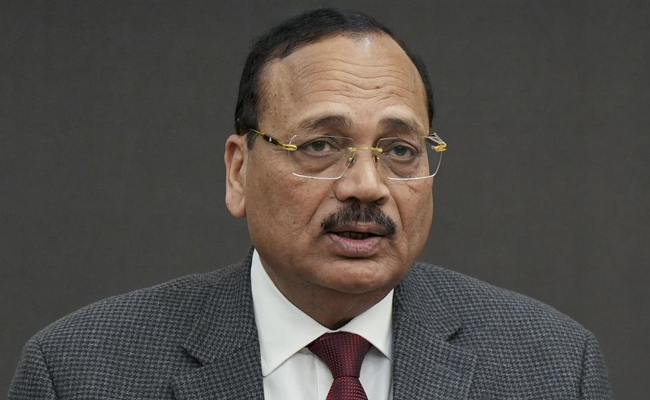
New Delhi (PTI): Chief Justice of India Surya Kant has written to chief justices of high courts for expeditious filling up of judicial vacancies with special focus on elevation of women judges for ensuring diversity in the benches.
According to sources, the CJI wrote to chief justices of 25 high courts last week and highlighted the vacancies of judges in higher judiciary and increase the representation of women in the benches.
The CJI, who has earlier flagged poor representation of women judges, also asked the chief justices not to delay the recommendation of collegiums and endeavour for taking steps for filling of the vacancies even before actual vacancy arises.
On March 8, while speaking at a function, CJI Kant batted for greater institutional reforms in the judiciary to bring more women into the legal field and said that high court collegiums should consider meritorious women members of the bar for judgeship as a norm and not as an exception.
ALSO READ: Around 1,068 hectares of railway land is under encroachment: Railway Minister
The CJI requested the high court collegiums to widen the zone of their consideration and include women advocates from their states who are practising in the Supreme Court for elevation.
He had highlighted that multiple women are currently serving as chief justices of different high courts, and the Punjab and Haryana High Court has as many as 18 sitting women judges.
Similarly, the Madras and Bombay High Courts also have about a dozen female judges each, he had said.
CJI Kant had also pointed out that women comprise approximately 36.3 per cent of the working strength of judicial officers at the district level.
"Friends, this is not a simple statistic; I would argue it reflects a generational shift. If we speak of a pipeline, it is here that it is visibly widening. And when the base of the system reflects greater inclusion, it is only a matter of time before that strength finds expression in the higher judiciary," he had said.
According to data tabled in Lok Sabha by Union minister Arjun Ram Meghwal in February, 170 women judges have been appointed in the high courts since 2014, including 96 in the last five years, and six in the Supreme Court.
The data said 116 women judges were serving in the high courts as on February 6. It said that 308 posts of high court judges were vacant as against the sanctioned strength of 1122 judges.
As on February 6, the high courts have a working strength of 814 judges and the Supreme Court as on date has 33 judges including one woman judge.
Let the Truth be known. If you read VB and like VB, please be a VB Supporter and Help us deliver the Truth to one and all.
Defeat of Constitution Amendment Bill betrayal of nation's woman power: Adityanath
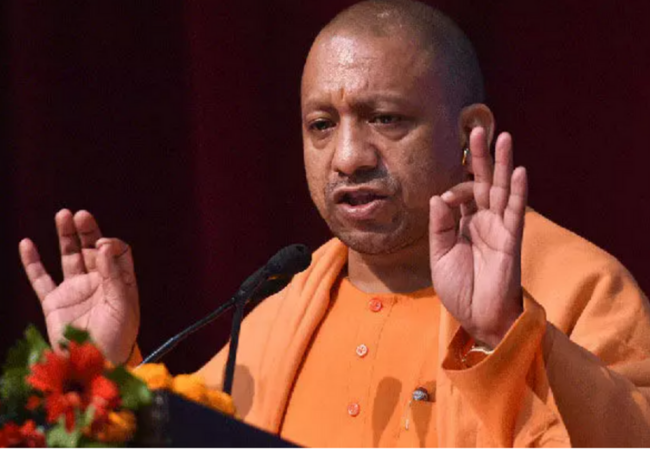
Lucknow (PTI): Uttar Pradesh Chief Minister Yogi Adityanath termed the defeat of the Constitution Amendment Bill to implement reservation for women in legislatures in 2029 and increase the number of seats of the Lok Sabha "betrayal of the woman power" of the nation.
A Constitution Amendment Bill to implement 33 per cent reservation for women in legislatures in 2029 and increase the number of Lok Sabha seats to 816 was defeated on Friday.
In a post on X in Hindi, late on Friday night, Adityanath said, "Today, a dark chapter has been added to the history of India's great democracy. The Opposition's obstruction of the passage of the Constitutional Amendment Bill essential for the 'Nari Shakti Vandan Adhiniyam' is a blow to the honour of 'Bharat Mata' (Mother India). It is a betrayal of the entire woman power of the nation; it is an infringement upon their democratic rights.
"The Congress-led 'INDI' alliance has exposed its anti-women mindset. The women of the nation are watching and understanding everything. They will remember this deceit and injustice, and when the time comes, they will surely give a reply. Under the leadership of our Prime Minister @narendramodi ji, the NDA alliance will continue its unwavering efforts to protect the honour, dignity, and rights of women, and to ensure their empowerment."
While 298 members voted in support of the Bill in the Lok Sabha, 230 MPs voted against it. The Bill required 352 votes for a two-thirds majority.
According to the Constitution (131st Amendment) Bill, Lok Sabha seats were to be increased to 816 from the current 543 to "operationalise" the women's reservation law before the 2029 parliamentary polls, following a delimitation exercise based on the 2011 Census.
Seats were also to be increased in state and Union Territory assemblies to accommodate 33 per cent reservation for women.
This was for the first time that a Bill under the Modi government was defeated in Parliament.