Communist Party of China delegation meets RSS leadership in Delhi a day after talks with BJP
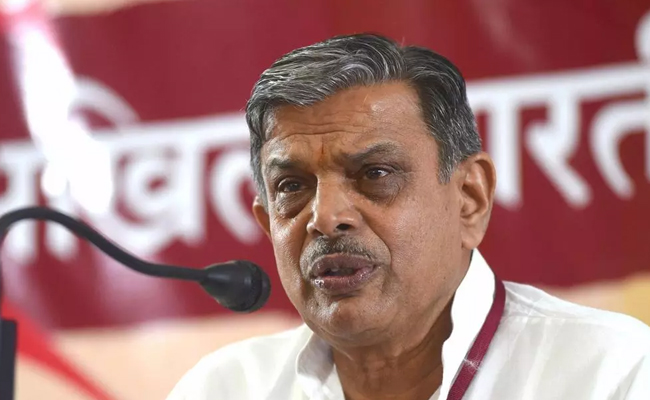
New Delhi: A delegation of the Communist Party of China (CPC) on Tuesday met senior leaders of the Rashtriya Swayamsewak Sangh (RSS) at its headquarters, Keshav Kunj, in Delhi, a day after holding talks with the Bharatiya Janata Party (BJP) leadership in the Capital.
Describing the meeting as a “courtesy call”, a senior RSS functionary said the request for the interaction had come from the Chinese side and that there was no specific agenda. RSS chief Mohan Bhagwat was not present at the meeting as he was travelling, the functionary added, The Indian Express reported.
The interaction is significant in the context of the limited engagement between the RSS and Chinese representatives in recent years. During Bhagwat’s lecture series in August last year, the RSS had avoided inviting Chinese diplomats, even as representatives from several other countries attended. At the time, the decision was linked to Operation Sindoor, following which neither Pakistan nor China was invited.
The CPC delegation’s meeting with the RSS followed its interaction with the BJP leadership on Monday, where discussions focused on advancing inter-party communication between the two political organisations. According to party sources, BJP leaders with a significant interface with the RSS were also part of Monday’s discussions.
ALSO READ: 'Modi will never succeed in suppressing voice of Tamil people': Rahul on 'Jana Nayagan' row
The Indian Express reported quoting sources that this was likely the first such engagement between the BJP and the CPC since the BJP came to power in 2014. The last similar interaction reportedly took place in 2009, when the BJP was led by its then president, Nitin Gadkari. Gadkari had also visited China in 2011 as part of an engagement with the CPC, according to insiders.
BJP leaders publicly confirmed Monday’s meeting through posts on social media. BJP foreign affairs department in-charge Vijay Chauthaiwale said a CPC delegation led by Sun Haiyan, Vice Minister of the International Department of the CPC, visited the BJP headquarters, where discussions were held on advancing inter-party communication. Chinese Ambassador to India Xu Feihong was also part of the delegation.
BJP national secretary Arun Singh, who led the BJP delegation, said the meeting focused on enhancing communication and interaction between the BJP and the CPC.
The outreach comes even as the BJP has repeatedly criticised the Congress over its past engagements with the CPC, citing meetings and memoranda of understanding between the two parties.
While both the BJP and the RSS have described the current engagements as limited and exploratory, the CPC delegation’s meetings with the ruling party and its ideological parent organisation indicate an effort to broaden political channels of communication amid an otherwise strained India-China relationship.
Let the Truth be known. If you read VB and like VB, please be a VB Supporter and Help us deliver the Truth to one and all.
4 workers die after being buried under coal slurry in Jharkhand's Dhanbad

Dhanbad (Jharkhand) (PTI): At least four workers died after being buried under coal slurry in Jharkhand's Dhanbad district on Saturday, a police official said.
The incident took place at Moonidih coal washery in the command area of Bharat Coking Coal Limited (BCCL).
"Bodies of all four workers were dug out of debris during a rescue operation," Putki police station in-charge Waqar Hussain told PTI.
The incident took place when coal slurry was being loaded into trucks by workers, during which a large chunk of slurry fell and trapped several workers underneath, officials said.
The deceased have been identified as Manik Bauri, Dinesh Bauri, Deepak Bauri, and Hemlal Gope.
Meanwhile, the family members of the deceased and local villagers placed the bodies in front of the washery gate and began a protest.
They demanded compensation, jobs for dependents and action against those responsible for the incident.
Police and administration officials are trying to pacify the protesters, an official said.