Cong's winning candidates to camp in Bengaluru after Rajasthan poll results: BJP's Kirodi Lal Meena
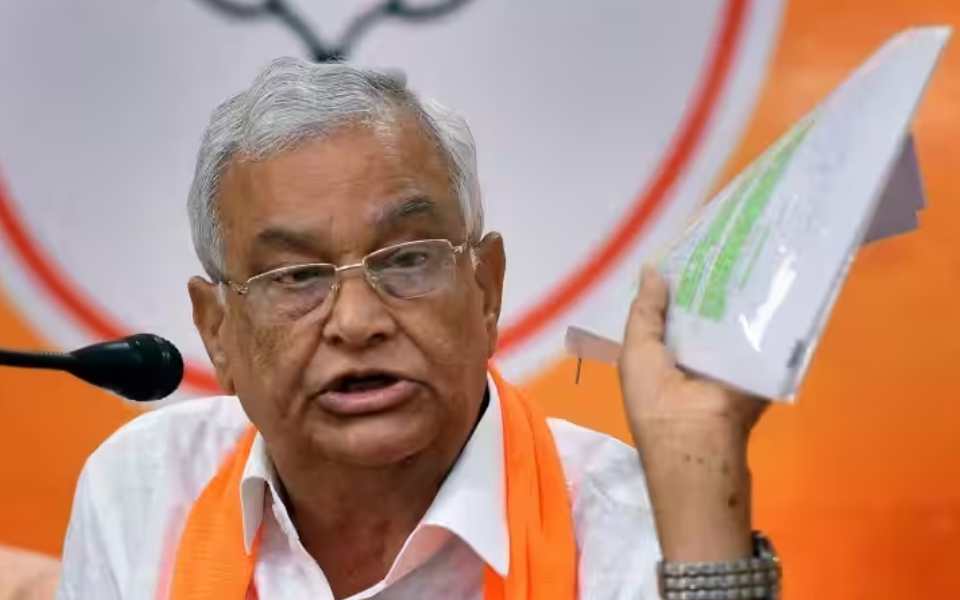
Jaipur, Dec 1: BJP's Rajya Sabha MP and candidate from Sawai Madhopur Kirodi Lal Meena Friday said two Bengaluru resorts have been booked for winning candidates of the Congress to camp there after the results of the Rajasthan Assembly polls are announced.
He alleged that the Congress had a habit of indulging in "horse-trading" of MLAs and said the same effort was being made now as well.
Meena was apparently referring to the practice of "confining" MLAs to hotels and resorts so that they do not switch loyalties ahead of a show of strength on the floor of the House. According to opinion polls, the Congress and the BJP are in a close race in Rajasthan.
"I have confirmed... that two resorts have been booked in Bengaluru to gather candidates there. It is their habit to do horse-trading and they will do it," the MP said.
The counting of votes for 199 out of the 200 seats in the Rajasthan assembly polls will take place on December 3.
On opinion polls, Meena said there was no uniformity in them as some predicted an absolute majority to the BJP whereas in others, the party was ranked lower.
The BJP leader said he has travelled in 22 out of the 28 assembly seats of eastern Rajasthan and the equations seem to be in favour of the BJP.
"The undercurrent is in favour of the BJP... Based on the feedback, I can say with confidence that the BJP will come with 120-plus seats in Rajasthan," Meena said.
He added that the BJP won just one of these 28 assembly seats in 2018 but this time, the party is expected to win 20 seats.
"The picture of Rajasthan is going to change. Undercurrent can be said to be in favour of the BJP as the youths were unhappy with paper leaks, corruption peaked in every (Congress) MLA constituency and there was massive anti-incumbency...," Meena said.
Let the Truth be known. If you read VB and like VB, please be a VB Supporter and Help us deliver the Truth to one and all.
4 held for sexually assaulting woman, girl on moving bus after social media alert in UP's Agra

Agra (UP) (PTI): Four people were arrested, after a prompt response by police following a social media alert, for allegedly sexually assaulting a woman and a girl inside a moving bus here, officials said on Tuesday.
According to an official police statement, at 12:27 am on April 27, information was received on the social media platform X about an incident of sexual assault on a bus travelling from Kanpur to Ahmedabad, which was approaching Namner crossing in Agra.
Acting under the direction of Police Commissioner Deepak Kumar, the Agra Police social media team immediately alerted the Rakabganj police station within minutes and coordinated with the victims to confirm the incident and obtain the exact location, it stated.
Police teams launched intensive checking at Namner crossing and intercepted the bus as it reached the spot. The four accused involved in the incident were apprehended on the spot, and legal action was initiated against them, the statement said.
The police said the swift response and coordination between the social media team and field units ensured timely action, bringing relief to the victims and other passengers, who expressed gratitude towards the police, it added.