COVID-19: India records 96,982 new cases, 446 fresh fatalities
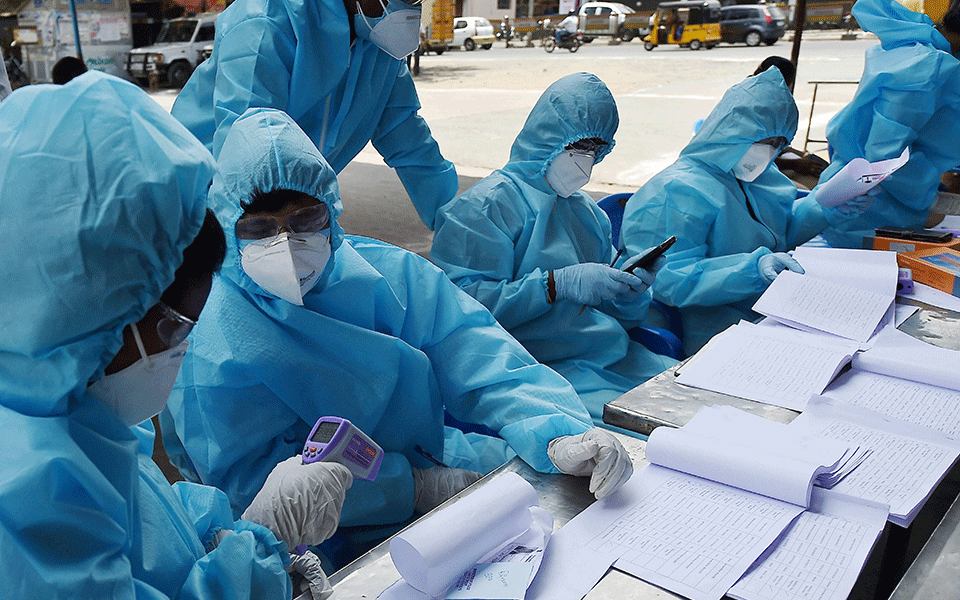
New Delhi: The daily rise in new coronavirus infections in India remained above 90,000 for the third consecutive day taking the nationwide COVID-19 tally of cases to 1,26,86,049, according to the Union Health Ministry data updated on Tuesday.
A total of 96,982 cases have been reported in a span of 24 hours, while the death toll increased to 1,65,547 with 446 daily new fatalities, the data updated at 8 am showed.
India on Monday recorded an all-time high of 1,03,558 single day new coronavirus infections in a span of 24 hours.
Registering a steady increase for the 27th day in row, the active cases have increased to 7,88,223 comprising 6.21 per cent of the total infections, while the recovery rate has further dropped to 92.48 per cent, the data stated.
The active caseload was at its lowest at 1, 35,926 on February 12 comprising 1.25 per cent of the total infections.
The number of people who have recuperated from the disease surged to 1,17,32,279, while the case fatality rate has further dropped to 1.30 per cent, the data stated.
India's COVID-19 tally had crossed the 20-lakh mark on August 7, 30 lakh on August 23, 40 lakh on September 5 and 50 lakh on September 16.It went past 60 lakh on September 28, 70 lakh on October 11, crossed 80 lakh on October 29, 90 lakh on November 20 and surpassed the one-crore mark on December 19.
According to the ICMR, 25,02,31,269 samples have been tested up to April 5 with 12,11,612 samples being tested on Monday.
The 446 new fatalities include 155 from Maharashtra, 72 from Punjab, 44 from Chhattisgarh, 32 from Karnataka, 15 each from Delhi, Gujarat and Madhya Pradesh, 13 from Uttar Pradesh, 12 each from Kerala and Rajasthan, 11 from Tamil Nadu and 10 from Jharkhand.
A total of 1,65,547 deaths have been reported so far in the country including 56,033 from Maharashtra, 12,789 from Tamil Nadu, 12,657 from Karnataka, 11,096 from Delhi, 10,348 from West Bengal, 8,894 from Uttar Pradesh and 7,244 from Andhra Pradesh and 7,155 from Punjab.
The health ministry stressed that more than 70 per cent of the deaths occurred due to comorbidities.
"Our figures are being reconciled with the Indian Council of Medical Research," the ministry said on its website, adding that state-wise distribution of figures is subject to further verification and reconciliation.
Let the Truth be known. If you read VB and like VB, please be a VB Supporter and Help us deliver the Truth to one and all.
Bhojshala case: Disputed structure built from remains of pre-existing temples, claims ASI
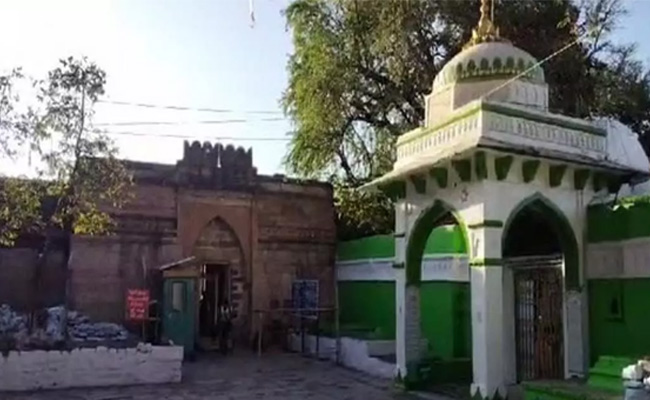
Indore (PTI): The ASI has told the Madhya Pradesh High Court that a massive structure dating back to the Paramara kings' rule existed at the disputed Bhojshala temple-Kamal Maula mosque complex, and the current structure was built from the remains of temples.
The Archaeological Survey of India (ASI) made the claim on Tuesday based on its 98-day scientific survey and over 2,000-page report.
The Hindu community considers Bhojshala a temple dedicated to Vagdevi (Goddess Saraswati), while the Muslim side claims the monument as the Kamal Maula Mosque. The disputed complex is protected by the ASI.
During the hearing before Justices Vijay Kumar Shukla and Alok Awasthi of the HC's Indore bench, Additional Solicitor General Sunil Kumar Jain, representing the ASI, presented a detailed account of the scientific survey conducted two years ago at the complex.
Referring to the ASI's survey report, he said, "Retrieved architectural remains, sculptural fragments, large slabs of inscriptions with literary texts, Nagakarnika inscriptions on pillars, etc, suggest that a large structure associated with literary and educational activities existed at the site. Based on scientific investigations and archaeological remains recovered during the investigations, this pre-existing structure can be dated to the Paramara period."
It can be said that the existing structure was made from the parts of earlier temples, based on scientific investigations, survey and archaeological excavations conducted, study and analysis of retrieved finds, study of architectural remains, sculptures, and inscriptions, art and sculptures, Jain said quoting the report.
Summarising the report, he also drew the court's attention to the fact that the archaeological study identifies that many architectural components, such as pillars and beams, were originally part of temple structures before being repurposed for a mosque.
"The evidence of this transition includes Sanskrit and Prakrit inscriptions that were damaged or hidden, alongside sculptures of deities and animals that were often mutilated or defaced," Jain contended.
The report also states that "all Sanskrit and Prakrit inscriptions are older than the Arabic and Persian inscriptions, indicating that users or engravers of the Sanskrit and Prakrit inscriptions occupied the place earlier".
In light of the Muslim side's earlier objections, the bench wanted to know why there were some discrepancies in the ASI's responses regarding the status of the disputed complex in the cases filed over the years.
The Additional Solicitor General argued that earlier studies of the complex involved only officials, while the current survey involved scientists and the use of advanced technologies such as Ground Penetrating Radar (GPR).
The hearing in the Bhojshala case will continue on Wednesday.
The high court has been regularly hearing four petitions and one writ appeal regarding the religious nature of the Bhojshala temple-Kamal Maula mosque complex since April 6.