Curfew from 10 pm to 5 am imposed in Delhi till April 30 to check COVID-19 spread
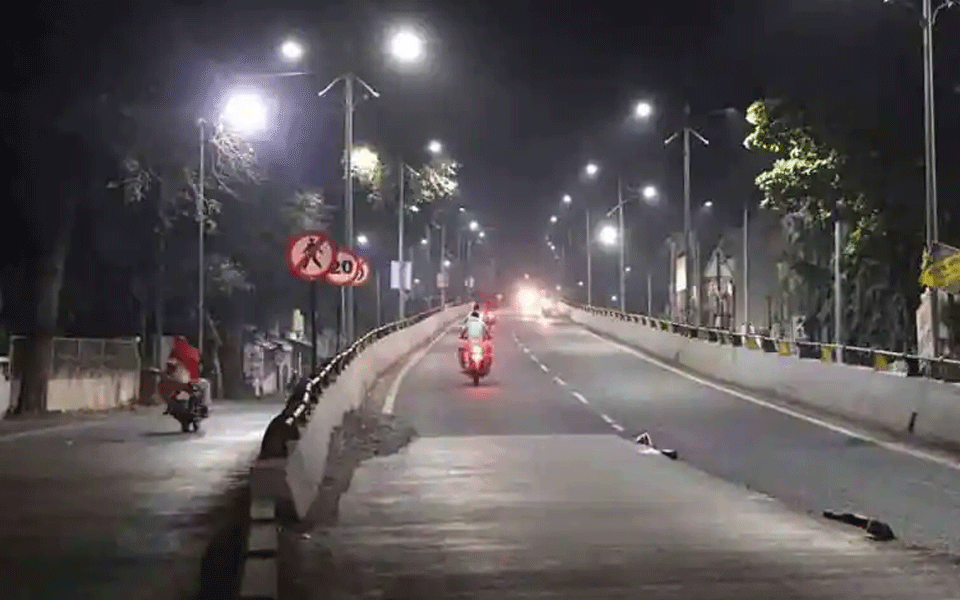
New Delhi: In view of rising COVID-19 cases in Delhi, the Arvind Kejriwal government on Tuesday imposed seven hours of night curfew with immediate effect but exempted people of certain professions from it.
The decision was taken after the Delhi Disaster Management Authority (DDMA) reviewed the COVID-19 situation in the city. The DDMA order for curfew from 10 pm to 5 am will continue till April 30.
People travelling during curfew hours for COVID-19 vaccination will require s soft or hard copy of an e-pass which can be obtained from the website www.delhi.gov.in.
According to the order issued by the chief secretary and chairperson of the executive body of DDMA, a sudden increase in COVID-19 cases in the recent past along with a high positivity rate has been observed in the national capital.
"It is felt that night curfew needs to be imposed in the NCT (National Capital Territory) of Delhi from 10 pm to 5 am, except for essential activities and services, as an emergency measure for the wellbeing and safety of people," the order stated.
Those exempted from the night curfew include pregnant women, patients, those travelling to and from airports, railway stations, state bus terminus on showing tickets, officials related to the functioning of offices of diplomats, and those holding any constitutional post on the production of valid identity card.
Central and Delhi government officials involved in emergency services such as health and family welfare and all related medical establishments, police, prisons, home guards, civil defence, fire and emergency services will also be exempted.
Officials of district administration, pay and accounts office, electricity, water and sanitation, public transport, disaster management and related services, NIC, NCC and municipal services, and all other essential services will also be exempted from the night curfew on the production of valid identity card.
Private medical personnel such as doctors, nursing staff, paramedical, and other hospital services, diagnostic centres, clinics, pharmacies, pharmaceutical companies and other medical and health services will be exempted, the order stated.
Movement of persons related to commercial and private establishments, including grocery, fruits and vegetable shops, dairy and milk booths, meat and fish, animal fodder, medical equipment shops, banks, insurance offices and ATMs, private security agencies, mediapersons, telecom and Internet services, Information Technology and IT-enabled services, e-commerce of essential services, will be allowed on production of e-pass.
Employees of petrol pumps, LPG, CNG, petroleum and gas retail and storage outlets, power generation, transmission and distribution units, cold storage and warehousing services, manufacturing units of essential commodities will also be exempted on carrying e-pass.
Public transport such as Delhi Metro, DTC and cluster buses, autos and taxis will be allowed to ply within the stipulated time for transportation of only exempted categories of people during night curfew, said the order.
However, there will be no restriction on inter-state and intra-state transportation of essential and non-essential goods. No separate permission or e-pass will be required for such movements, it said.
All district magistrates and deputy commissioners of police, as well as authorities concerned, will ensure strict compliance with the DDMA order.
Enforcement authorities are required to note that these restrictions fundamentally relate to the movement of people, and not to that of essential goods and services, the order stated, adding violation of curfew restrictions will be dealt with under the relevant section of the Disaster Management Act, 2005, and Section 188 of the IPC and other applicable laws.
Chief Minister Arvind Kejriwal had on Friday said that Delhi is witnessing the fourth wave of COVID-19 but any decision on lockdown will be taken after due public consultation.
Let the Truth be known. If you read VB and like VB, please be a VB Supporter and Help us deliver the Truth to one and all.
Bhojshala case: Disputed structure built from remains of pre-existing temples, claims ASI
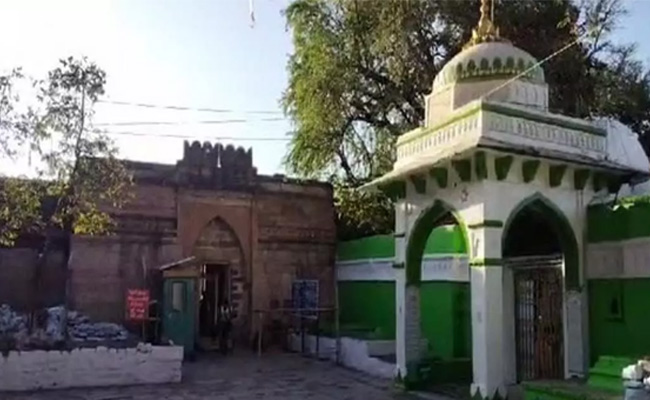
Indore (PTI): The ASI has told the Madhya Pradesh High Court that a massive structure dating back to the Paramara kings' rule existed at the disputed Bhojshala temple-Kamal Maula mosque complex, and the current structure was built from the remains of temples.
The Archaeological Survey of India (ASI) made the claim on Tuesday based on its 98-day scientific survey and over 2,000-page report.
The Hindu community considers Bhojshala a temple dedicated to Vagdevi (Goddess Saraswati), while the Muslim side claims the monument as the Kamal Maula Mosque. The disputed complex is protected by the ASI.
During the hearing before Justices Vijay Kumar Shukla and Alok Awasthi of the HC's Indore bench, Additional Solicitor General Sunil Kumar Jain, representing the ASI, presented a detailed account of the scientific survey conducted two years ago at the complex.
Referring to the ASI's survey report, he said, "Retrieved architectural remains, sculptural fragments, large slabs of inscriptions with literary texts, Nagakarnika inscriptions on pillars, etc, suggest that a large structure associated with literary and educational activities existed at the site. Based on scientific investigations and archaeological remains recovered during the investigations, this pre-existing structure can be dated to the Paramara period."
It can be said that the existing structure was made from the parts of earlier temples, based on scientific investigations, survey and archaeological excavations conducted, study and analysis of retrieved finds, study of architectural remains, sculptures, and inscriptions, art and sculptures, Jain said quoting the report.
Summarising the report, he also drew the court's attention to the fact that the archaeological study identifies that many architectural components, such as pillars and beams, were originally part of temple structures before being repurposed for a mosque.
"The evidence of this transition includes Sanskrit and Prakrit inscriptions that were damaged or hidden, alongside sculptures of deities and animals that were often mutilated or defaced," Jain contended.
The report also states that "all Sanskrit and Prakrit inscriptions are older than the Arabic and Persian inscriptions, indicating that users or engravers of the Sanskrit and Prakrit inscriptions occupied the place earlier".
In light of the Muslim side's earlier objections, the bench wanted to know why there were some discrepancies in the ASI's responses regarding the status of the disputed complex in the cases filed over the years.
The Additional Solicitor General argued that earlier studies of the complex involved only officials, while the current survey involved scientists and the use of advanced technologies such as Ground Penetrating Radar (GPR).
The hearing in the Bhojshala case will continue on Wednesday.
The high court has been regularly hearing four petitions and one writ appeal regarding the religious nature of the Bhojshala temple-Kamal Maula mosque complex since April 6.