Dalit youth's lynching in Raebareli heartbreaking, Rahul Gandhi spoke to victim's family: Congress
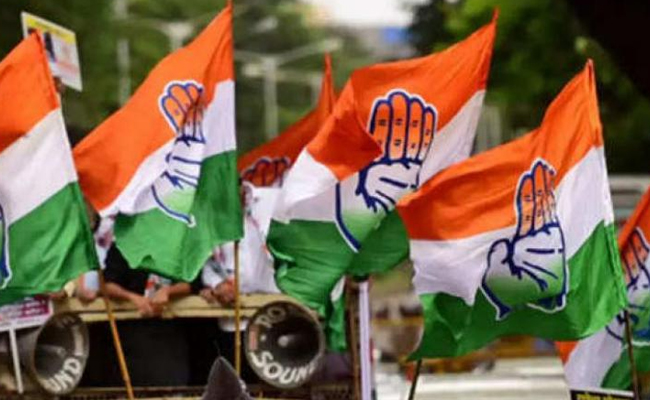
New Delhi (PTI): Congress leader Rahul Gandhi has spoken to the father and brother of a Dalit youth who was lynched in Raebareli and stands in complete solidarity with them in this hour of unbearable grief, AICC media and publicity department head Pawan Khera has said.
In a post on X on Sunday, Khera said the horrific lynching is both heartbreaking and enraging.
"In his final moments, as he was being mercilessly beaten with sticks and belts, the deceased young man remembered his last hope - Shri Rahul Gandhi," he said.
"For Rahul ji, who represents Raebareli in Parliament and considers its people his family, this tragedy is deeply wounding. He has personally spoken to the father and brother of the deceased and stands in complete solidarity with them in this hour of unbearable grief," Khera said.
"He (Gandhi) has also expressed his profound concern over the dangerous normalisation of lynching in India, vowing that such violent elements must face their legal end. Justice must be served," the Congress leader said.
Gandhi is currently on a four-nation tour of South America.
Congress spokesperson Shama Mohamed said she came across a very disturbing video from Raebareli, where a Dalit youth, Hariom, was lynched and killed by a few criminals.
"When he repeatedly said 'Rahul Gandhi, Rahul Gandhi', those criminals claimed they were supporters of Yogi. This is what the double engine of Yogi and Modi has done in Uttar Pradesh. Their politics of hate is taking the lives of Dalits and the marginalised," she said on X.
"Muslims are under attack, women are unsafe, and Dalits and OBCs are being targeted -- no one is safe under the BJP government anywhere," she said.
Police in Raebareli arrested five men on Saturday for allegedly lynching Hariom after mistaking him for a drone thief.
Police said Hariom, reportedly mentally unstable, was walking to his in-laws' house in Dandepur Jamunapur when a mob surrounded him and accused him of being a member of a gang marking houses with drones for theft. He was beaten with belts and sticks and died soon after.
Let the Truth be known. If you read VB and like VB, please be a VB Supporter and Help us deliver the Truth to one and all.
KKR defeat LSG via Super Over
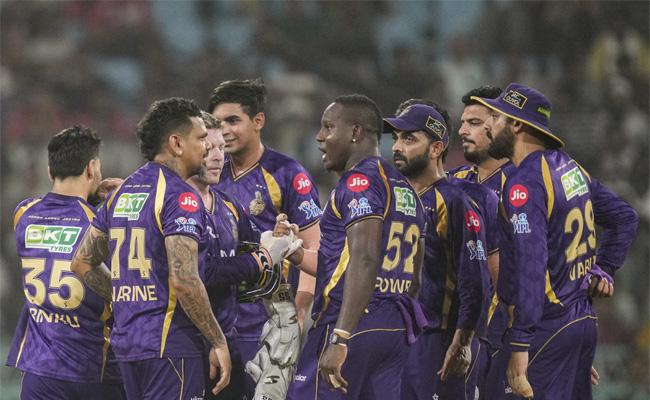
Lucknow (PTI): Kolkata Knight Riders edged Lucknow Super Giants via Super Overs in a battle between two bottom-placed teams in the IPL, here on Sunday.
Chasing a modest 156, LSG suffered a batting collapse and managed to tie the contest and take it to Super Over with No. 9 Mohammed Shami striking a last-ball six against a wayward Kartik Tyagi, who leaked 16 runs in the final over.
But Sunil Narine bowled a stunning Super Over conceding just one run and taking two wickets to give KKR an easy target.
Rinku Singh then finished the chase with a boundary off first ball from Prince Yadav.
Earlier the KKR were in deep trouble with 93/7 in 15 overs but Rinku smashed a sensational 83 not out from 51 balls including four sixes in a row in the final over to lift them to 155/7.
Cameron Green (34) was the only other batter to reach double-digit scores as KKR suffered a familiar batting meltdown with Mohsin taking his maiden fifer.
In reply, LSG continued their dismal show with the bat to succumb to their fifth loss in a row.
Brief Scores:
Kolkata Knight Riders 155/7; 20 overs (Rinku Singh 83 not out, Cameron Green 34; Mohsin Khan 5/23). Lucknow Super Giants 155/8; 20 overs (Rishabh Pant 42). KKR won via Super Over.