Day 7: Vertical hole, new road planned to reach 41 workers trapped in collapsed Uttarkashi tunnel
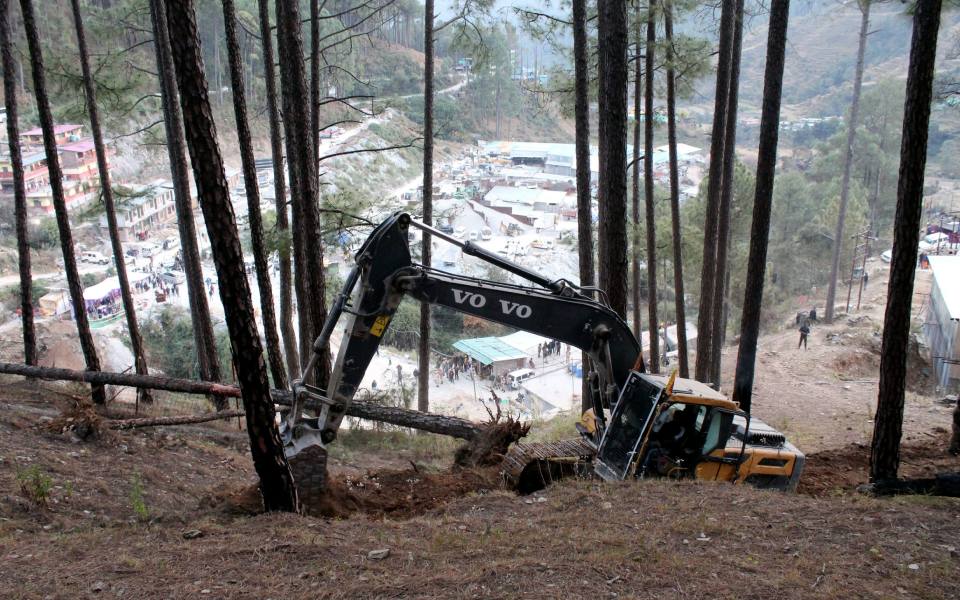
Uttarkashi (Uttarakhand), Nov 18: With time running out, officials on Saturday began preparations to drill a vertical hole from the top of the hill under which 41 workers have been trapped inside a collapsed tunnel for seven days with limited food and communication.
As the sun slipped behind the mountains and night fell on another day gone by, officials held out the hope that the Border Roads Organisations (BRO) road to create an alternative route to the under-construction Silkyara tunnel would be ready by Sunday afternoon and the rescue mission that had been stalled since Friday could finally resume.
"We are trying to make a vertical track from the top of the tunnel. A point at the top of the tunnel has been identified from where drilling will start soon.
"This track is about 1,000-1,100 metres long. Simultaneously, we are also conducting a survey to know how much time it will take. As per our calculations, the track should be ready by tomorrow afternoon," BRO's Major Naman Narula told reporters.
A high-performance drilling machine was brought here from Indore on Saturday to pierce through the rubble of the collapsed tunnel on the Char Dham route and was being assembled before it is deployed to resume drilling, officials at the site said.
The Silkyara tunnel, about 30 km from the district headquarters of Uttarkashi and a seven-hour drive from the Uttarakhand capital Dehradun, is part of the ambitious Char Dham all-weather road project of the central government. It is being constructed under the National Highways and Infrastructure Development Corporation Limited (NHIDCL).
The tunnel collapsed around 5.30 am last Sunday. One week on, as the hours ticked by, the desperation of families waiting outside mounted. That rescue operations had been suspended since Friday afternoon when a US-made auger machine deployed to drill and push in pipes through the rubble to prepare an escape passage for the workers developed a snag exacerbated the anxiety.
By the time the drilling was halted, the auger machine had drilled up to 24 metres through the rubble spread over a 60-metre area inside the tunnel.
While families back home and those gathered at the mouth of the tunnel counted the hours, officials waged their own frantic battle against time as they weighed the various options available to them.
"One option is to make a four-six inch long hole which will help in providing essential items to the trapped people. If the conditions are favourable, a three-feet diameter hole will also be made so people will be able to come out. This road is about 900 metres long. Hopefully, the road will be ready by tomorrow morning," said RS Rao of the Directorate General Border Roads (DGBR).
Four machines have been currently put to work right now and four more are arriving, he added.
A team of officials from the Prime Minister's Office (PMO) and experts at the site also decided to work simultaneously on five plans to rescue the 41 men.
"The experts were one in their view that rather than working on just one plan we should work at the same time on five plans to reach the trapped workers as early as possible," Bhaskar Khulbe, former advisor to the prime minister and now OSD in the Uttarakhand government, said at a press conference in Silkyara.
The five plans include drilling from one end to the other on both Silkyara and Barkot sides, vertical drilling from the top of the tunnel and perpendicular drilling, he said.
"Efforts to build a platform to start vertical drilling through the top of the tunnel have begun already," he said.
The ONGC, RVNL, Satluj Jal Vikas Nigam Ltd, the BRO and the state PWD besides the NHIDCL will be the agencies carrying out different responsibilities to establish early access to the trapped workers, he said.
Khulbe is part of a team that includes Secretary of the Ministry of Road Transport and Highways Mahmood Ahmed, Deputy Secretary, PMO, Mangesh Ghildiyal, geologist Varun Adhikari and engineering expert Armando Capellan.
Asked about the rescue work being suspended at the tunnel for so long, Khulbe said it was time to look ahead. "We should think of what we can do now. Time is not appropriate to discuss what happened in the past."
Chief Minister Pushkar Singh Dhami held a meeting with officials at his official residence in Dehradun for an update on the crisis. He expressed the hope that the state-of-the-art machines manufactured in the country and abroad will be successful in rescuing the labourers.
"Under the guidance of the PMO, the state government is busy making all efforts to evacuate labourers trapped inside the tunnel are rescued. We hope we will soon succeed in the mission," he said.
"The government stands with the families of workers who are trapped. Their safe and timely evacuation is our priority," Dhami said.
Notwithstanding government assurances, it was an agonising wait for the families keeping vigil outside, despairing as the hours and days rolled on inexorably.
Their voices are getting weaker, their strength seemingly dimming, family members said after speaking to some of the workers.
Among those waiting was the family of Gabbar Singh Negi. His two brothers, Maharaj Singh and Prem Singh, and son Akash Singh have been camping outside, desperate for any sliver of news that comes their way. The family belongs to Kotdwar in the state.
Maharaj said he spoke to Gabbar through a pipe used for supplying oxygen and his voice sounded very feeble.
"I could not talk to my brother. His voice sounded very weak. He was hardly audible. Rescue work in the tunnel has come to a halt. Those trapped are also short of food and water. We have come to the end of our patience. What more can I say?" Maharaj told PTI.
Their brother Prem said the trapped workers are beginning to lose hope.
"Gabbar said he is alright but his voice is feebler now. They are getting light edibles like chana, kheer and badam. How long can they sustain on this?" Prem asked.
"India has gone digital. They talk about the success of India's Chandrayan mission but they cannot evacuate our people trapped for around a week."
The health condition of the men is worsening and his family back home getting increasingly panicky, added Haridwar Sharma, whose younger brother Sushil is among those inside the tunnel.
"All we are getting are assurances from authorities that the trapped labourers will be rescued. It has been nearly a week," Sharma, who is from Bihar's Rohtas district, told PTI.
"There is no work going on inside the tunnel. Neither the company nor the government is doing anything," he added tearfully.
Rescue operations stalled around 2.45 pm on Friday. During the positioning of a fifth pipe, a big cracking sound was heard in the tunnel upon which rescue operation was suspended immediately, a statement from the NHIDCL tasked with the construction of the tunnel said in a statement on Friday night.
The sound created panic among the rescue team. An expert involved with the project warned about the possibility of further collapse in the vicinity. Subsequently, the pipe pushing activity was stopped.
The number of workers inside has been revised from 40 to 41. The NHIDCL, which is constructing the tunnel through Navayuga Engineering Company Ltd, came to know about this discrepancy on Friday.
Deepak Kumar from Muzaffarpur district in Bihar was identified as the 41st person to be stuck in the tunnel.
Let the Truth be known. If you read VB and like VB, please be a VB Supporter and Help us deliver the Truth to one and all.
Three private doctors arrested in illegal scanning case involving 31 minor pregnant girls in KR Pet
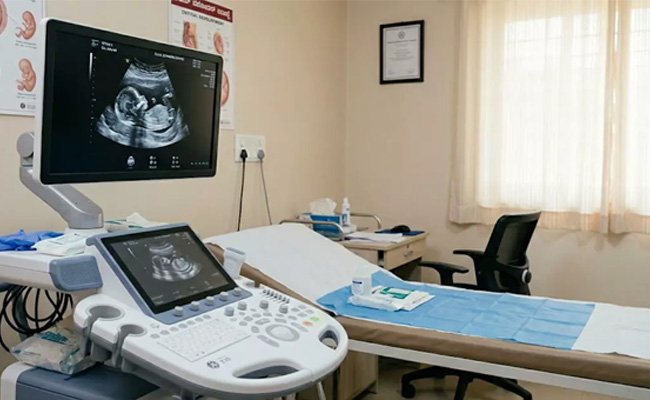
Mandya: Police on Tuesday arrested three private doctors in connection with a case involving alleged illegal scanning of 31 minor pregnant girls at a private diagnostic centre in KR Pet. The accused were later remanded to judicial custody.
The arrested doctors have been identified as Dr. Divyachetan of Chetana Maternity Centre, Dr. Harshit of Navi Diagnostic Centre, and Dr. Harish of Kushal Diagnostic Centre.
Police said Priyanka, a gynaecologist attached to a government hospital, is absconding and efforts are under way to trace her.
The case came to light after Karnataka Lokayukta Police recently conducted raids, during which illegal sex determination tests on minor pregnant girls were allegedly detected at two diagnostic centres in KR Pet town.
Following the raids, District Health and Family Welfare Officer Dr. Mohan, Deputy Director of the Women and Child Development Department P.S. Asha, and District Child Protection Officer Rashmi inspected several diagnostic centres and filed cases at KR Pet Town and Rural police stations.
According to the allegations, Navi Diagnostic Centre conducted scans on 24 minor pregnant girls, including 19 cases in 2024 and five in 2025. Kushal Diagnostic Centre is accused of conducting scans on seven minor pregnant girls.
Meanwhile, Deputy Commissioner Dr. Kumar has directed taluk vigilance committees to inspect all 63 ultrasound scanning centres in the district and submit reports within 10 days.
Officials said the Tahsildar of each taluk has been appointed chairperson of the respective committee.