Death of 14 kids in MP: Doctor held, ‘toxic’ cough syrup maker booked; SIT formed
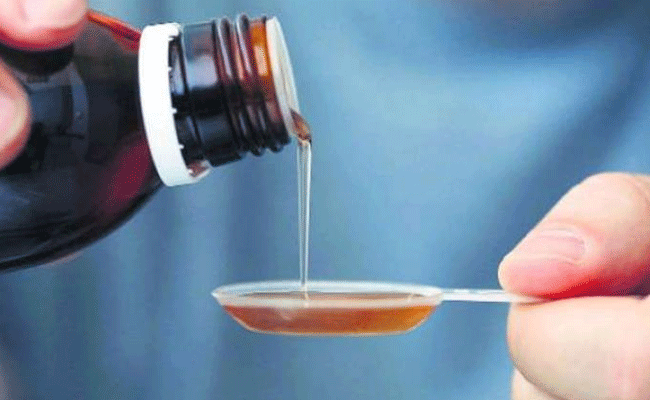
Chhindwara (MP) (PTI): The Madhya Pradesh police have formed a special investigation team (SIT) to probe the death of 14 children in Chhindwara due to suspected renal failure, linked to the consumption of a “toxic” cough syrup, officials said on Sunday.
A doctor has been arrested for alleged negligence in connection with the child deaths, while a case has been registered against the maker of the medicine, Coldrif cough syrup, they said.
The body of the last victim was exhumed during the day for post-mortem, even as Chhindwara Additional Collector Dhirendra Singh said that ex gratia of Rs 4 lakh each, announced by Chief Minister Mohan Yadav, has been transferred to the bank accounts of the victims’ families.
Eight children are being treated in Nagpur -- four in a government hospital, one at AIIMS and three in private facilities, he said. Meanwhile, two children in MP's Betul district have died allegedly after taking Coldrif cough syrup, health officials said on Sunday.
Upset by the arrest of Dr Praveen Soni, who was also practising at a private clinic and had prescribed the syrup even after its adverse effects on children for nearly a month, his colleagues have threatened to strike work from Monday.
The opposition Congress has also announced a protest from Monday to highlight the “BJP government’s failure” in handling the crisis and seek more financial relief for the families of the children.
The MP government has banned the sale of Coldrif cough syrup, manufactured by Sresan Pharmaceutical, Kancheepuram (Tamil Nadu), with officials saying the drug samples have been found to contain a highly toxic substance.
Of the children who died, 11 were from Parasia sub-division, two from Chhindwara city and one from Chaurai tehsil.
A 12-member SIT, led by Parasia Sub Divisional Officer of Police Jitendra Singh Jat, has been set up, and it will visit the pharma company in Tamil Nadu, said additional collector Singh.
Meanwhile, the body of two-year-old Yogita Thakre, the last victim, was exhumed for post-mortem as demanded by her family, Singh said.
He said that samples of 1,102 children have been collected so far. A total of 5,657 tests have been conducted, of which the results of 4,868 have been received.
The government on Sunday also suspended Dr Soni from service, a day after CM Yadav had said on Saturday that strict action would be taken against those responsible.
Chhindwara unit president of the Indian Medical Association, Kalpana Shukla, has said that if Dr Soni is not released, all doctors will launch an indefinite strike from Monday.
The Congress said in a statement that its workers will hold a sit-in fast at Fawara Chowk in the district headquarters on October 6 to protest against the government’s “apathy”, alleged delay in action over the rising deaths of children, and “inadequate” compensation to victims’ families.
Dr Soni and the company have been charged under sections 105 (culpable homicide not amounting to murder) and 276 (adulteration of drugs) of the Bharatiya Nyaya Sanhita. They have also been booked under section 27A of the Drugs and Cosmetics Act, which prescribes over 10 years’ imprisonment or a life term, according to Superintendent of Police Ajay Pandey.
The Tamil Nadu drug control authorities, in their report of October 2, declared the Coldrif syrup sample (Batch No SR-13; Mfg: May 2025; Exp: April 2027) manufactured by Sresan Pharmaceuticals, Kancheepuram, as adulterated because it contained diethylene glycol (48.6% w/v), a poisonous substance "which may render the contents injurious to health".
Following the report, the Madhya Pradesh Food and Drug Administration issued instructions to stop further sale and distribution of Coldrif statewide and immediately seize any available stock for investigation under the Drugs and Cosmetics Act, 1940. It also ordered that other products manufactured by Sresan Pharmaceuticals be removed from sale pending testing.
The Tamil Nadu government on Friday banned Coldrif following reports of deaths in Madhya Pradesh and at least three similar fatalities in Rajasthan due to suspected kidney infections.
Samples from the affected children have been sent to the National Institute of Virology in Pune, while further tests on the syrup's adulteration and contamination are underway.
The Central Drugs Standard Control Organisation (CDSCO) has also initiated risk-based inspections at the manufacturing units of 19 drugs, including cough syrups and antibiotics, across six states, the Union health ministry said on Saturday.
Let the Truth be known. If you read VB and like VB, please be a VB Supporter and Help us deliver the Truth to one and all.
KKR defeat LSG via Super Over
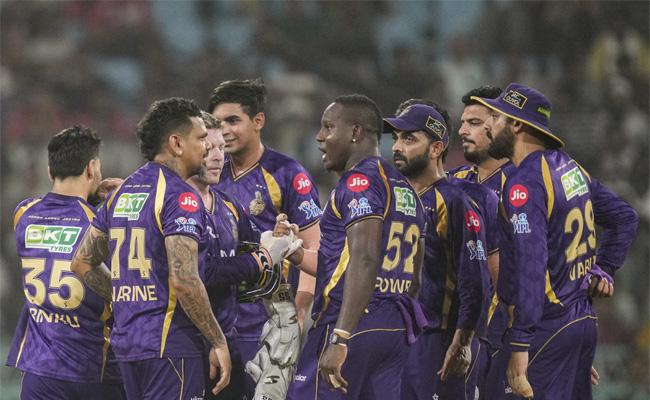
Lucknow (PTI): Kolkata Knight Riders edged Lucknow Super Giants via Super Overs in a battle between two bottom-placed teams in the IPL, here on Sunday.
Chasing a modest 156, LSG suffered a batting collapse and managed to tie the contest and take it to Super Over with No. 9 Mohammed Shami striking a last-ball six against a wayward Kartik Tyagi, who leaked 16 runs in the final over.
But Sunil Narine bowled a stunning Super Over conceding just one run and taking two wickets to give KKR an easy target.
Rinku Singh then finished the chase with a boundary off first ball from Prince Yadav.
Earlier the KKR were in deep trouble with 93/7 in 15 overs but Rinku smashed a sensational 83 not out from 51 balls including four sixes in a row in the final over to lift them to 155/7.
Cameron Green (34) was the only other batter to reach double-digit scores as KKR suffered a familiar batting meltdown with Mohsin taking his maiden fifer.
In reply, LSG continued their dismal show with the bat to succumb to their fifth loss in a row.
Brief Scores:
Kolkata Knight Riders 155/7; 20 overs (Rinku Singh 83 not out, Cameron Green 34; Mohsin Khan 5/23). Lucknow Super Giants 155/8; 20 overs (Rishabh Pant 42). KKR won via Super Over.