Delhi court extends interim bail to Robert Vadra till March 2, ED alleges non-cooperation
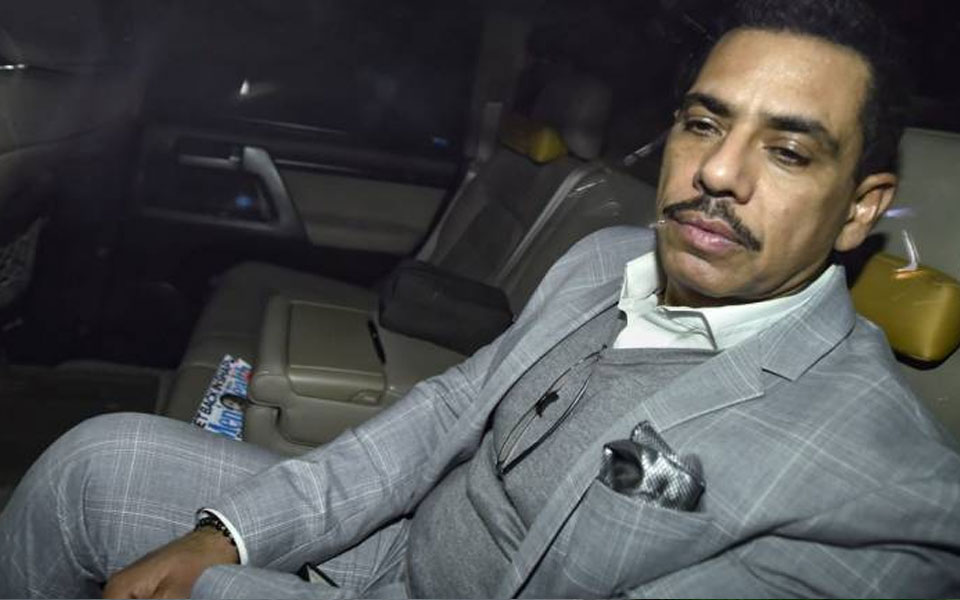
New Delhi : A Delhi court Saturday extended the interim bail granted to Robert Vadra till March 2 in a money laundering case lodged by the Enforcement Directorate (ED) even as the agency claimed that he was not cooperating in the matter.
Special judge Arvind Kumar granted the relief to Vadra, the brother-in-law of Congress president Rahul Gandhi.
The court also extended the protection from arrest granted to his close aide and a co-accused in the case, Manoj Arora, till the next date of hearing i.e. March 2.
The ED told the court that it needed to question Vadra in the case and opposed his anticipatory bail plea, saying that he was not cooperating in the case.
"Vadra is not cooperating and giving evasive replies," Special Public Prosecutor D P Singh and advocate Nitesh Rana, appearing for the ED, said.
The businessman, represented through senior advocate KTS Tulsi, however, denied the charge and said he was ready to come for questioning as and when called.
Singh told the court Vadra is accompanied by a 'baraat' (procession) wherever he goes, whether to the agency's office or to the court.
"There are some people who always come with a 'baraat', Vadra is one of them," Singh, said, adding that by 'baraat', he was referring to the media.
The lawyer alleged that Vadra was using social media, including Facebook, for writing about the case and highlighting the matter.
Vadra had filed an anticipatory bail application in the case linked to allegations of money laundering in the purchase of a London-based property at 12, Bryanston Square worth GBP 1.9 million. The property is allegedly owned by him.
The agency had earlier said it has received information about various new properties in London which belongs to Vadra, including two houses of five and four million pounds, each, six other flats and more properties.
In his anticipatory bail plea, Vadra had said he was being subjected to "unwarranted, unjustified and malicious criminal prosecution which on the face of it is completely politically motivated and is being carried out for reasons other than those prescribed under law".
The plea had said Vadra's office was raided by ED on December 7, 2018 and therefore, he seriously apprehends that his liberty may be curtailed by the investigating agency.
"The petitioner (Vadra) is being subjected to a farce criminal prosecution which actually is beset with nothing else except political vendetta and most unfortunately the respondent (ED) being the law enforcement agency is a party to the unethical and illegal exercise.
"It is stated that the petitioner's (Vadra's) firm through its authorised representative Manoj Arora has already joined investigation with the ED conducting investigation into the affairs of the firm in Rajasthan with their offices at Jaipur on many occasions and has supplied all the relevant documents to the satisfaction of the officials of the ED," the plea had said.
Arora, an employee of Vadra's Skylight Hospitality LLP, was a key person in the case and he was aware of the latter's overseas undeclared assets and was instrumental in arranging funds, the ED had alleged.
Vadra had alleged that he is being "hounded and harassed" to subserve political ends.
"It is stated the the petitioner has highest regard for the due process of law and is always willing to cooperate with the investigation in the highly charged political atmosphere and political contours of the present investigation, he seriously apprehends arrest by the investigating authorities and in such circumstances, the petitioner by means of the present petition is also praying that while he is willing to join investigation with the ED authorities," his plea read.
Arora had alleged before the court that the case was foisted on him by the NDA government out of "political vendetta".
However, the ED had refuted the allegations, asking that "should no authority investigate any political bigwig because that will be called a political vendetta?"
The agency had told the court that it lodged the money laundering case against Arora after his role came up during the probe of another case by the Income Tax Department under the newly enacted Black Money Act and tax law against absconding arms dealer Sanjay Bhandari.
Let the Truth be known. If you read VB and like VB, please be a VB Supporter and Help us deliver the Truth to one and all.
US warns shipping firms they could face sanctions over paying Iranian tolls in Strait of Hormuz
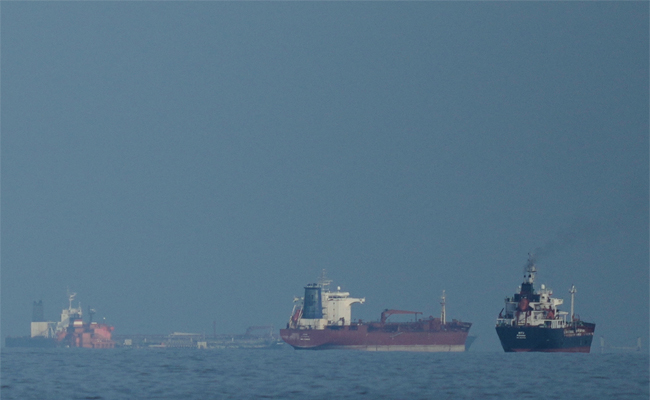
Dubai (AP): The United States is warning shipping companies that they could face sanctions for making payments to Iran to safely pass through the Strait of Hormuz.
The alert posted Friday by the US Office of Foreign Assets Control adds another layer of pressure in the standoff between the US and Iran over control of the Strait of Hormuz.
About a fifth of the world's trade in oil and natural gas typically passes through the strait at the mouth of the Persian Gulf in peacetime.
Iran effectively closed the strait to normal traffic by attacking and threatening to attack ships after the US and Israel launched a war on Feb. 28. It later began offering some ships safe passage by detouring them through alternate routes closer to its shoreline, charging fees at times for the service.
That "tollbooth” effort is the focus of the US sanctions warning.
The payment demands could include transfers not only in cash but also “digital assets, offsets, informal swaps, or other in-kind payments,” including chartibale donations and payments at Iranian embassies, OFAC said.
“OFAC is issuing this alert to warn US and non-US persons about the sanctions risks of making these payments to, or soliciting guarantees from, the Iranian regime for safe passage. These risks exist regardless of payment method,” it said.
ALSO READ: Student preparing for NEET dies after falling from hostel's fourth floor in Kota
The US responded to Iran's closure of the strait with a naval blockade of its own on April 13, preventing any Iranian tankers from leaving and depriving Iran of oil revenue it needs to shore up its ailing economy.
The US Central Command said 45 commercial ships have been told to turn around since the blockade began.
Trump rejects Iranian proposal
--------------------------------------
The warning came as US President Donald Trump swiftly rejected Iran's latest proposal to end the war between the countries.
“They want to make a deal, I'm not satisfied with it, so we'll see what happens,” Trump said Friday at the White House. He didn't elaborate on what he saw as its shortcomings but expressed frustration with the Iranian leadership.
“It's a very disjointed leadership,” Trump said. “They all want to make a deal, but they're all messed up.”
Iran's state-run IRNA news agency reported Iran handed over its plan to mediators in Pakistan on Thursday night.
The shaky three-week ceasefire between the US and Iran appears to be holding, though both countries have traded accusations of violations. The standoff is increasingly putting pressure on the global economy, driving up prices and leading to shortages of fuel and other products tied to the oil industry.
Negotiations continued by phone after Trump called off his envoys' trip to Pakistan last week, the president said. Trump this week floated a new plan to reopen the critical passageway used by America's Gulf allies to export their oil and gas.
Iranian Foreign Minister Abbas Araghchi has briefed many of his regional counterparts on the country's initiatives to end the ear, according to his social media. He also held talks Friday with European Union foreign policy chief Kaja Kallas, who is in contact with the EU's Gulf partners.
China's UN envoy urges Iran to lift restrictions
------------------------------------------------------
Fu Cong, the Chinese ambassdor to the United Nations, said Friday that maintaining the ceasefire is “the most urgent issue" as well as bringing together the sides to resume good faith negotiations “to make sure that the ground is laid for reopening of Hormuz.”
Foreign Minister Wang Yi “has been on the phone almost constantly” with representatives from all sides, Fu said, adding that China supports Pakistan's efforts to mediate between the parties.
Fu stressed the root cause of the tremendous suffering in Iran and neighboring countries and the growing turmoil in the global economy, especially in developing countries, “is the illegitimate war by the US and Israel.