Delhi court quashes order in Adani defamation case, says it is 'not sustainable'
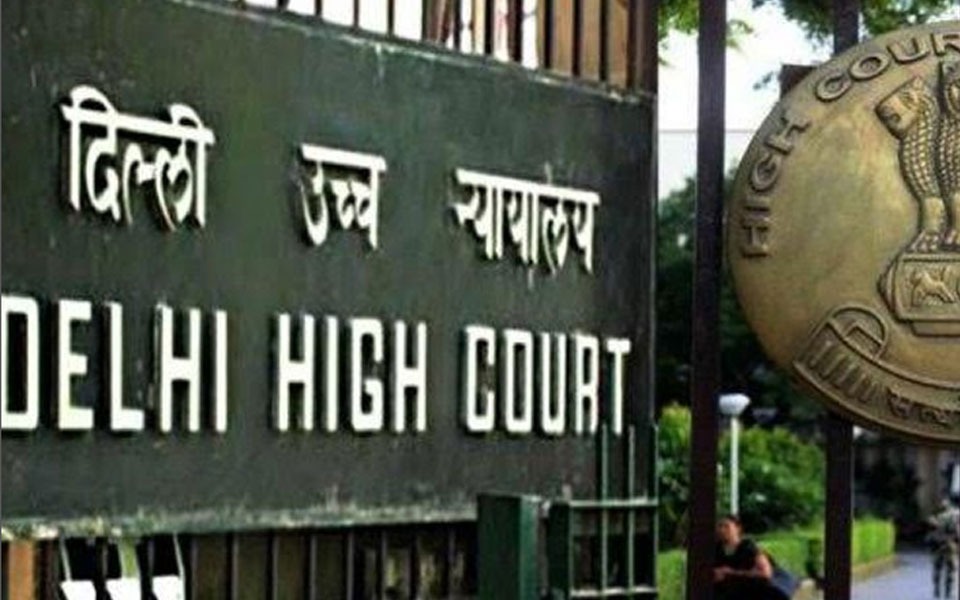
New Delhi (PTI): A Delhi court has set aside an order asking four journalists to take down alleged defamatory content against Adani Enterprises Limited (AEL), saying the effect of removal of the articles by an ad interim ex parte order was "sweeping" and it had the "effect of decreeing the suit itself without a trial".
District Judge Ashish Aggarwal said the civil court order was "not sustainable" and asked it to pass a fresh order after hearing the appellants and AEL.
The judge was hearing a plea filed by journalists Ravi Nair, Abir Dasgupta, Ayaskanta Das and Ayush Joshi against the civil court's September 6 order restraining them from publishing or circulating alleged unverified and defamatory content against AEL.
Advocate Vrinda Grover appeared for them.
In its order dated September 18 and made available on Friday morning, the court said, "On the basis of the arguments advanced before this court, I find that the case is fit for stay of the impugned order dated September 6 since extensive directions have been passed by the trial court without hearing the appellants."
"Unless the appellants are heard, it is not open to the court to infer that the appellants have made unverified, inaccurate and irresponsible statements.
"Until this exercise is undertaken and a determination is made, at least prima facie, that the articles are incorrect, defamatory and unverified, the articles cannot be shunted out from the public domain, lest this will fall foul of Article 19 (1) (a) of the Constitution and will be a serious violation of the freedom of speech and expression," it said.
The court said by the civil judge's order, AEL was given the liberty to expand the scope of the suit by bringing within its fold articles that could be written in future by other persons, even though there was no finding yet of them being libellous.
"The plaintiff (AEL) is not asked to amend the plaint so as to challenge the said articles that might be written in the future. The plaintiff has been empowered to directly obtain removal of those articles on the basis of his own opinion that they are unfavourable," it said.
The court, however, underlined that only when the author of those articles defied any direction and was hauled up for contempt, that there could possibly be a judicial determination of whether the article was indeed defamatory.
Flagging the earlier order, it said, "Such directions expose authors to contempt proceedings without prior adjudication of whether their statements are defamatory, thereby depriving them of an opportunity to defend themselves."
"It has also been left open to the intermediaries to themselves determine whether the articles pointed out by the plaintiff are indeed defamatory and such directions would keep a sword hanging over the fate of every person who may make a statement which is critical of, and considered unflattering by, the plaintiff and the said author may remain in a constant perilous state, thereby being dealt a chilling effect," it added.
Before passing such "far-reaching directions", the judge said, the civil court must have given a prior opportunity to the defendants to put forth their stance, more particularly when the articles and posts had been in the public domain for about a year.
"Thus, in my opinion, the court of the senior Civil Judge ought to have granted an opportunity of hearing to the defendants before passing an order which had the effect of declaring their statements to be irresponsible and defamatory," he said.
The judge underlined that the effect of removal of the articles by an ad interim ex parte order was "sweeping" and had the "effect of decreeing the suit itself without a trial" as the articles could not be restored and the damage cannot be undone if later it was found that the articles were actually not defamatory.
He said the order was "not sustainable" as the defendants were not heard.
The judge said that some provisions of the Civil Procedure Code (CPC) were overlooked and that according to law, while passing an ex parte injunction order, an endeavour must be made to finally decide the application within 30 days.
"While passing the impugned order dated September 6, the senior civil judge posted the case for consideration on October 9. By fixing the next date beyond the period of 30 days, the trial court disempowered itself from deciding the application for interim injunction within the prescribed period," he said.
"In view of the above, I allow the appeal and set aside the impugned order so far as the appellants are concerned," he added.
The court clarified that there was no finding on the merits of the case, or on the point of whether the articles and posts in question were indeed defamatory.
"All contentions of the parties are left open. It is directed that fresh orders be passed by the court of the senior civil judge on the application -- after hearing the appellants (before this court) and also the respondent 1 (AEL). The court may decide the application uninfluenced by any observation made by this court," it said, disposing of the appeal.
Acting on AEL's defamation complaint, the civil judge directed 10 defendants, including the four journalists, to take down the contentious material, like articles and social media posts, already published on various platforms, including websites, within a stipulated period.
The defendants in the case are Paranjoy Guha Thakurta, Ravi Nair, Abir Dasgupta, Ayaskanta Das, Ayush Joshi, Bob Brown Foundation, Dreamscape Network International Private Limited, Getup Limited, Domain Directors Private Limited trading as Instra and John Doe parties.
Let the Truth be known. If you read VB and like VB, please be a VB Supporter and Help us deliver the Truth to one and all.
PM unveils development projects worth over Rs 4,000 crore in Sikkim
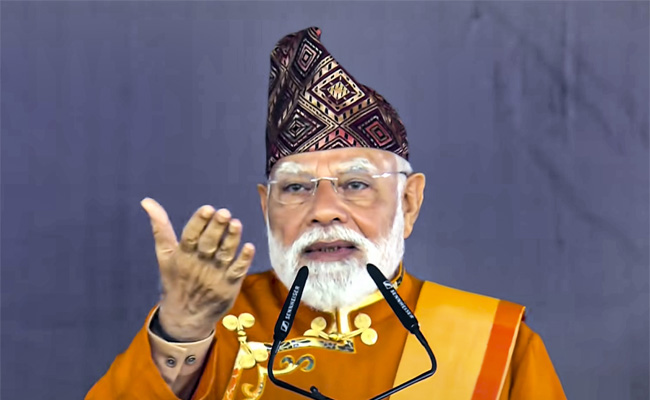
Gangtok (PTI): Prime Minister Narendra Modi on Tuesday launched development projects worth over Rs 4,000 crore in Sikkim while attending the closing ceremony of the state's 50 years of statehood celebrations.
The projects span a wide range of sectors such as infrastructure, connectivity, healthcare, education, power, urban development, environment, tourism and agriculture, the officials said.
These projects are aimed at accelerating holistic and inclusive development in Sikkim.
The PM's visit marks an important milestone in the golden jubilee year of Sikkim's statehood and reflects the government's "continued commitment to the rapid and sustainable development of the Himalayan state", the officials said.