Delhi govt accepts DTC workers' demands, promises salary hike and electric bus training

New Delhi (PTI): Delhi Chief Minister Atishi announced on Monday that all Delhi Transport Corporation (DTC) drivers will be trained to operate electric buses as part of the city’s plan to transition its entire bus fleet to electric vehicles.
She also assured that senior drivers, particularly assistant ticket inspectors, would be given priority for employment in the new electric bus fleet.
Addressing a press conference, Atishi stated that the Delhi government had agreed to several key demands made by DTC workers, who had recently gone on strike to protest their working conditions.
"DTC bus services play a crucial role in Delhi’s transportation system. There are 4,500 contractual drivers and 17,850 contractual conductors in DTC. Recently, they went on strike. We listened to their demands, which are absolutely justified. I want to thank them for ending the strike and responding to our appeal after two days of protests. We are working on addressing their demands," she said.
One of the primary issues raised by the workers was the transfer of female DTC employees stationed at the Sarojini Nagar Pink Bus Depot.
Atishi said that the government had resolved this issue by transferring the workers back to their original depots, addressing a major point of contention that led to the strike.
Another significant concern was the workers' request for postings closer to their homes. Atishi explained that the Delhi government had introduced a new policy aimed at rationalising duty stations for drivers and conductors.
"An online form will be created so that all drivers can provide their details, and an online list will be released to make the process more transparent," she said. The new policy aims to ensure that workers are assigned to depots nearer to their homes, she added.
In response to the workers' demand for improved compensation, the Delhi government has given in-principle approval for a proposal to increase the salaries of contractual drivers and conductors, the CM said.
This proposal will include Dearness Allowance (DA) and grade pay, which were previously not part of their salary, she explained.
"Contractual drivers currently receive a daily wage of Rs 843, totaling Rs 21,918 per month. They did not receive DA or grade pay. They have requested a consolidated amount instead of daily wages,” she added.
The government has approved the proposal, and within the next one to two months, workers will begin receiving salaries according to their grade pay, Atishi said.
"As per the proposal, contractual conductors will see their salary rise to Rs 29,250 from Rs 21,900, and contractual drivers will receive Rs 32,918, up from Rs 21,918," Atishi stated.
The cost of this salary increase will be Rs 222 crore, which will be borne by the Delhi government, she said.
The government is also in the process of finalising a proposal to make these contractual workers permanent in the near future, Atishi added.
Let the Truth be known. If you read VB and like VB, please be a VB Supporter and Help us deliver the Truth to one and all.
No need for guv: DMK leader Kanimozhi
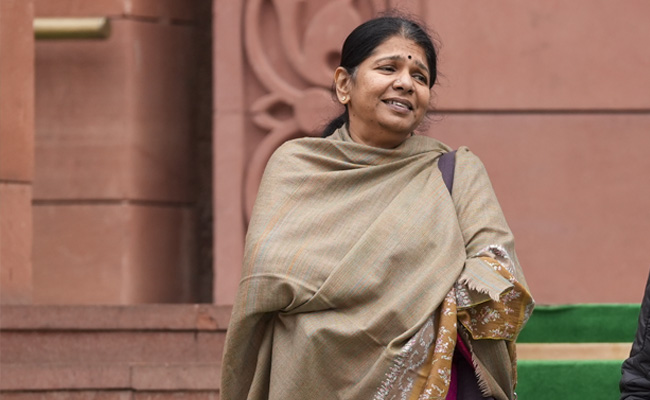
Chennai (PTI): Senior DMK leader Kanimozhi Karunanidhi on Friday reiterated her party’s opposition to the office of the governor amid uncertainty over government formation in Tamil Nadu after a fractured election mandate.
Speaking to PTI Videos, Kanimozhi emphasised that the DMK’s demand for the abolition of the governor’s post remained unchanged, especially as questions arise over constitutional propriety during the current political transition.
"Our position that we do not need a governor at all is something the DMK has never changed at any point in time," she said.
When asked about the governor’s actions following the election results—particularly the delay in inviting the leading party to form the government—Kanimozhi pointed to what she described as the "inherent friction" between the office of the governor and the political interests of the state.
She said the current situation "raises a lot of questions" and requires introspection regarding constitutional procedures.
Kanimozhi described the election results as lacking a "clear mandate", which she identified as the primary reason for the prevailing political uncertainty in the state.
"What the people decide is supreme," she said, adding that while the mandate was not decisive, it must be respected.
The Thoothukudi MP attributed the ongoing delays and "many confusions" to the absence of a decisive majority for any single party.
She firmly dismissed rumours about the DMK potentially supporting the AIADMK from outside to help stabilise the government.
She described such reports as mere "speculation" and "rumours".
"We can’t be responding to every rumour," she said, declining to comment on the AIADMK’s claims regarding its numbers to form the government.
The political situation in Tamil Nadu remains fluid as stakeholders await the governor’s next constitutional step in an Assembly where no party has secured a clear majority.
The DMK and AIADMK—both of which suffered significant losses to the TVK—are reportedly exploring tactical manoeuvres to navigate the hung Assembly.
The TVK, with 108 seats and the support of Congress’s five MLAs, is still short of the majority mark. The DMK and AIADMK secured 59 and 47 seats, respectively.