Delhi High Court rejects plea seeking formula of petrol pricing
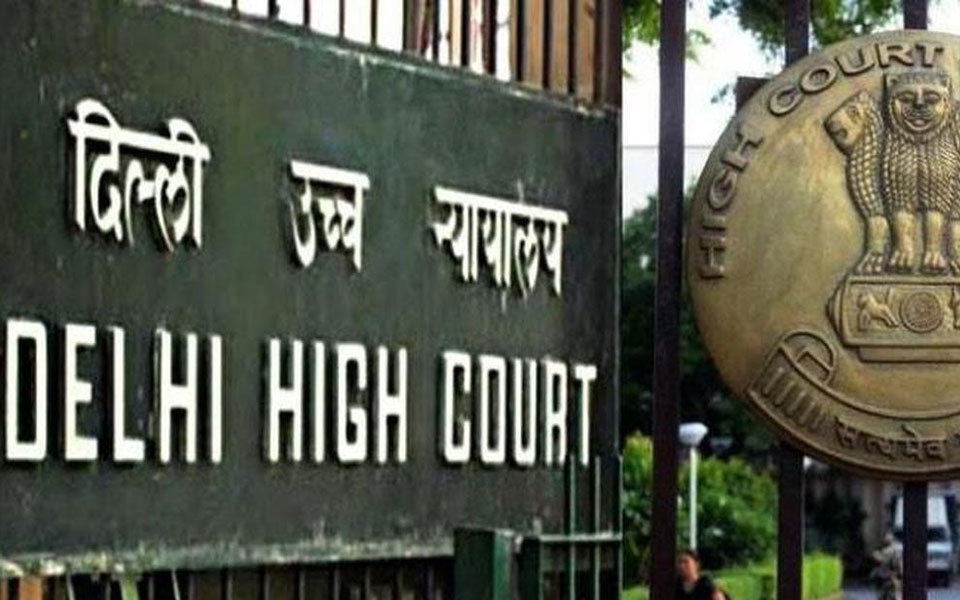
New Delhi, Sep 19: The Delhi High Court on Wednesday dismissed an application seeking direction to the Centre to disclose the formula on the basis of which daily prices of petroleum and diesel are fixed.
A bench of Chief Justice Rajendra Menon and Justice V. Kameswar Rao refused to interfere with the government policy on fixing petrol prices.
The court was hearing an application, filed by Delhi-based designer Pooja Mahajan. Her advocate A. Maitri sought direction to call the records from the government, including oil companies to disclose the formula and furnish details on the basis of which the daily fuel prices are fixed.
The petitioner said that people were suffering irreparably because these prices were being enhanced on presumption.
Maitri said that the oil manufacturing companies were selling their old stock of petrol and diesel at enhanced prices while admittedly the said stock was purchased at a cheaper rate.
As per official claims, petrol and diesel prices are fixed on account of increase in international prices. Admittedly, international price of crude oil is fixed on barrel basis, the plea said.
The application was filed on the pending public interest litigation by the petitioner in which she has sought direction to the central government to fix a "fair price" of petrol and diesel as it is a policy matter which involved larger economic issues.
The court has asked the government to consider an earlier representation pending before it on price rise of petrol and diesel.
Mahajan had filed a similar plea in July but the high court had then directed the Centre to treat the PIL as a representation. The petitioner has sought a directive to the Centre to fix a "fair price" of petrol and diesel in line with the Essential Commodities Act.
Let the Truth be known. If you read VB and like VB, please be a VB Supporter and Help us deliver the Truth to one and all.
Trump pauses Project Freedom, claims great progress for final agreement with Iran
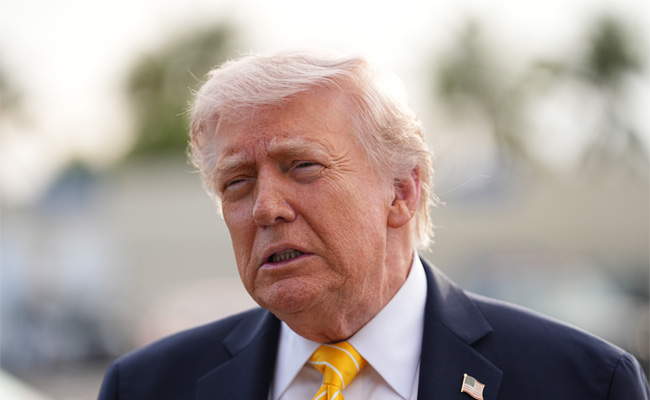
Washington (PTI): President Donald Trump has suspended “Project Freedom,” to escort ships through the Strait of Hormuz, claiming progress in negotiations with Iran toward an agreement to end the war.
In a post on Truth Social on Tuesday, Trump said, “Great progress has been made toward a complete and final agreement with representatives of Iran.”
“Based on the request of Pakistan and other Countries, the tremendous Military Success that we have had during the Campaign against the Country of Iran and, additionally, the fact that Great Progress has been made toward a Complete and Final Agreement with Representatives of Iran, we have mutually agreed that, while the Blockade will remain in full force and effect, Project Freedom (The Movement of Ships through the Strait of Hormuz) will be paused for a short period of time to see whether or not the Agreement can be finalized and signed," Trump said.
Project Freedom was launched on Monday to escort ships, stranded due to the closure of the Strait of Hormuz, out to safety. Trump had announced the operation on Sunday and the US Central Command began implementing it the next day.
However, the Project led to friction in the vicinity of the narrow seaway, a key route for transporting one-fifth of the global oil supplies, with the UAE claiming that its ships were attacked by Iran. The US also claimed to have destroyed several Iranian small boats.
Trump’s statement on Truth Social came hours after US Secretary of State Marco Rubio announced that Operation Epic Fury, launched on February 28, had concluded as its objectives have been achieved.
"Operation Epic Fury is concluded. We achieved the objectives of that operation. We're not cheering for an additional situation to occur. We would prefer the path of peace. What @POTUS would prefer is a deal... that is, so far, not the route that Iran has chosen," Rubio told a press conference at the White House on Tuesday.
On Project Freedom, Rubio said the goal was to rescue almost 23,000 civilians from 87 different countries who were trapped inside the Persian Gulf and left for dead by the Iranian regime.
"This is not an offensive operation. This is a defensive operation, and what that means is very simple: there’s no shooting unless we're shot at first. We’re not attacking them, but if they're attacking us or they’re attacking a ship, you need to respond to that," Rubio said.