DGCA issues guidelines to prevent bird hits at airports

New Delhi (PTI) To check incidents of collision of planes with birds and other animals at airports across India, aviation regulator DGCA on Saturday issued guidelines for them that included carrying out routine patrols in random patterns and informing pilots whenever there is any wildlife activity.
There have been various incidents of bird hits during the last few weeks. On August 4, Go First's flight to Chandigarh returned to Ahmedabad on Thursday after suffering a bird hit.
On June 19, an engine on a SpiceJet Delhi-bound aircraft carrying 185 passengers caught fire soon after it took off from the Patna airport and the plane made an emergency landing minutes later. The engine malfunctioned because of a bird hit.
The regulator stated in its Saturday circular that all airport operators are requested to review their wildlife hazard management programme to identify the gaps and ensure its strict implementation in and in the vicinity of an aerodrome.
The Directorate General of Civil Aviation (DGCA) asked the airports to carry out a wildlife risk assessment and rank them according to the risk posed to aircraft.
The airports must have a procedure to monitor and record wildlife movement data, it said.
The airports should also have a procedure to notify pilots "in response to any significant wildlife concentration or activity both on and in the vicinity of the airport", it mentioned.
Routine patrolling is the core of the wildlife hazard management programme, it said.
The patrols should be carried out in random patterns rather than a regular route so that wildlife do not learn or become accustomed to the timing of patrols, it mentioned.
"Aerodrome operators are directed to forward monthly action taken report on the implementation of wildlife hazard management programme and also provide wildlife strike data...by 7th of every month," it noted.
Let the Truth be known. If you read VB and like VB, please be a VB Supporter and Help us deliver the Truth to one and all.
Biker injured, leopard dies in road accident near forest area in Shivamogga
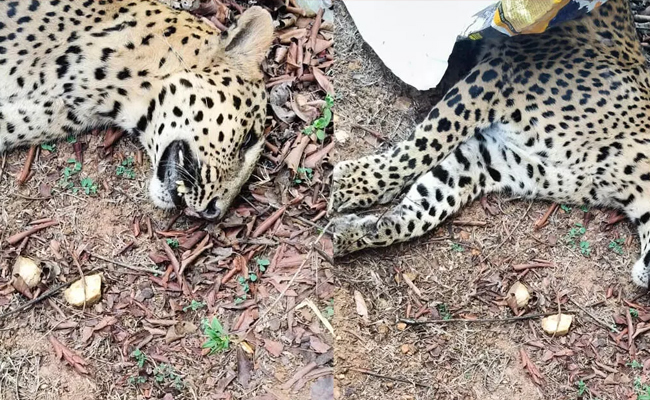
Shivamogga: A leopard was killed after being hit by a motorcycle near Mandagadde in Thirthahalli taluk of Shivamogga district.
According to reports, the biker was travelling from Shivamogga towards Thirthahalli when the leopard suddenly came onto the road from a nearby forest area near Mandagadde. The rider is said to have lost control of the bike and crashed into the animal.
The leopard suffered severe injuries in the impact and died on the spot. The biker also fell onto the road along with the motorcycle and sustained serious injuries. He was shifted to a hospital in Shivamogga for further treatment.
After receiving information about the incident, forest department officials, including Gajanur RFO Vinay Kumar, visited the spot and conducted an inspection.