Divya Deshmukh makes the right moves; Gukesh fails to impress

New Delhi (PTI): A starry-eyed teenager Divya Deshmukh winning the Women's Chess World Cup in faraway Batumi this year not only showcased India's unfathomable depth of talent in the sport but also reaffirmed the country's status as the new hub of the game in the world.
Just when it seemed the aura of D. Gukesh, who became world champion in 2024, was on the wane after suffering a string of losses this year, the 19-year-old Nagpur girl emerged from nowhere and achieved three career milestones with one signature triumph.
Divya not only became the first Indian woman to win the FIDE Women's World Cup, she also instantly secured the prestigious Grandmaster title, bypassing the usual "norms" required to earn it.
ALSO READ: Rajasthan continues to reel under intense cold wave
Divya, whose parents are doctors, also secured an automatic qualification for the 2026 Candidates tournament, where the winner will earn the right to challenge the reigning Women's world champion Ju Wenjun of China.
On that eventful day in July, Divya's victory also shifted the contours of women's chess in the country, which relied on two-time world rapid champion Koneru Humpy and Dronavalli Harika. The two women have been the torchbearers of the sport in the country for nearly two decades.
But while Divya made a huge statement with her triumph, success eluded world champion Gukesh and his year was dotted with unflattering results after it started on a promising note with a second-place finish in the Tata Steel Chess Masters in Wijk Aan Zee, Netherlands.
Turbulence hits Gukesh
After the high of becoming world champion, Gukesh's journey this year has been anything but smooth. Country-mate R. Praggnanandhaa challenged his supremacy, defeating the champion in a thrilling blitz tiebreaker to clinch the Tata Steel Masters title.
In a year, when the 19-year-old Gukesh should have consolidated the gains of the world title, he kept slipping, getting knocked out of the Freestyle Chess Grand Slam, finishing dismally in the FIDE Grand Swiss, and suffering a shocking third-round exit at the FIDE World Cup in Goa.
Gukesh's famous victory over world No.1 Magnus Carlsen in Norway Chess in May- June and the European Club Cup triumph in October, where he won the individual gold and helped his team, SuperChess, bag the title, were the few bright spots in a largely barren year.
Amid all the gloom in classical, rapid and blitz, one signature victory that saw Gukesh's popularity soar was his win against Carlsen in Norway Chess in Stavanger.
That famous triumph, where a shaken Carlsen slammed his fist on the table and muttered "Oh my God" before leaving the hall agitated, caused a social media storm.
French football giants Paris Saint-Germain tweeted a viral image of Gukesh's calm expression after defeating the Norwegian world No.1, using it to express their own emotions after winning their first-ever UEFA Champions League title.
PSG captioned the image: "What it felt like winning our first UCL". The football club's use of the image was widely shared across social media, garnering over eight million impressions.
That nerve-wracking defeat against Gukesh notwithstanding, Carlsen beat an elite field to clinch his seventh Norway Chess title, even as he extended his reign on the chess world by winning multiple titles across formats.
Home advantage lost
India were expected to at least secure one Candidates tournament berth from the World Cup in Goa recently. Unfortunately, front-runners Praggnanandhaa, Arjun Erigaisi, Nihal Sarin, P Harikrishna and Vidit Gujrathi bowed out at various stages of the tournament as the Indians couldn't capitalise on the home advantage.
Javokhir Sindarov, Wei Yi, and Andrey Esipenko went on to secure their spots for the Candidates in Cyprus next year.
However, Praggnanandhaa did finally manage to seal his spot in the Candidates by winning the FIDE Circuit 2025, making him the first Indian male player to qualify for the prestigious World Championship qualifier by topping the circuit's standings with strong performances and points from events like the London Chess Classic.
It's raining Grandmasters in India
India has come a long way since the legendary Viswanathan Anand became the country's first Grandmaster in 1988. As the country looks ahead to 2026, it now boasts of 91 GMs, with many standing on the threshold of the prestigious title.
Among those who became Grandmasters in 2025 are LR Srihari, Harikrishnan A Ra, Divya Deshmukh, S Rohith Krishna, Ilamparthi AR and Raahul VS.
Making early moves
With Sarwagya Singh Kushwaha from Madhya Pradesh recently becoming the youngest player on the FIDE rating list at the age of just three years, seven months, and 20 days, it's only a matter of time before someone breaks the record as well. Too 'young' to be true!
Let the Truth be known. If you read VB and like VB, please be a VB Supporter and Help us deliver the Truth to one and all.
Tamil Nadu Assembly Results: CM M.K. Stalin loses in Kolathur constituency
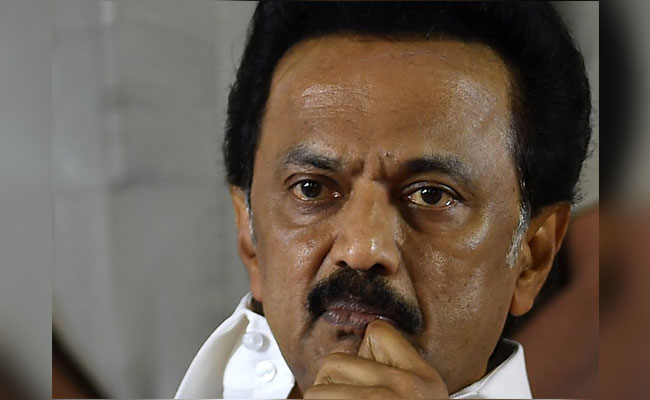
Chennai: In the Tamil Nadu Assembly election results, Chief Minister M.K. Stalin has lost in the Kolathur constituency.
TVK party candidate Babu defeated Stalin by over 7,000 votes.