Don't give special treatment, biryani to Rana: Tea seller who helped 26/11 victims
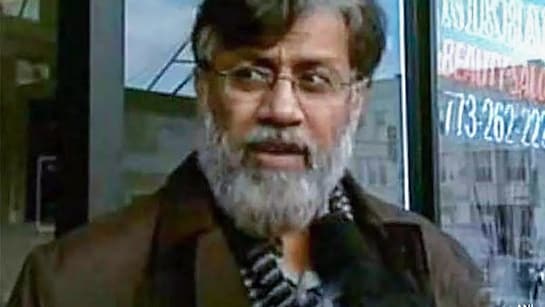
Mumbai (PTI): A tea seller who helped many people escape the 2008 Mumbai terror attacks has said accused Tahawwur Rana should not be given any special treatment, like biryani or a separate cell, and demanded that he be hanged to death.
Talking to PTI, Mohammed Taufiq, also known as 'Chotu Chai Wala', also demanded stricter laws in the country to deal with terrorists.
Taufiq was operating his tea stall at the Chhatrapati Shivaji Maharaj Terminus (CSMT) in south Mumbai when it came under attack from terrorists in November 2008. He recounted seeing people dying in front of his eyes during the assault.
He had then alerted a large number of people, guided them towards a safe direction at the station to escape from the attack and rushed many of the injured persons to hospital.
"There is no need to provide a separate cell, or biryani and other facilities to Tahawwur Rana, like those given to Ajmal Kasab (the lone terrorist from the Pakistani group captured alive)," Taufiq said.
Notably, Kasab's demand for mutton biryani in jail was just a myth and was "concocted" to stop an "emotional wave" which was being created in favour of the militant, Ujjwal Nikam, public prosecutor in the case, said in 2015.
"Kasab never demanded biryani and was never served by the government. I concocted it just to break an emotional atmosphere which was taking shape in favour of Kasab during the trial of the case," Nikam had said.
Tahawwur Rana, 64, is being brought to India after his last-ditch attempt to evade extradition failed as the US Supreme Court justices rejected his application. He is expected to reach New Delhi on Thursday.
He is likely to be lodged in a high-security ward in Tihar jail in New Delhi when he reaches India.
Taufiq expressed gratitude to the US government and President Donald Trump for extraditing Rana to India.
"There should be a strict law in India also for terrorists. Rana being brought to India is a good news for us, but he should be hanged publicly within 15 days or in two-three months," the tea seller said.
"There is no need to give any special treatment to such people and spend crores of rupees on them like we did on Kasab. I will celebrate once Rana is given death penalty. He should be hanged to death before anyone tries to save him," Taufiq said.
The government has provided help to the victims but money cannot bring back anyone's life, he added.
On November 26, 2008, a group of 10 Pakistani terrorists went on a rampage, carrying out a coordinated attack on the CSMT, two luxury hotels and a Jewish centre, after they sneaked into India's financial capital using the sea route in the Arabian Sea.
As many as 166 persons were killed in the nearly 60-hour terror assault.
Rana is a Pakistan-born Canadian national and close associate of one of the main conspirators of the 2008 Mumbai terror attacks David Coleman Headley alias Daood Gilani, a US citizen.
Kasab was hanged to death in Pune's Yerawada Jail in 2012.
Let the Truth be known. If you read VB and like VB, please be a VB Supporter and Help us deliver the Truth to one and all.
Bhojshala case: Disputed structure built from remains of pre-existing temples, claims ASI
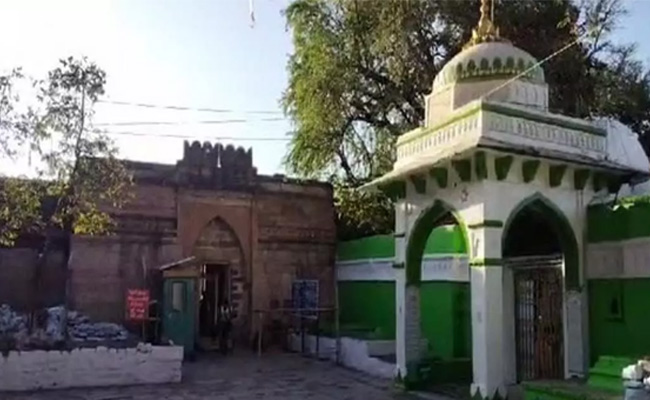
Indore (PTI): The ASI has told the Madhya Pradesh High Court that a massive structure dating back to the Paramara kings' rule existed at the disputed Bhojshala temple-Kamal Maula mosque complex, and the current structure was built from the remains of temples.
The Archaeological Survey of India (ASI) made the claim on Tuesday based on its 98-day scientific survey and over 2,000-page report.
The Hindu community considers Bhojshala a temple dedicated to Vagdevi (Goddess Saraswati), while the Muslim side claims the monument as the Kamal Maula Mosque. The disputed complex is protected by the ASI.
During the hearing before Justices Vijay Kumar Shukla and Alok Awasthi of the HC's Indore bench, Additional Solicitor General Sunil Kumar Jain, representing the ASI, presented a detailed account of the scientific survey conducted two years ago at the complex.
Referring to the ASI's survey report, he said, "Retrieved architectural remains, sculptural fragments, large slabs of inscriptions with literary texts, Nagakarnika inscriptions on pillars, etc, suggest that a large structure associated with literary and educational activities existed at the site. Based on scientific investigations and archaeological remains recovered during the investigations, this pre-existing structure can be dated to the Paramara period."
It can be said that the existing structure was made from the parts of earlier temples, based on scientific investigations, survey and archaeological excavations conducted, study and analysis of retrieved finds, study of architectural remains, sculptures, and inscriptions, art and sculptures, Jain said quoting the report.
Summarising the report, he also drew the court's attention to the fact that the archaeological study identifies that many architectural components, such as pillars and beams, were originally part of temple structures before being repurposed for a mosque.
"The evidence of this transition includes Sanskrit and Prakrit inscriptions that were damaged or hidden, alongside sculptures of deities and animals that were often mutilated or defaced," Jain contended.
The report also states that "all Sanskrit and Prakrit inscriptions are older than the Arabic and Persian inscriptions, indicating that users or engravers of the Sanskrit and Prakrit inscriptions occupied the place earlier".
In light of the Muslim side's earlier objections, the bench wanted to know why there were some discrepancies in the ASI's responses regarding the status of the disputed complex in the cases filed over the years.
The Additional Solicitor General argued that earlier studies of the complex involved only officials, while the current survey involved scientists and the use of advanced technologies such as Ground Penetrating Radar (GPR).
The hearing in the Bhojshala case will continue on Wednesday.
The high court has been regularly hearing four petitions and one writ appeal regarding the religious nature of the Bhojshala temple-Kamal Maula mosque complex since April 6.