DU appoints ABVP's Shakti Singh as DUSU president
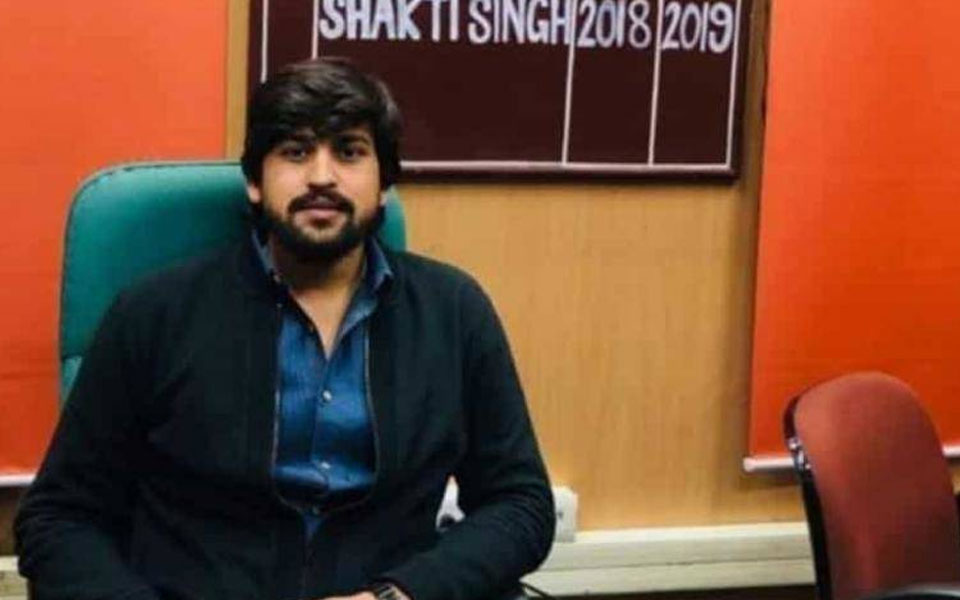
New Delhi, Jan 15: The Delhi University on Tuesday formally promoted DUSU vice-president Shakti Singh to the post of president.
In an official communication, the varsity said, "In compliance with the order of the Hon'ble Delhi High Court dated December 18, 2018, the DUSU Election Committee 2018-19 declared the promotion of Mr Shakti Singh, vice-president DUSU 2018-19 as President 2018-19."
Singh said that the decision came late which has hampered the working of the students' union but said he would try to make the optimum use of the less time he has as the DUSU president.
The NSUI said that the BJP is capturing institutions and where it cannot, people are shunted out or even thrown out.
"The checks and balances of democracy cannot handle bullies. The only recourse is to throw these guys out," they said.
The Left-backed All India Students' Association also slammed the varsity's decision and accused them of deliberately delaying the verification of Baisoya's mark sheets so that the president's post could go to Singh.
The RSS-affiliated Akhil Bharatiya Vidyarthi Parishad's Singh had taken over as the students body's president last month.
The Delhi High Court had dismissed a plea by the Congress-backed National Students' Union of India leader Sunny Chillar challenging the election of DUSU ex-president Ankiv Baisoya for allegedly furnishing a fake bachelor's degree to get admission in the university.
According to the Lyngdoh Committee Guidelines, which are applicable to the DUSU polls, "In the event of the office of any major post of office bearer falling vacant within two months of elections, re-elections should be conducted; otherwise, the vice-president may be promoted to the post of president."
The ABVP had cited the above guidelines as Singh assumed office last month.
The Delhi University cancelled the admission of Baisoya on November 14 after receiving a letter from Thiruvalluvar University confirming that his bachelor's degree was fake.
Baisoya was also suspended from ABVP and an inquiry into allegations that he got admission in the varsity on the basis of a fake marksheet was ordered. Police have also registered an FIR in the case.
The DUSU elections were held in September.
Let the Truth be known. If you read VB and like VB, please be a VB Supporter and Help us deliver the Truth to one and all.
Rickelton's ton in vain as SRH beat MI by 6 wickets
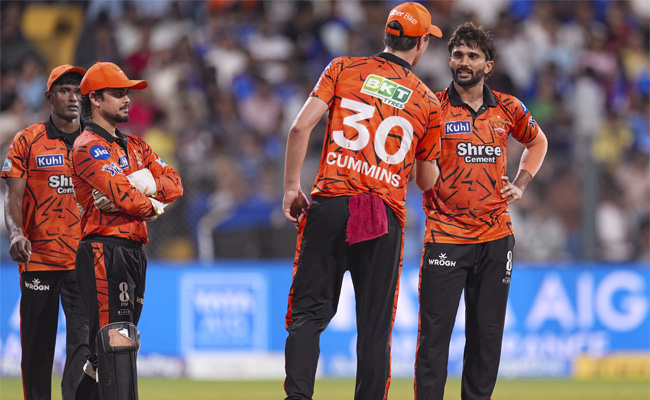
Mumbai (PTI): Ryan Rickelton's whirlwind unbeaten ton was overshadowed by Heinrich Klaasen's unbeaten 65 as Sunrisers Hyderabad defeated Mumbai Indians by six wickets in an IPL match here on Wednesday.
Chasing an imposing 244-run target, Travis Head (76 off 30) and Abhishek Sharma (45 off 24) shared 129 runs for the opening wicket to set the platform for SRH.
Klaasen (65 not out off 30 balls) then displayed his all-round hitting abilities to guide SRH home with the help of Nitish Kumar Reddy (21) and Salil Arora (30 not out off 10) in 18.4 overs.
Earlier, Rickelton's knock powered MI to 243 for five.
MI rode on a 93-run stand between Rickelton (123 not out off 55 balls) and Will Jacks (46 off 22) in 7.1 overs for the opening stand to power the side.
MI skipper Hardik Pandya scored a valuable 31 off 15 balls before being dismissed.
Praful Hinge (2/54), Eshan Malinga (1/29), Sakib Hasan (1/39) and Nitish Kumar Reddy (1/31) were the wicket-takers for SRH.
Brief Scores:
Mumbai Indian: 243 for 5 in 20 overs (Ryan Rickelton 123 not out; Praful Hinge 2/54).
Sunrisers Hyderabad: 249 for 4 in 18.4 overs (Travis Head 76, Heinrich Klaasen 65 not out; AM Ghazanfar 2/51).