EAM Jaishankar holds talks with Chinese counterpart Wang Yi
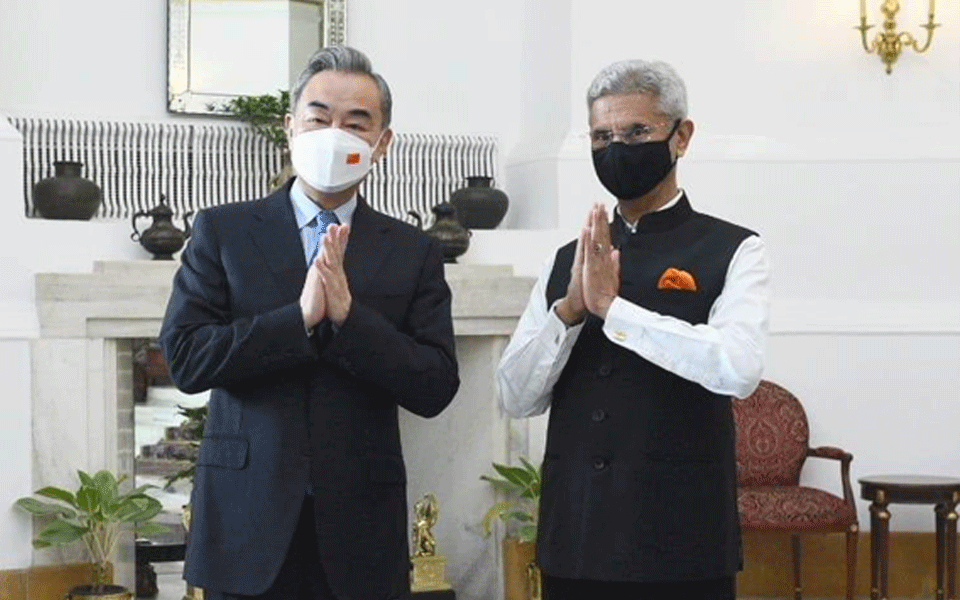
New Delhi(PTI): In the first major diplomatic engagement between India and China in nearly two years, External Affairs Minister S Jaishankar and his visiting Chinese counterpart Wang Yi held extensive talks covering the eastern Ladakh row and the geopolitical turmoil triggered by the crisis in Ukraine.
Wang, who holds the rank of state councillor, arrived in Delhi on Thursday evening from Kabul. There had been no official announcement or word on the visit.
"Greeted Chinese FM Wang Yi at Hyderabad House. Our discussions commence shortly," Jaishankar tweeted in the first official comment by India on the Chinese foreign minister's trip.
Ahead of talks with Jaishankar, Wang met National Security Adviser Ajit Doval. There was no official comment on the meeting.
The border issue is understood to have figured prominently in the meeting as both Wang and Doval have been serving as Special Representatives (SR) for boundary talks between the two countries.
Doval and Wang held a lengthy telephonic conversation in July 2020 and the talks focused on bringing down tension in eastern Ladakh.
Jaishankar and Wang have met in Moscow and Tajik capital Dushanbe on the sidelines of multilateral events in the last one-and-a-half years. But this is the first high-level visit between India and China after their ties came under severe strain following the border standoff in eastern Ladakh nearly two years ago.
Ahead of the visit, India criticised Wang over his remarks on Kashmir at a meeting of the Organisation of Islamic Cooperation (OIC) in Pakistan.
For China, it is learnt, the visit is more to do with the geopolitical turmoil in the wake of the Russian invasion of Ukraine than bilateral ties.
However, the Indian side is unlikely to shift focus from the eastern Ladakh row. it is expected to press for complete disengagement of troops from all the friction points in the region for resumption of normal bilateral ties.
India and China have been holding high-level military talks to resolve the face-off in the remaining friction points in eastern Ladakh. Both sides withdrew troops already from some of the friction points following the talks.
On March 11, India and China held the 15th round of high-level military dialogue to resolve the pending issues in the eastern Ladakh region. However, there was no forward movement in the talks which were aimed at resolving the remaining issues.
In September 2020, Jaishankar and Wang held extensive talks in Moscow on the sidelines of a conclave of the Shanghai Cooperation Organisation (SCO) during which they reached a five-point agreement to resolve the eastern Ladakh border row.
The pact included quick disengagement of troops, avoiding action that could escalate tensions, adherence to all agreements and protocols on border management and steps to restore peace along the LAC.
The two foreign ministers had held a bilateral meeting on the sidelines of another SCO meeting in Dushanbe in July last year with a focus on the border row. They again met in Dushanbe in September.
India has been consistently maintaining that peace and tranquillity along the Line of Actual Control (LAC) is key for the overall development of the bilateral ties.
Recently, Wang said some forces have always sought to stoke tensions between China and India, an apparent reference to the US.
The eastern Ladakh border standoff between the Indian and Chinese militaries erupted on May 5, 2020, following a violent clash in the Pangong lake areas.
Both sides gradually enhanced their deployment by rushing in tens of thousands of soldiers as well as heavy weaponry.
As a result of a series of military and diplomatic talks, the two sides completed the disengagement process last year in the north and south banks of the Pangong lake and in the Gogra area.
Each side currently has around 50,000 to 60,000 troops along the Line of Actual Control (LAC) in the sensitive sector.
Let the Truth be known. If you read VB and like VB, please be a VB Supporter and Help us deliver the Truth to one and all.
Raj Thackeray questions need for NEET, demands Pradhan’s resignation
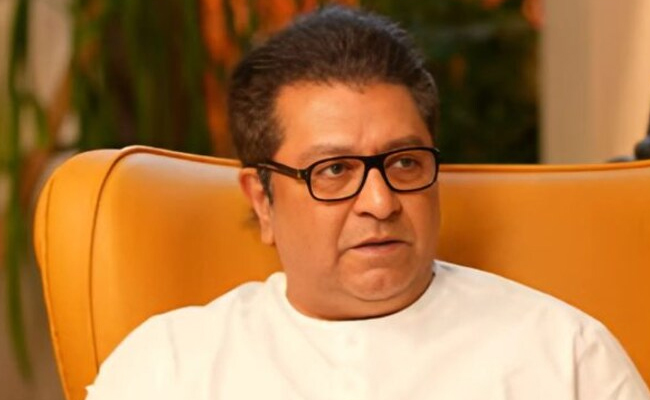
Mumbai (PTI): Maharashtra Navnirman Sena (MNS) president Raj Thackeray on Thursday questioned the need for NEET-UG and demanded that Prime Minister Narendra Modi seek the resignation of Union Minister of Education Dharmendra Pradhan.
Thackeray's demand comes amid massive protests over the cancellation of the examination following allegations of paper leak.
The MNS chief said the government is so “obsessed” with bringing everything under a centralised authority that it appears to make no difference if the lives of hundreds of thousands of people are thrown into “disarray”.
In a post on X, Thackeray said that for several years now, a single individual (Pradhan) has remained entrenched in the position of Union education minister. Despite numerous “irregularities” and “scandals” within the NEET framework during his tenure, this “gentleman” continues to occupy the post, he said.
“One wonders: has he been rewarded with this continued tenure because he is so zealously pursuing the agenda of imposing the Hindi language across the entire nation? I earnestly appeal to the Prime Minister: please demand the immediate resignation of this Minister of yours, who has repeatedly toyed with the lives and future of 22 lakh students,” Thackeray said.
The National Testing Agency on Tuesday cancelled the NEET (UG) 2026 exam held on May 3 amid allegations of paper leak, with the government asking the CBI to carry out a comprehensive inquiry into the “irregularities”. The examination for students seeking admission to undergraduate courses in medical colleges will now be held afresh on dates to be notified separately.
Thackeray said the Centre continues its tradition of creating “chaos” in every matter and holding the public to ransom. The “NEET paper leak” has proved this once again, he said.
Thackeray sought to know what the Centre did when it found out the alleged malpractice. It merely cancelled the examination and ordered a CBI inquiry, he said.
In 2024, a CBI inquiry was ordered in a similar case, but nothing substantial was achieved through it, he said.
The government projects an air of having fulfilled its duty in all of this. But what about the lives of 22 lakh students and their families, who have been left hanging in the balance, he asked.
Thackeray said fundamentally, there was no need to “impose” NEET (National Eligibility-cum-Entrance Test)-UG back in 2016.
“However, this government’s obsession with bringing everything under a single, centralised authority is so intense that, to them, it seems to make no difference if the lives of hundreds of thousands of people are thrown into disarray,” he said.
The MNS chief also asked ministers within the Maharashtra government to show some “spine” and join voices with those of the southern states and oppose this system.
Thackeray said leaders from the southern states have voiced their opposition in much the same way as he. Tamil Nadu Chief Minister Vijay has also demanded the cancellation of NEET. The reason for this is that the five southern states, combined with Maharashtra, collectively possess over 350 medical colleges, whereas the large states in the north have only 180 medical colleges, he said.
Consequently, this persistent push that began in 2016 is essentially an attempt to facilitate the “entry of students from the north into medical colleges in the south”, alleged Thackeray. To ensure this, the largest network of coaching classes has been established in the northern states, he claimed.