EC begins phased publication of post-SIR rolls in Bengal; 1.18L names deleted in Bankura
Kolkata (PTI): The Election Commission (EC) on Saturday began publishing the post-SIR electoral rolls in West Bengal in phases, with figures from Bankura district indicating that around 1.18 lakh names have been deleted since the exercise commenced.
Hard copies of the updated rolls were put up in districts including Bankura and Cooch Behar, even as the lists were yet to be made available online on the designated EC portals and mobile application till reports last received.
In Bankura, where the electorate stood at 30,33,830 when the SIR exercise began on November 4 last year, the number in the draft rolls published on December 16 had come down to 29,01,009.
Following hearings and scrutiny during the subsequent phase of the SIR, around 4,000 more names were deleted. However, a few thousand fresh applications under Form 6, meant for the inclusion of new voters, were approved.
As a result, the final electoral roll of Bankura, considered a turf where both BJP and TMC have equal political dominance, now stands at approximately 29,15,000, indicating a net deletion of around 1.18 lakh names since the commencement of the SIR, a senior district official said.
Election Commission officials said the deletions were primarily due to death, migration, duplication and untraceability, while additions were processed after due verification.
Reports from other districts are still awaited.
The publication of the rolls is being carried out in phases across districts, and supplementary lists are expected to be issued as adjudication of pending cases continues.
According to officials, the publication classifies 7.08 crore electors, whose names appeared in the draft rolls issued on December 16, into three categories -- 'approved', 'deleted' and 'under adjudication/under consideration'.
Commission sources also indicated that in parts of north Kolkata, nearly 17,000 names were found missing from the approved rolls, further fuelling political reactions from rival parties.
The draft rolls published on December 16 had already seen the state's electorate shrink from 7.66 crore -- the figure based on names appearing in the rolls till August 2025 -- to 7.08 crore, with over 58 lakh names deleted during the first phase of scrutiny.
The SIR process, the first such statewide revision since 2002, began on November 4 last year with the distribution of enumeration forms. The commission took 116 days to provisionally complete the exercise and publish what officials described as a "final but dynamic" list, as adjudication in several cases is still underway.
The second phase involved hearings for 1.67 crore electors -- 1.36 crore flagged for 'logical discrepancies' and 31 lakh lacking proper mapping.
Around 60 lakh voters continue to remain under adjudication, meaning their inclusion or exclusion will be determined in supplementary rolls to be issued in phases.
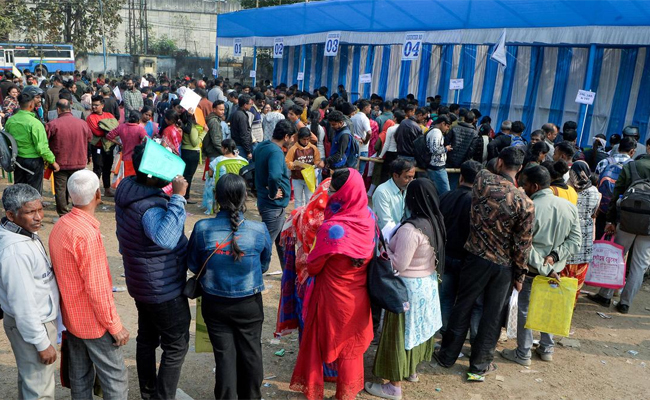
Meanwhile, long queues were seen outside district election offices and cyber cafes across the state as anxious voters thronged centres to check their names in the updated rolls.
In districts such as Bankura, North 24 Parganas and parts of Kolkata, hard copies of the lists were put up on notice boards, drawing steady streams of residents since morning. Many were seen scanning page after page of printed sheets, some taking photographs on their mobile phones, while others sought help from officials to trace their entries.
At several district magistrate and sub-divisional offices, voters waited in serpentine queues for their turn to verify whether their names figured under the 'approved', 'deleted' or 'under adjudication' categories.
With the updated rolls yet to be fully accessible online, cyber cafes reported a sudden surge in footfall. In many neighbourhoods, small computer centres witnessed lines of people waiting outside, clutching voter ID cards and enumeration slips, reflecting both public anxiety and the high political stakes surrounding the revision exercise ahead of the assembly elections due in April.
Let the Truth be known. If you read VB and like VB, please be a VB Supporter and Help us deliver the Truth to one and all.
What is Iran’s 10-point plan? Key demands ahead of US talks in Islamabad
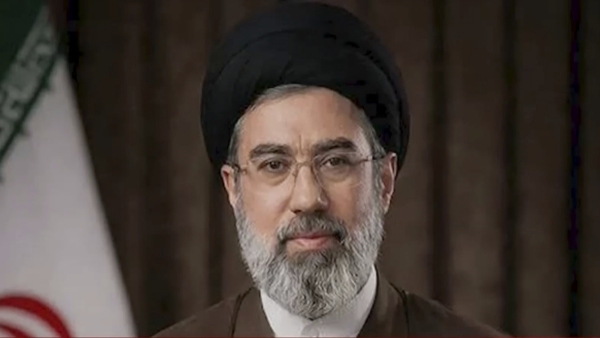
Tehran/Islamabad: Iran has outlined a 10-point plan as the basis for upcoming talks with the United States, expected to begin in Islamabad on April 11, according to a statement from the Iranian Supreme National Security Council.
The plan lays out Tehran’s key political, military and economic demands, and is being seen as a framework for negotiations following the recent escalation in the region.
Strait of Hormuz at the centre
A major focus of the plan is the Strait of Hormuz, a critical global shipping route. Iran has proposed “controlled passage through the Strait of Hormuz in coordination with the Iranian armed forces,” which it says would give the country a unique economic and geopolitical position.
The plan also calls for the “establishment of a safe transit protocol” in the Strait that would guarantee Iran’s dominance under an agreed mechanism.
Call to end conflict
Iran has demanded “the necessity of ending the war against all elements of the axis of resistance,” signalling its expectation that hostilities should stop not only in Iran but also involving allied groups in the region.
US troop withdrawal
Another key demand is the “withdrawal of US combat forces from all bases and deployment points in the region,” indicating Tehran’s long-standing position against American military presence in West Asia.
Sanctions relief and compensation
The plan places strong emphasis on economic measures. It calls for “full payment of Iran’s damages according to estimates,” along with “the lifting of all primary and secondary sanctions and resolutions of the Board of Governors and the Security Council.”
It also seeks “the release of all Iranian assets and properties frozen abroad,” which have been a major point of contention for years.
Binding global guarantee
Finally, Iran has demanded that all these terms be formally recognised through “a binding Security Council resolution,” suggesting it wants international legal backing to ensure enforcement.
What this means
The 10-point plan reflects Iran’s broader push for security guarantees, economic relief and regional influence. The upcoming talks in Islamabad are expected to test how far both sides are willing to negotiate on these demands.