EC hiding behind district magistrates, lekhpals given free rein: Akhilesh Yadav
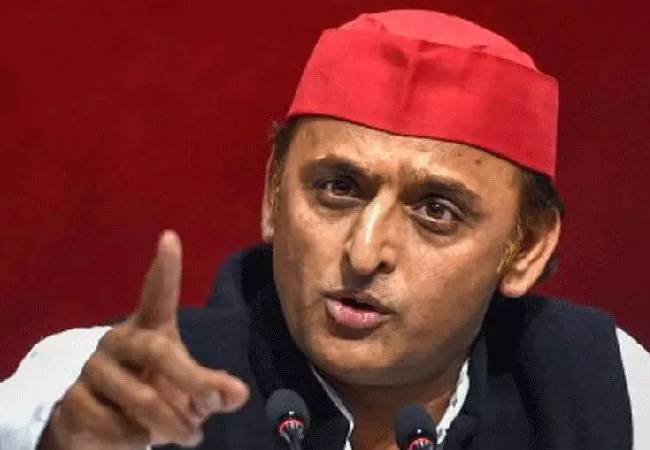
Lucknow, Aug 24 (PTI): Samajwadi Party president Akhilesh Yadav on Sunday accused the Election Commission of hiding behind district magistrates to cover up alleged vote theft by the BJP.
He added that constitutional institutions are being systematically weakened by the ruling party.
Speaking to reporters here, Yadav alleged that district magistrates were hiding behind chief electoral officers, who in turn were hiding behind the police, while lower level officers, or lekhpals, were being given "free rein to play the government's game".
"Orders are going down to the lowest officials because this government has no truth to show," Yadav said.
He added that even after affidavits showing irregularities in voter rolls were produced, only 14 out of 18,000 complaints were investigated.
"If someone is declared dead, there has to be a death certificate. We will hold a separate press conference on this issue of voter fraud -- the public now knows that the BJP steals votes and commits dacoity in elections."
Yadav also accused the BJP of crippling independent bodies for political gain.
"Those sitting in constitutional positions are working according to the government's agenda. If anyone is weakening India's institutions, it is the BJP. The weaker the institutions become, the greater the loss to people's rights," he said.
On social welfare, Yadav pledged that a future Samajwadi Party government would support persons with disabilities through special quotas, financial assistance, and better quality assistive devices.
"We provided free e-rickshaws in large numbers. Today, the devices given by this government are of the worst quality. Yet they take money for the best," he said, adding that Samajwadi Party would ensure special facilities in buses, schools and hospitals.
He also hit out at the state government over its handling of education.
"They lied in the Assembly about not closing schools. Not a single merged school has reopened. They are now planning action even against those (Samajwadi Party workers) who ran PDA pathshalas (community schools)," Yadav said.
PDA refers to an acronym coined by the Samajwadi Party and stands for Pichre (backward), Dalit, and Alpashankhak (minorities).
On farmers' distress, Yadav cited reports of shortages of fertiliser and food grain.
"Farmers are dying while standing in queues for fertiliser, but the government claims everything is available. In Bijnor, leopards are killing farmers and children. Lives are being lost in villages while the government looks away," he said.
Replying to a question, Yadav said he would join Rahul Gandhi's upcoming INDIA bloc yatra, calling it "a joint programme to strengthen the Opposition and protect democracy."
Let the Truth be known. If you read VB and like VB, please be a VB Supporter and Help us deliver the Truth to one and all.
MediaOne TV Facebook page restored after block linked to ‘government request’

Kochi: The official Facebook page of Malayalam news channel MediaOne TV has been restored after being blocked without prior notice, the broadcaster said on Wednesday.
The channel was quoted by Maktoob as saying that the restriction was lifted automatically, with Meta Platforms informing it that the action had been taken following a “government request” which has now expired or been reversed.
The development came shortly after the channel approached the Kerala High Court challenging the blocking of its page, terming it arbitrary and in violation of legal provisions and judicial precedents. The High Court had issued notice to Meta via email hours before the restriction was withdrawn.
In its petition, the channel said access to its Facebook page had been restricted for users in India without citing any specific content or alleged violation. It contended that while individual posts may be taken down under applicable a rule, blocking an entire page goes beyond the scope of such measures.
The incident followed an earlier action taken against the channel in 2022, when the Ministry of Information and transmitting prohibited it from transmitting. It cited national security concerns regarding the Ministry of Home Affairs' refusal of security clearance.
The Supreme Court of India in April 2023 set aside the ban, observing that national security claims cannot be made without substantive basis and that criticism of government policies does not render a media outlet anti-national.