EC sources reject suggestions that Indian EVMs prone to hacking
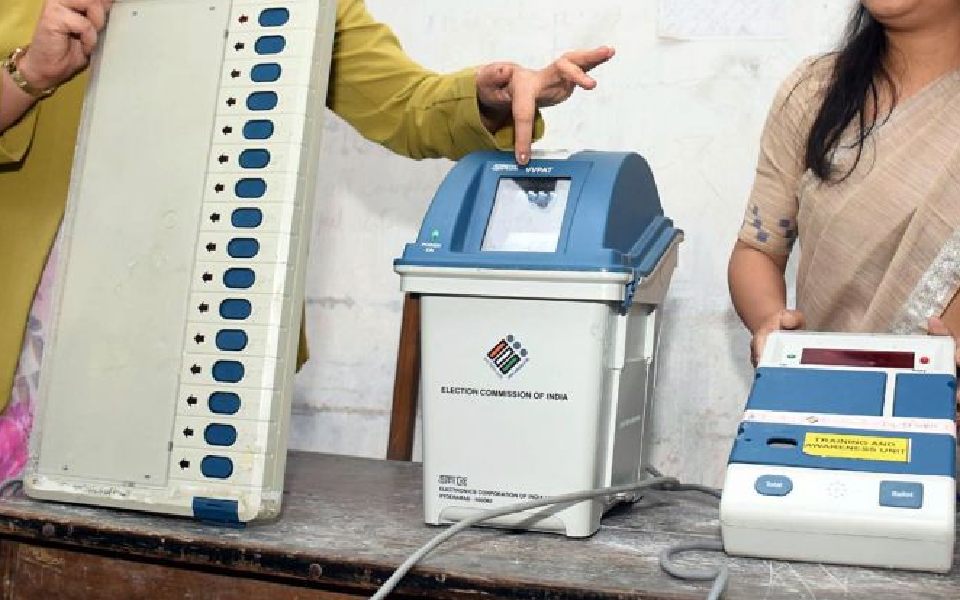
New Delhi, Apr 12 (PTI): Election Commission sources on Friday rejected suggestions that electronic voting machines (EVMs) used in the country are vulnerable to hacking, asserting that the machines work like simple calculators which are not connected to the internet or infrared.
Referring to the reported remarks of United States Director of National Intelligence Tulsi Gabbard that her office has obtained evidence of vulnerabilities to the hacking of electronic voting systems for manipulating votes, the sources pointed out that some countries use "electronic voting systems" which are a mix of multiple systems, machines and processes including various private networks including the Internet.
They underlined that India uses electronic voting machines that work like "simple, correct and accurate calculators" and cannot be connected to either the internet, WiFi or infrared.
These machines have stood legal scrutiny by the Supreme Court and are invariably checked by the political parties at various stages, including the conduct of "mock polls" before actual polling starts.
More than five crore paper trail machine slips have been verified and matched while counting in front of political parties, they pointed out.
Tech mogul Elon Musk had last year called for the elimination of EVMs, citing the risk of being hacked by humans or artificial intelligence (AI).
The then chief election commissioner Rajiv Kumar had in January responded to Musk's claim saying, "A global IT expert said EVMs can be hacked while our elections were going on. They (the US) don't have EVMs, they have electronic voting mechanisms.
"The remarks created pandemonium here. The same expert later said that India takes a single day to finish counting while the US takes over a month. We just follow the narratives that are suiting."
Kumar had, however, not named Musk.
Let the Truth be known. If you read VB and like VB, please be a VB Supporter and Help us deliver the Truth to one and all.
Trump pauses Project Freedom, claims great progress for final agreement with Iran
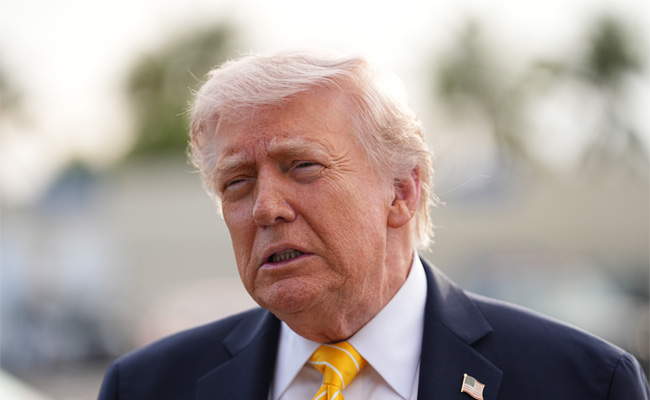
Washington (PTI): President Donald Trump has suspended “Project Freedom,” to escort ships through the Strait of Hormuz, claiming progress in negotiations with Iran toward an agreement to end the war.
In a post on Truth Social on Tuesday, Trump said, “Great progress has been made toward a complete and final agreement with representatives of Iran.”
“Based on the request of Pakistan and other Countries, the tremendous Military Success that we have had during the Campaign against the Country of Iran and, additionally, the fact that Great Progress has been made toward a Complete and Final Agreement with Representatives of Iran, we have mutually agreed that, while the Blockade will remain in full force and effect, Project Freedom (The Movement of Ships through the Strait of Hormuz) will be paused for a short period of time to see whether or not the Agreement can be finalized and signed," Trump said.
Project Freedom was launched on Monday to escort ships, stranded due to the closure of the Strait of Hormuz, out to safety. Trump had announced the operation on Sunday and the US Central Command began implementing it the next day.
However, the Project led to friction in the vicinity of the narrow seaway, a key route for transporting one-fifth of the global oil supplies, with the UAE claiming that its ships were attacked by Iran. The US also claimed to have destroyed several Iranian small boats.
Trump’s statement on Truth Social came hours after US Secretary of State Marco Rubio announced that Operation Epic Fury, launched on February 28, had concluded as its objectives have been achieved.
"Operation Epic Fury is concluded. We achieved the objectives of that operation. We're not cheering for an additional situation to occur. We would prefer the path of peace. What @POTUS would prefer is a deal... that is, so far, not the route that Iran has chosen," Rubio told a press conference at the White House on Tuesday.
On Project Freedom, Rubio said the goal was to rescue almost 23,000 civilians from 87 different countries who were trapped inside the Persian Gulf and left for dead by the Iranian regime.
"This is not an offensive operation. This is a defensive operation, and what that means is very simple: there’s no shooting unless we're shot at first. We’re not attacking them, but if they're attacking us or they’re attacking a ship, you need to respond to that," Rubio said.