ED attaches assets in money laundering case against YouTuber Elvish Yadav, others
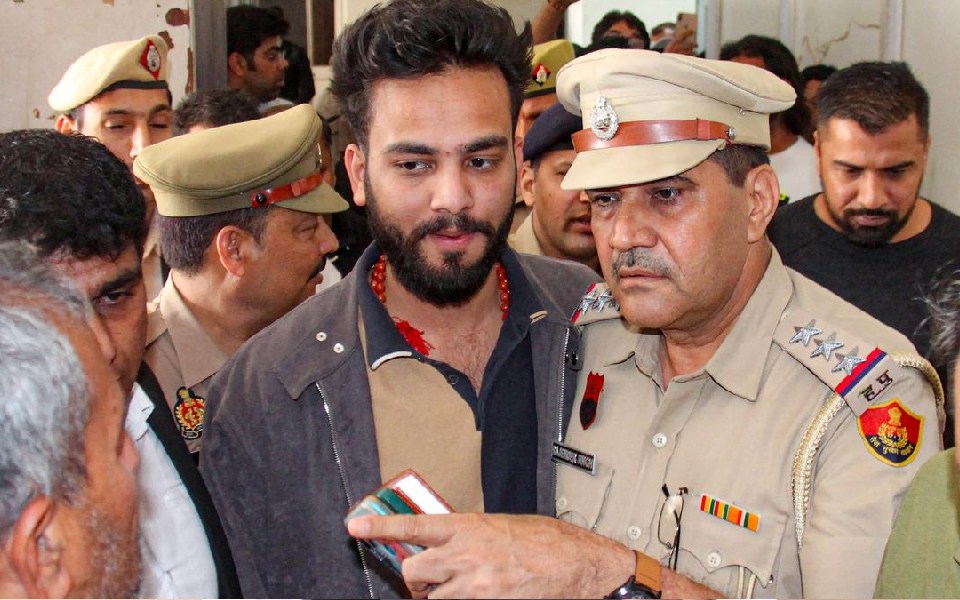
Lucknow, Sep 26: The Enforcement Directorate has attached assets as part of its ongoing money laundering investigation against YouTuber Siddharth Yadav alias Elvish Yadav and some others, official sources said Thursday.
A provisional order under the Prevention of Money Laundering Act (PMLA) has been issued, they said.
Yadav has been questioned by the federal agency in a case related to suspected use of snake venom as recreational drugs in parties he hosted and related financial transactions.
The central agency had registered a case in May and pressed charges under the PMLA after taking cognisance of an FIR and charge sheet filed against him and linked persons by the Gautam Buddh Nagar (Noida) district police in Uttar Pradesh.
Rahul Yadav alias Rahul Fazilpuriya, a singer from Haryana who allegedly has links to Elvish Yadav, was also questioned by the ED in the said case.
Alleged generation of proceeds of crime and use of illicit funds for organising rave or recreational parties is under the scanner of the ED.
Elvish Yadav was arrested on March 17 by the Noida police in connection with its probe into suspected use of snake venom as a recreational drug in parties that were allegedly hosted by him.
The controversial YouTuber, also the winner of reality show Bigg Boss OTT 2, was booked under various sections of the Narcotic Drugs and Psychotropic Substances (NDPS) Act, Wildlife Protection Act and the Indian Penal Code (IPC) by the Noida police.
Yadav was among the six people named in the FIR lodged at Noida's Sector 49 police station on November 3 last year on a complaint from a representative of animal rights NGO People for Animals (PFA).
Five other accused, all snake charmers, were arrested in November and they were later given bail by a local court.
The five snake charmers were arrested from a banquet hall in Noida on November 3 last year and nine snakes, including five cobras, rescued from their possession, while 20 ml of suspected snake venom was also seized.
However, police had said Yadav was not present at the banquet hall and they were probing his role in the case that allegedly involved the use of snake venom as a recreational drug.
In April, the Noida police filed an over 1,200-page charge sheet in the case. The charges included are snake trafficking, use of psychotropic substances and organising rave parties, police had said.
Let the Truth be known. If you read VB and like VB, please be a VB Supporter and Help us deliver the Truth to one and all.
Bhojshala case: Disputed structure built from remains of pre-existing temples, claims ASI
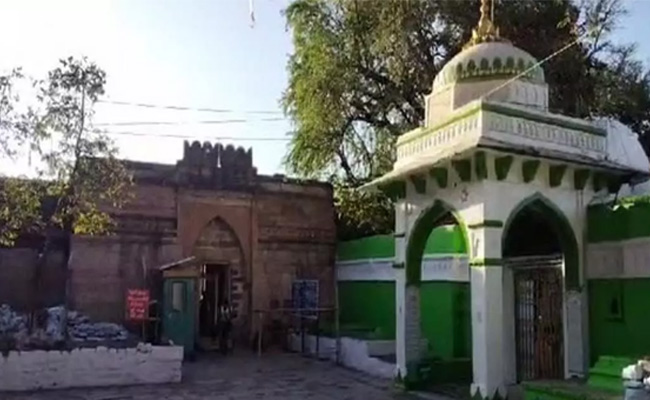
Indore (PTI): The ASI has told the Madhya Pradesh High Court that a massive structure dating back to the Paramara kings' rule existed at the disputed Bhojshala temple-Kamal Maula mosque complex, and the current structure was built from the remains of temples.
The Archaeological Survey of India (ASI) made the claim on Tuesday based on its 98-day scientific survey and over 2,000-page report.
The Hindu community considers Bhojshala a temple dedicated to Vagdevi (Goddess Saraswati), while the Muslim side claims the monument as the Kamal Maula Mosque. The disputed complex is protected by the ASI.
During the hearing before Justices Vijay Kumar Shukla and Alok Awasthi of the HC's Indore bench, Additional Solicitor General Sunil Kumar Jain, representing the ASI, presented a detailed account of the scientific survey conducted two years ago at the complex.
Referring to the ASI's survey report, he said, "Retrieved architectural remains, sculptural fragments, large slabs of inscriptions with literary texts, Nagakarnika inscriptions on pillars, etc, suggest that a large structure associated with literary and educational activities existed at the site. Based on scientific investigations and archaeological remains recovered during the investigations, this pre-existing structure can be dated to the Paramara period."
It can be said that the existing structure was made from the parts of earlier temples, based on scientific investigations, survey and archaeological excavations conducted, study and analysis of retrieved finds, study of architectural remains, sculptures, and inscriptions, art and sculptures, Jain said quoting the report.
Summarising the report, he also drew the court's attention to the fact that the archaeological study identifies that many architectural components, such as pillars and beams, were originally part of temple structures before being repurposed for a mosque.
"The evidence of this transition includes Sanskrit and Prakrit inscriptions that were damaged or hidden, alongside sculptures of deities and animals that were often mutilated or defaced," Jain contended.
The report also states that "all Sanskrit and Prakrit inscriptions are older than the Arabic and Persian inscriptions, indicating that users or engravers of the Sanskrit and Prakrit inscriptions occupied the place earlier".
In light of the Muslim side's earlier objections, the bench wanted to know why there were some discrepancies in the ASI's responses regarding the status of the disputed complex in the cases filed over the years.
The Additional Solicitor General argued that earlier studies of the complex involved only officials, while the current survey involved scientists and the use of advanced technologies such as Ground Penetrating Radar (GPR).
The hearing in the Bhojshala case will continue on Wednesday.
The high court has been regularly hearing four petitions and one writ appeal regarding the religious nature of the Bhojshala temple-Kamal Maula mosque complex since April 6.