ED files first charge sheet against Chinese smartphone maker vivo-India, others
New Delhi, Dec 7: The Enforcement Directorate filed its first charge sheet in connection with its money laundering probe against Chinese smartphone maker vivo and some others, official sources said on Thursday.
The prosecution complaint has been filed before a special court here on Wednesday under the criminal sections of the Prevention of Money Laundering Act (PMLA) and vivo-India has been named an accused apart from those arrested in this case, the sources told PTI.
The federal probe agency arrested four persons, including the MD of the Lava International mobile company Hari Om Rai, in this investigation. The others who were taken into custody were Chinese national Guangwen alias Andrew Kuang, Chartered Accountants Nitin Garg and Rajan Malik.
The ED had then claimed in its remand papers before a local court here that the alleged activities of the four enabled vivo-India to make wrongful gains that were detrimental to the economic sovereignty of India.
It had raided vivo-India and its linked persons in July last year, claiming to have busted a major money laundering racket involving Chinese nationals and multiple Indian companies.
The ED had then alleged that a whopping Rs 62,476 crore was "illegally" transferred by Vivo-India to China to avoid payment of taxes in India. The company had said that it "firmly adheres to its ethical principles and remains dedicated to legal compliance."
Rai had recently told a court here that though his company and vivo-India were in talks to launch a joint venture in India a decade ago, he had nothing to do with the Chinese firm or its representatives since 2014.
"He has not derived any monetary benefit, nor has he engaged in any transaction with vivo or any entity allegedly related to vivo, let alone having been associated with any alleged 'proceeds of crime'," Rai's lawyer told the court.
The agency filed an enforcement case information report (ECIR), the ED equivalent of a police FIR, on February 3 after studying a Delhi Police FIR of December last year against an associated company of vivo, Grand Prospect International Communication Pvt Ltd (GPICPL), its directors, shareholders and some others professionals.
The police complaint was filed by the Corporate Affairs Ministry alleging that GPICPL and its shareholders used "forged" identification documents and "falsified" addresses at the time of incorporation of the company in December 2014.
Let the Truth be known. If you read VB and like VB, please be a VB Supporter and Help us deliver the Truth to one and all.
TMC will be voted back to power in Bengal: Tejashwi Yadav
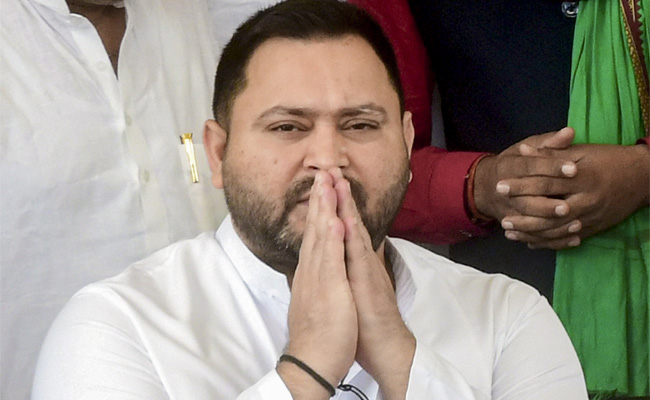
Patna (PTI): Leader of Opposition in Bihar assembly, Tejashwi Yadav, on Tuesday exuded confidence that the Mamata Banerjee-led TMC will again be voted to power in West Bengal.
Yadav returned to Patna after a four-day poll campaign in West Bengal.
“The atmosphere there is euphoric and people want to bring Didi (Mamata Banerjee) back to power. I am fully confident that the TMC will win the election,” he told reporters here.
He said that a large number of people from Bihar living in West Bengal share a lot of love and respect for Mamata Banerjee.
Responding to BJP’s allegations that the TMC had “ruined” West Bengal during its tenure, the RJD leader said the “entire country has been ruined under the Narendra Modi-led government”.
“I want to ask one question to Modi ji – you have been prime minister for more than 11 years, tell me one thing you have done for Bengal,” Yadav said.
The first phase of elections to the 294-member West Bengal assembly was held on April 23, while the second phase will take place on April 29. Votes will be counted on May 4.