ED raids prominent actors, agents in Kerala luxury cars smuggling case

Kochi (PTI): The ED on Wednesday raided premises linked to actors Prithviraj Sukumaran, Dulquer Salmaan and Amit Chakkalackal and some others across Kerala and in Tamil Nadu as part of an investigation linked to a recent Customs case related to alleged smuggling of luxury vehicles from Bhutan to India, official sources said.
The searches by the Enforcement Directorate (ED) also covered certain vehicle owners, auto workshops, and traders in Ernakulam, Thrissur, Kozhikode, Malappuram, Kottayam and Coimbatore (Tamil Nadu).
A total of 17 premises are being covered, the sources said.
The action is being taken under the Foreign Exchange Management Act (FEMA) in a recent case unearthed by the Customs Preventive department related to alleged smuggling of luxury vehicles and unauthorised foreign exchange dealings, they said.
The searches are based on inputs about a syndicate engaged in illegal import and registration of high-end cars such as Land Cruiser, Defender, and Maserati through the India-Bhutan and India-Nepal routes, they said.
Preliminary findings, according to the officials, point to a Coimbatore-based network that used "forged" documents (purporting to be from Indian Army, US Embassy, and MEA) and fraudulent RTO registrations in Arunachal Pradesh, Himachal Pradesh and some other states.
The vehicles were later sold to high-net worth (HNI) individuals, including film personalities, at undervalued prices, they alleged.
The ED suspects that the case bears "prima facie" violations of Sections 3, 4, and 8 of FEMA that involves unauthorised foreign exchange transactions and cross-border payments through hawala channels.
In a linked development, the Kerala High Court on Tuesday allowed Dulquer Salmaan to file an application for the provisional release of his vehicle seized by the Customs Preventive Department and directed the agency to consider it within one week if such a plea is filed.
According to Dulquer, the vehicle was shipped by the International Committee of the Red Cross to the ICRC Regional Delegation in New Delhi.
In his petition, the actor stated that he was under the bona fide belief that the vehicle had valid ownership and registration with the Motor Vehicle Authority, and there was nothing to make him suspect its validity.
The actor claimed that Customs officials refused to examine the vehicle's documents handed over to them and carried out the seizure in a hasty and arbitrary fashion.
The Customs officials conducted raids at around 30 locations across Kerala on September 23, including the homes of the three actors, and seized 36 luxury cars.
The raids, part of 'Operation Numkhor', revealed that some of these vehicles were also used to smuggle gold and drugs.
Let the Truth be known. If you read VB and like VB, please be a VB Supporter and Help us deliver the Truth to one and all.
KKR defeat LSG via Super Over
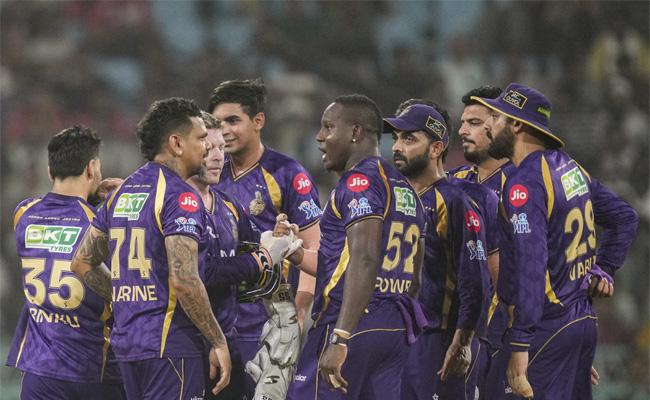
Lucknow (PTI): Kolkata Knight Riders edged Lucknow Super Giants via Super Overs in a battle between two bottom-placed teams in the IPL, here on Sunday.
Chasing a modest 156, LSG suffered a batting collapse and managed to tie the contest and take it to Super Over with No. 9 Mohammed Shami striking a last-ball six against a wayward Kartik Tyagi, who leaked 16 runs in the final over.
But Sunil Narine bowled a stunning Super Over conceding just one run and taking two wickets to give KKR an easy target.
Rinku Singh then finished the chase with a boundary off first ball from Prince Yadav.
Earlier the KKR were in deep trouble with 93/7 in 15 overs but Rinku smashed a sensational 83 not out from 51 balls including four sixes in a row in the final over to lift them to 155/7.
Cameron Green (34) was the only other batter to reach double-digit scores as KKR suffered a familiar batting meltdown with Mohsin taking his maiden fifer.
In reply, LSG continued their dismal show with the bat to succumb to their fifth loss in a row.
Brief Scores:
Kolkata Knight Riders 155/7; 20 overs (Rinku Singh 83 not out, Cameron Green 34; Mohsin Khan 5/23). Lucknow Super Giants 155/8; 20 overs (Rishabh Pant 42). KKR won via Super Over.