ESIC to provide cash benefit during job loss
New Delhi, Sep 19: Taking cognizance of lack of long-term jobs, the Ministry of Labour and Employment on Wednesday said it has rolled out a scheme to financially support those who lost their jobs even as it relaxed norms for its other benefits.
The Employees' State Insurance Corporation (ESIC), in its 175th meeting on Tuesday here, approved 'Atal Bimit Vyakti Kalyan Yojna' for insured persons covered under the Employees' State Insurance Act, 1948, the Ministry said in a statement.
"The current scenario of employment in India which has transformed from a long-term employment to fixed short-term engagement in the form of contract and temping... This scheme is a relief payable in cash directly to their bank account in case of unemployment and while they search for new engagement," it said.
Detailed instructions including eligibility conditions and application format will be issued separately, it added.
The corporation further approved reimbursement of Rs 10 per person to employers for seeding of Aadhar (UID) in ESIC database of their workers and their family members for enabling the insured with benefits that require longer contribution.
"It will curtail the multiple registrations of same Insured Persons and thus enable them to avail the benefits requiring longer contributory conditions," it said.
For super specialty treatment, the ESIC relaxed the eligibility condition by reducing the requirement of insurable employment of two years to six months with contribution requirement of only 78 days.
For availing super specialty treatment for dependents of Insured Person, the eligibility has now been relaxed to insurable employment of one year with 156 days of contributions.
"This relaxation will immensely help the Insured Persons and their beneficiaries to avail super specialty treatment free of cost as per revised eligibility," the Ministry said.
Further, the corporation approved the proposal to increase the funeral expenses from existing Rs 10,000 to Rs 15,000 being paid on the death of Insured Person.
The ESIC is for establishments having more than 10 workers with monthly wage ceiling of Rs 21,000.
Let the Truth be known. If you read VB and like VB, please be a VB Supporter and Help us deliver the Truth to one and all.
Bhojshala case: Disputed structure built from remains of pre-existing temples, claims ASI
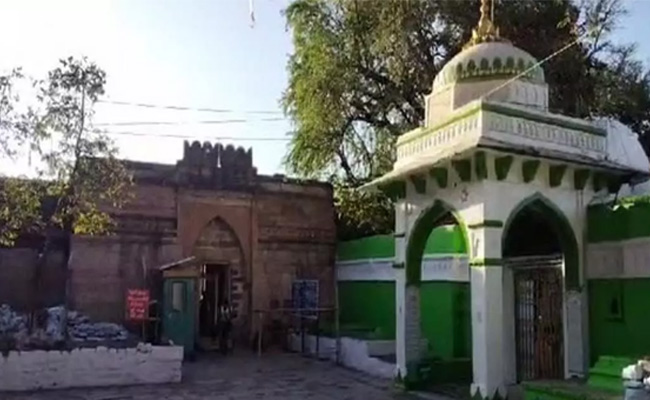
Indore (PTI): The ASI has told the Madhya Pradesh High Court that a massive structure dating back to the Paramara kings' rule existed at the disputed Bhojshala temple-Kamal Maula mosque complex, and the current structure was built from the remains of temples.
The Archaeological Survey of India (ASI) made the claim on Tuesday based on its 98-day scientific survey and over 2,000-page report.
The Hindu community considers Bhojshala a temple dedicated to Vagdevi (Goddess Saraswati), while the Muslim side claims the monument as the Kamal Maula Mosque. The disputed complex is protected by the ASI.
During the hearing before Justices Vijay Kumar Shukla and Alok Awasthi of the HC's Indore bench, Additional Solicitor General Sunil Kumar Jain, representing the ASI, presented a detailed account of the scientific survey conducted two years ago at the complex.
Referring to the ASI's survey report, he said, "Retrieved architectural remains, sculptural fragments, large slabs of inscriptions with literary texts, Nagakarnika inscriptions on pillars, etc, suggest that a large structure associated with literary and educational activities existed at the site. Based on scientific investigations and archaeological remains recovered during the investigations, this pre-existing structure can be dated to the Paramara period."
It can be said that the existing structure was made from the parts of earlier temples, based on scientific investigations, survey and archaeological excavations conducted, study and analysis of retrieved finds, study of architectural remains, sculptures, and inscriptions, art and sculptures, Jain said quoting the report.
Summarising the report, he also drew the court's attention to the fact that the archaeological study identifies that many architectural components, such as pillars and beams, were originally part of temple structures before being repurposed for a mosque.
"The evidence of this transition includes Sanskrit and Prakrit inscriptions that were damaged or hidden, alongside sculptures of deities and animals that were often mutilated or defaced," Jain contended.
The report also states that "all Sanskrit and Prakrit inscriptions are older than the Arabic and Persian inscriptions, indicating that users or engravers of the Sanskrit and Prakrit inscriptions occupied the place earlier".
In light of the Muslim side's earlier objections, the bench wanted to know why there were some discrepancies in the ASI's responses regarding the status of the disputed complex in the cases filed over the years.
The Additional Solicitor General argued that earlier studies of the complex involved only officials, while the current survey involved scientists and the use of advanced technologies such as Ground Penetrating Radar (GPR).
The hearing in the Bhojshala case will continue on Wednesday.
The high court has been regularly hearing four petitions and one writ appeal regarding the religious nature of the Bhojshala temple-Kamal Maula mosque complex since April 6.