Fact check: Amit Malviya misreads SC order on Aadhaar for Bihar voter re-inclusion
Court’s directive clearly allows Aadhaar as standalone document, contrary to BJP IT chief’s claim
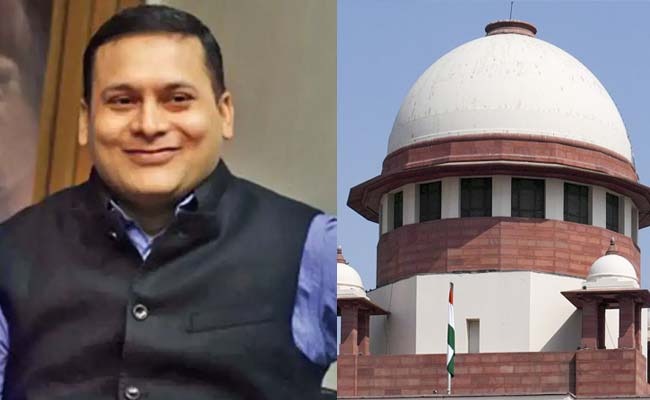
New Delhi: A recent statement by BJP's IT department head, Amit Malviya, claiming the Supreme Court did not permit Aadhaar alone as a valid document for voters to re-apply to the electoral roll in Bihar, appears to misinterpret the court's explicit order. A detailed review of the Supreme Court's directive from August 22, 2025, shows that the court listed the Aadhaar card as a distinct and alternative document for submitting requisite forms.
What the BJP claimed?
On Sunday, Malviya accused the Opposition of spreading propaganda regarding the ongoing Special Intensive Revision (SIR) of electoral rolls in Bihar. He asserted that the Supreme Court "did not say Aadhaar alone can be a valid document to get voting rights" and that it "is only proof of identity and residence, and it does not establish citizenship."
He further claimed that the low number of objections filed, only 84,305 from a list of 65 lakh deleted names, indicated that the removed names were "fake, dead, and Bangladeshi and Rohingya," and that the Opposition's cry of "vote chori" (vote theft) was manufactured.
What does the Supreme Court order actually say?
The Supreme Court bench, comprising Justice Surya Kant and Justice Joymalya Bagchi, issued several directives on August 22, 2025, to address the exclusion of approximately 65 lakh people from the draft electoral roll in Bihar. The court's primary focus was to ensure that every eligible voter has the opportunity to file claims or objections before the September 1, 2025, deadline.
Contrary to Malviya's assertion, the court's order explicitly mentions the Aadhaar card as a valid document. In paragraph 9, the court directs 12 recognized political parties to instruct their Booth Level Agents (BLAs) to assist voters. The crucial text reads: "...to issue specific instructions to their respective BLAs to assist the voters in their village/block/constituency/panchayat area as well as relief camps in submitting the requisite forms along with any of the 11 documents mentioned in SIR Notification or Aadhar Card."
The use of the word "or" grammatically separates "any of the 11 documents mentioned in SIR Notification" from "Aadhar Card," presenting them as two distinct options for the voter. This means a voter can submit the requisite form accompanied by either one of the 11 specified documents or by an Aadhaar Card.
Malviya's claim that the apex court did not say "Aadhaar alone can be a valid document" is directly contradicted by the phrasing of the order. The order creates a clear choice for the voter between two categories of documents to submit with their form. While Malviya interprets the low number of objections (84,305) as a sign of a clean electoral roll, the Supreme Court expressed a different view. The court was surprised that out of 1,60,813 BLAs appointed by political parties, only two objections had been filed. This was noted in the context of submissions from some political parties that their BLAs "are not being permitted to submit the objections".
The court's reaction to the situation was not to endorse the draft roll but to issue proactive directives to prevent disenfranchisement. It ordered:
The 12 recognized political parties in Bihar to be impleaded as respondents in the case.
These parties must issue specific instructions to their BLAs to assist the approximately 65 lakh excluded persons.
Individuals can apply online without needing to submit physical forms.
The Chief Electoral Officer of Bihar to formally notify the state presidents of these 12 parties of their impleadment and require them to be present in court with status reports.
The BJP's claim that the Supreme Court's order does not permit the use of an Aadhaar card alone to accompany voter inclusion forms is a misrepresentation of the court's explicit directive. The order's text clearly presents the Aadhaar card as an alternative to a list of 11 other documents for the purpose of submitting claims. Furthermore, the court's surprise at the low number of objections from party agents and its subsequent orders to all major political parties to actively assist excluded voters suggest deep concern about the process, a nuance entirely absent from Malviya's statement.
Let the Truth be known. If you read VB and like VB, please be a VB Supporter and Help us deliver the Truth to one and all.
Lebanon PM accuses Israel of ‘war crime’ after rescue workers killed in strikes
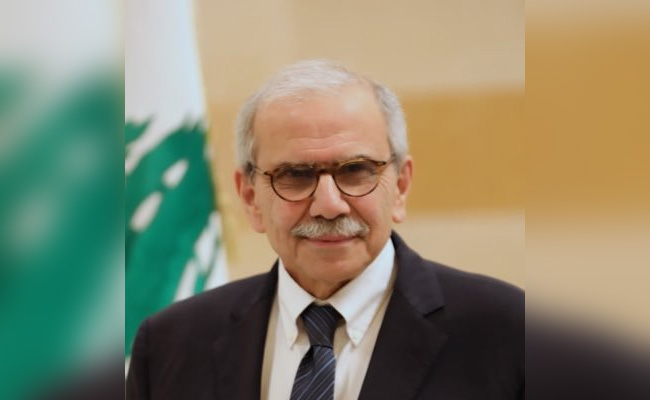
Beirut: Lebanon’s Prime Minister Nawaf Salam on Tuesday accused Israel of committing a “war crime” after five people, including three civil defence personnel, were killed in twin air strikes in southern Lebanon.
According to Lebanon’s Ministry of Health, the strikes targeted a building in the town of Majdal Zoun, where rescue workers had arrived following an initial attack. A second strike hit the same location, killing those involved in relief operations.
Salam said targeting emergency responders carrying out humanitarian duties amounted to a serious violation of international humanitarian law. He added that the government would raise the matter at international forums and seek action to halt such incidents.
A spokesperson for the Lebanese Civil Defence was quoted by AL Jazeera that the rescuers were trapped under debris after the second strike and later confirmed dead.
The Lebanese army said two of its personnel were also injured in the attack, which reportedly struck a military patrol escorting the rescue team along with civilian equipment.
Lebanon’s President Joseph Aoun also condemned the incident, stating that it was part of a pattern of attacks affecting relief workers and civilians.
Despite a US-mediated ceasefire between Israel and Lebanon, cross-border hostilities have continued, with frequent air strikes reported in southern and eastern parts of the country.
Lebanese authorities said at least eight people were killed in separate incidents on Tuesday, while the overall toll from Israeli strikes since early March has crossed 2,500, with thousands injured.