Fact Check: Beware of fake Sarva Shiksha Abhiyan website’s claim to offer job opportunities
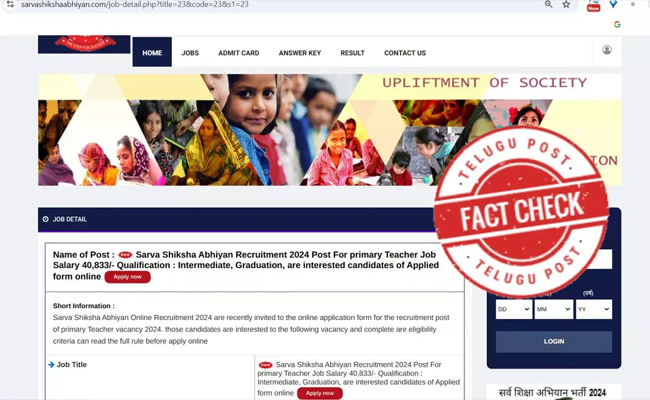
Claim: sarvashikshaabhiyan.com website is related to the Government of India and offers job opportunities.
Fact: The website is not an authentic one, it is duping the job aspirants of their money.
Samagra Shiksha Abhiyan is a school education scheme in India that aims to improve the quality of education and ensure universal access to school. The scheme not only provides support for the implementation of the Right of Children to Free and Compulsory Education Act, 2009 but has also been aligned with the recommendations of National Education Policy (NEP) 2020.
It encompasses a comprehensive approach to school education, including initiatives like universal access to schooling, foundational literacy and numeracy, gender equity, inclusive education, quality improvement, teacher training, vocational education, sports and physical education, digital initiatives, and support for children with special needs, effectively combining the previously separate schemes of Sarva Shiksha Abhiyan (SSA), Rashtriya Madhyamik Shiksha Abhiyan (RMSA), and Teacher Education (TE) under one umbrella; essentially covering the entire spectrum of schooling from pre-primary to class 12. The Central Government recruits teachers and other staff under this Scheme for various posts across the country.
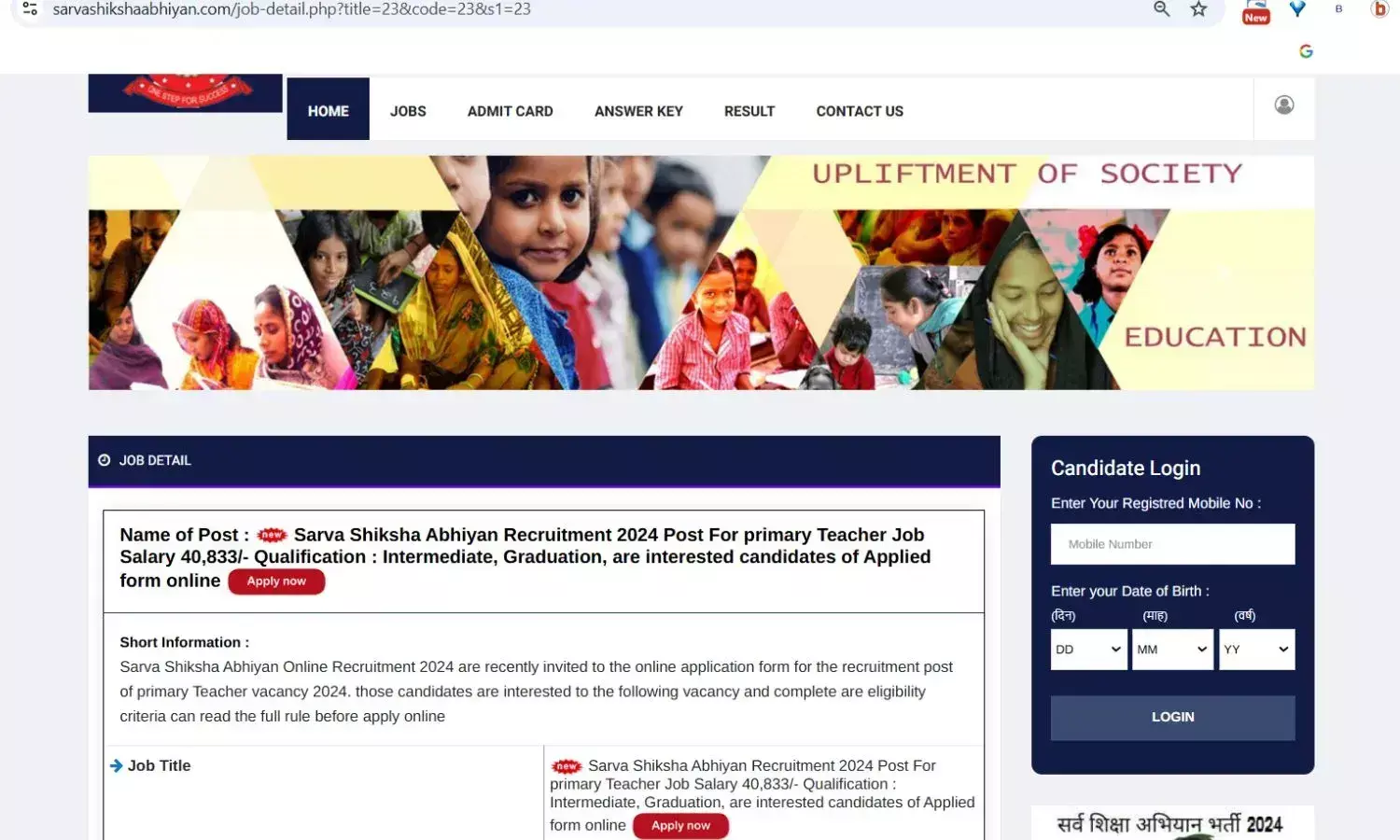
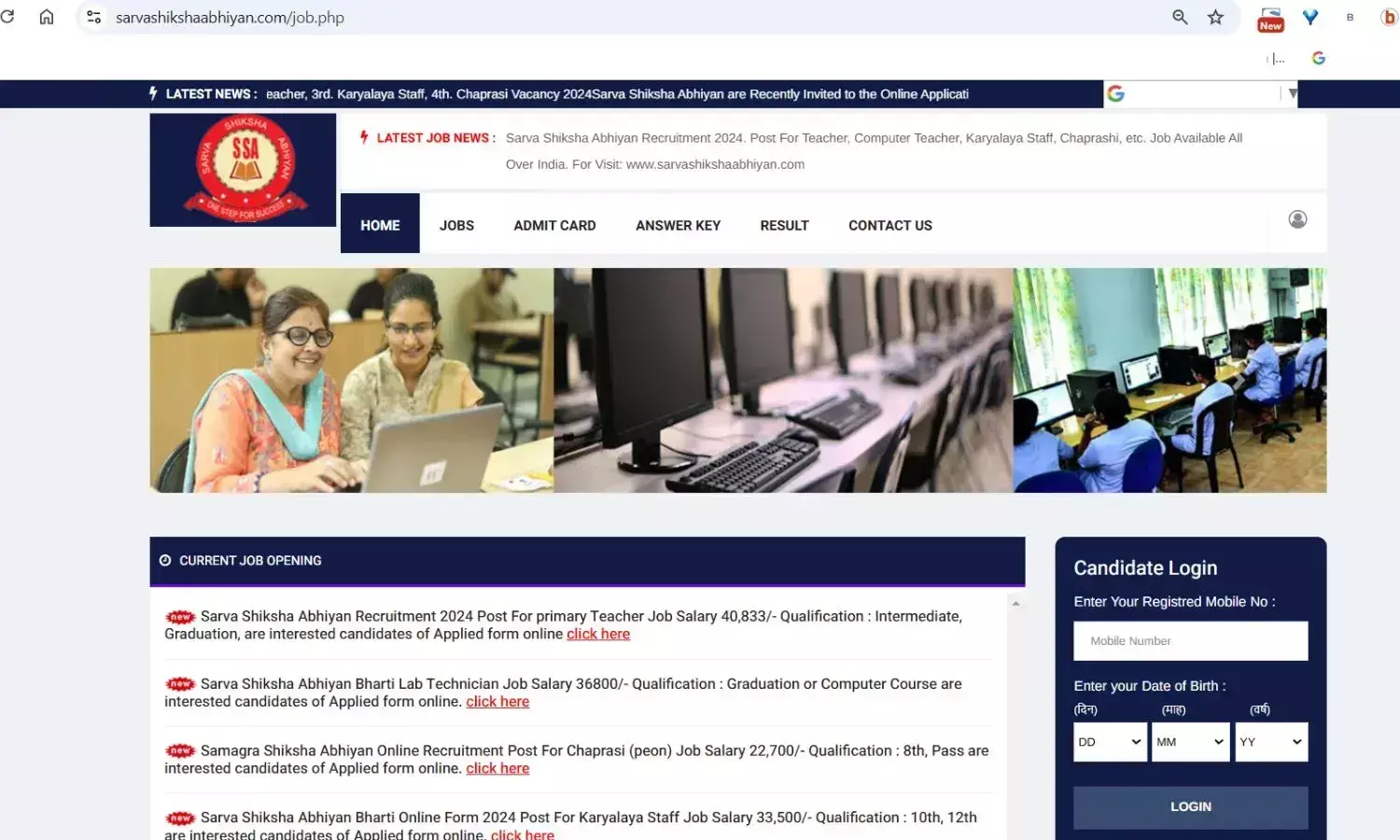
A website named sarvashikshaabhiyan is in circulation with several job recruitment links posted here. The website claims to offer employment opportunities to aspiring candidates. Job opportunities for primary school teachers, lab technicians, chaprasis, etc. can be seen on the website.
Here is the screenshot of the website home page.
Here is the archive link to the website pages.
Fact Check:
The website makes a False claim. It is not a genuine website and is not related to the Government of India’s Samagra Shiksha Abhiyaan scheme. The home page of the website does not show the Government of India’s logo and is very static in nature.
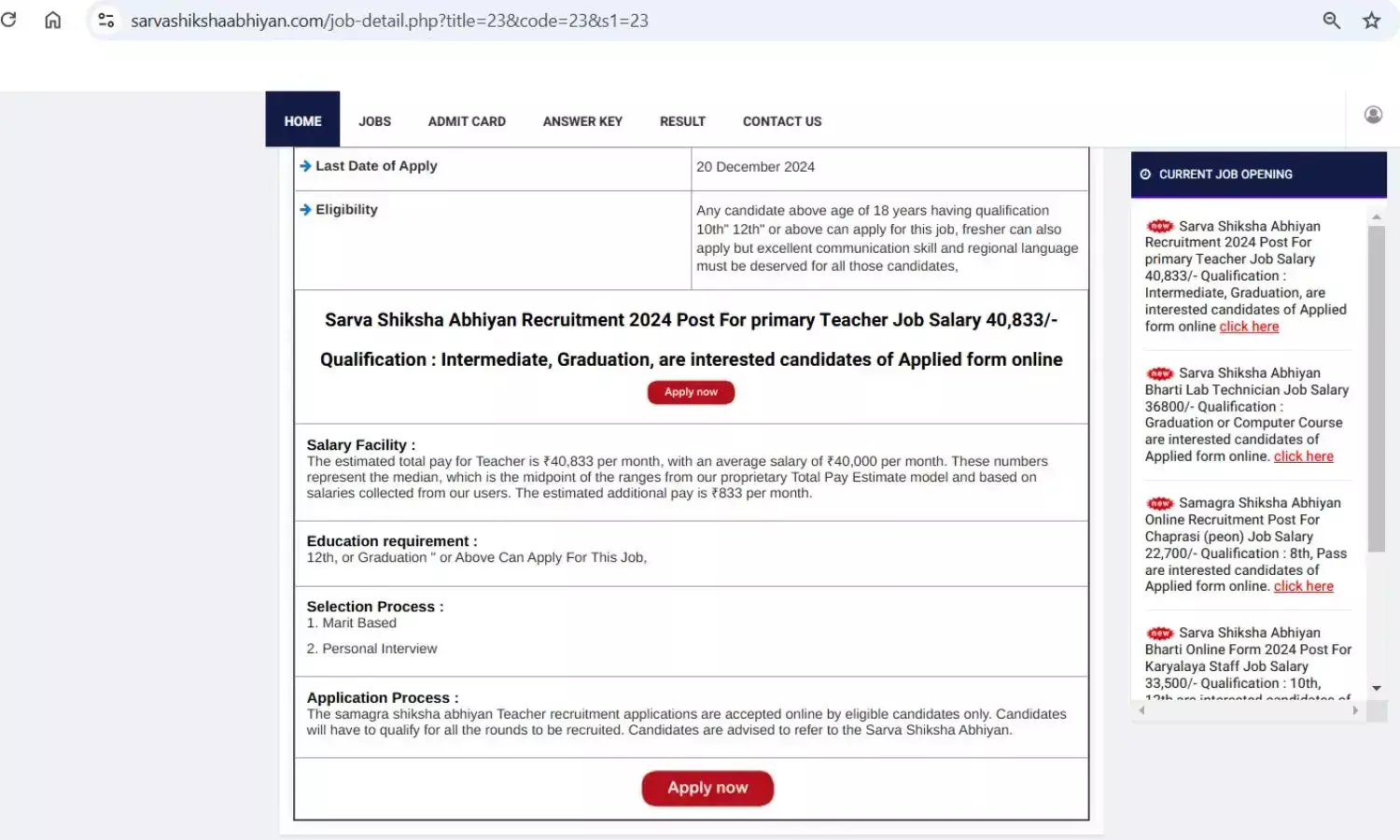
When we clicked on one of the recruitment ads posted on this website, we could see that it mentions that total job vacancies are 98,305, which is a very large number. The qualification needed for teachers is 10th, 12th or above.
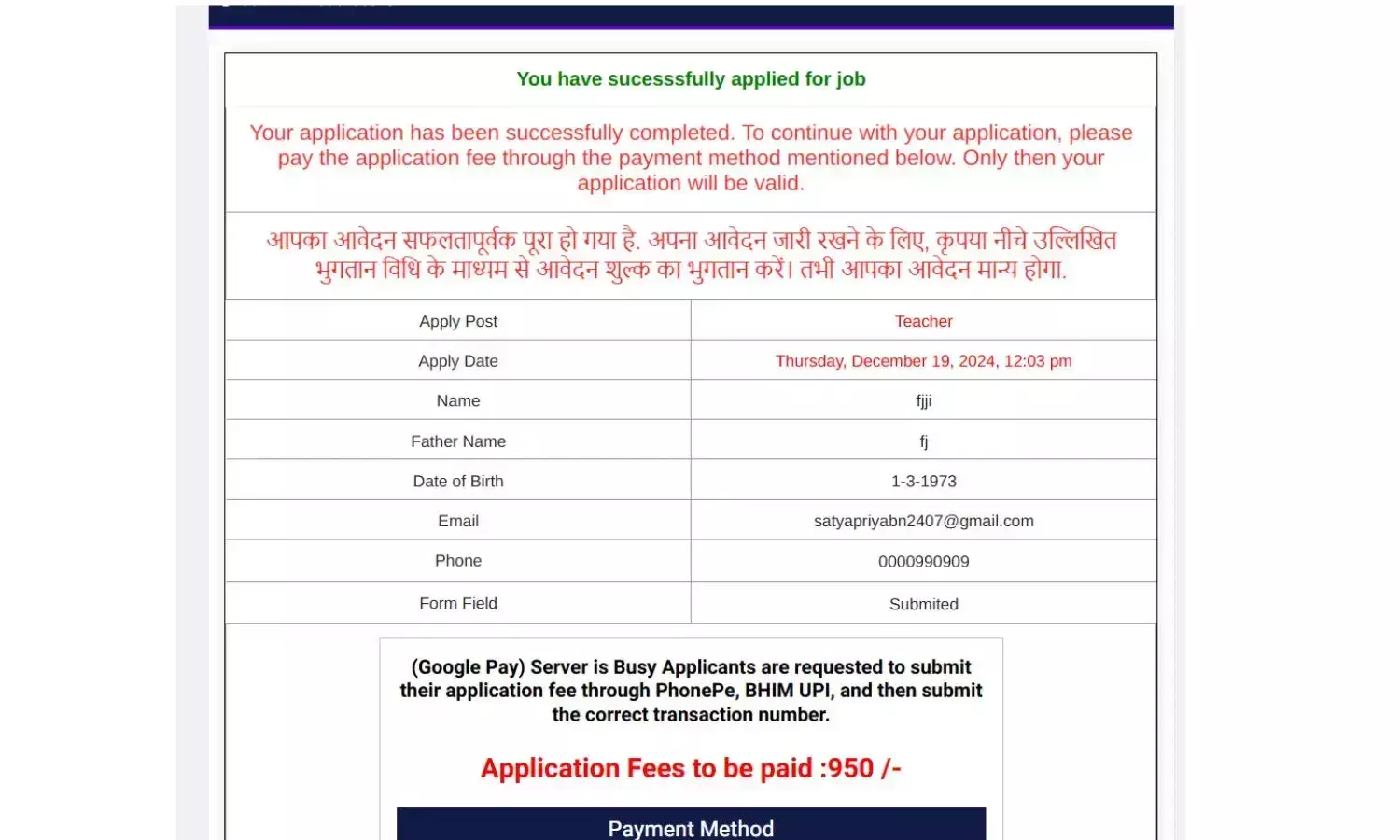
When clicked on apply now, the website gathers all the details of the applicant including the phone number and email id, etc. At the end of the process, we can see a QR code for the payment of the application fee which is Rs 950.
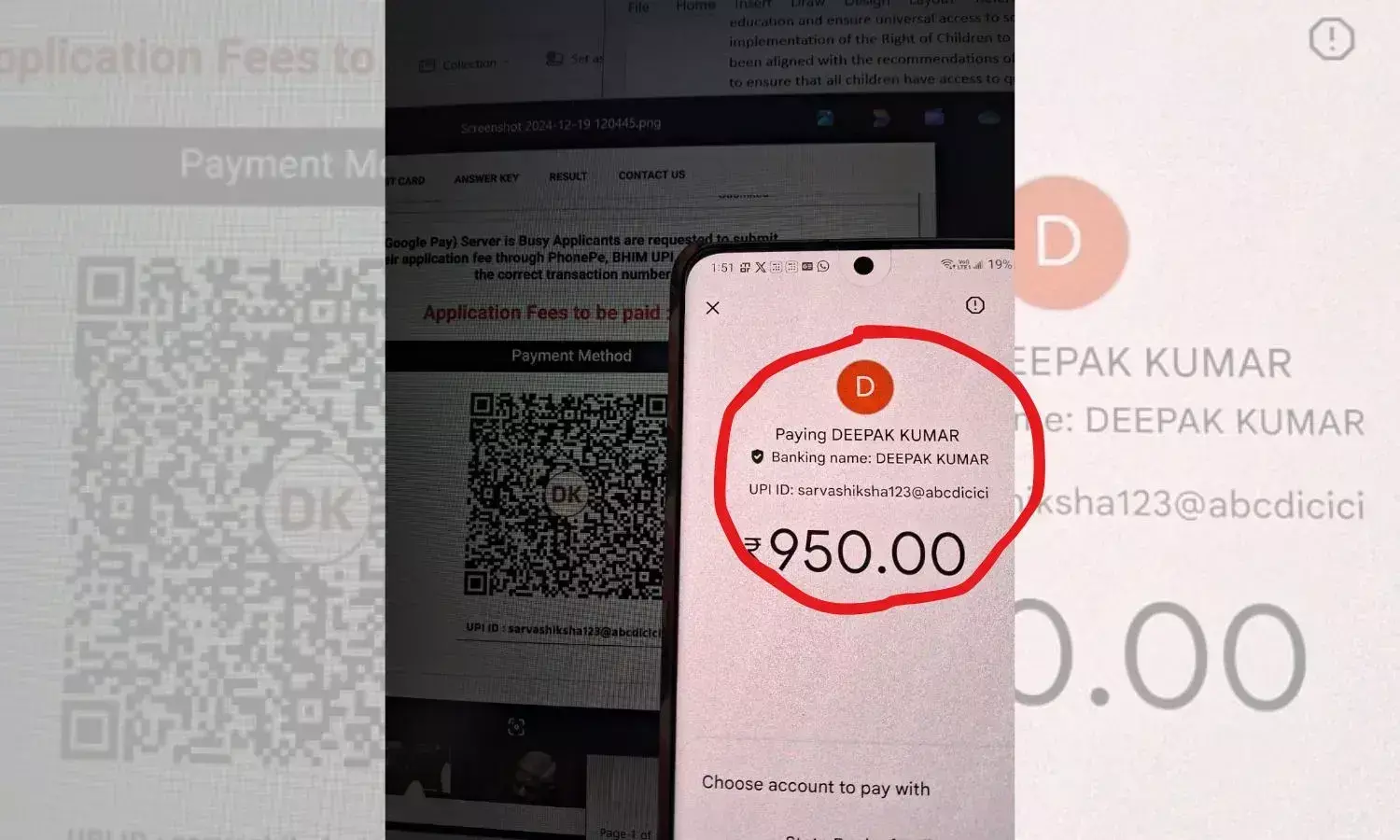
Even though the UPI ID shown on this screenshot is sarvashiksha123@abcdicici, the user name on the bank states ‘Deepak Kumar’, not the name of any government department or scheme.
We also found that PIB fact check in its post, declared that this website is fake and is not associated with Government of India.
Beware!⚠️#Fake website 'https://t.co/A8nJO6T8Si' is posing as the official website of Sarva Shiksha Abhiyan & offering fake job opportunities#PIBFactCheck
— PIB Fact Check (@PIBFactCheck) December 19, 2024
▶️This website is not associated with GOI
▶️Official website: https://t.co/pCjN1ZGIMW
Read: https://t.co/Pi56ELk7hn pic.twitter.com/ptvKhIsVS1
PIB also published a clarification on its website stating – It has come to the notice of the Ministry of Education that in order to dupe innocent applicants several websites have been created with the name similar to the schemes. (like www.sarvashiksha.online,
These websites offer employment opportunities to aspiring candidates and misguide the job aspirants through the layout of the website, content, and presentation in a manner similar to the original website and ask for money from the respondents for the applications. While these websites have come to the notice of the Department of School Education and Literacy, there may be more such other websites/social media accounts promising jobs and demanding money for the recruitment process.
The general public is, hereby, advised to avoid applying for job opportunities on such websites and to ensure that the websites are authorized by visiting the official website of the concerned Department/personal inquiry/telephone call/e-mail to safeguard their own interest. Any person applying on these websites will be doing so at his own risk & cost and shall be responsible for the consequences thereof.’ This clarification was published in March 2022. But the website has resurfaced again and is duping the aspiring candidates in the name of recruitment opportunities.
Hence, the website https://www.
(This story was originally published by telugupost, and republished by english.varthabharati.in as part of the Shakti Collective)
Let the Truth be known. If you read VB and like VB, please be a VB Supporter and Help us deliver the Truth to one and all.
Biker injured, leopard dies in road accident near forest area in Shivamogga
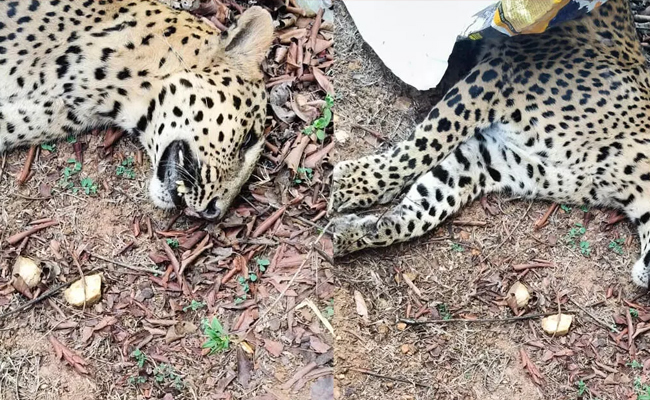
Shivamogga: A leopard was killed after being hit by a motorcycle near Mandagadde in Thirthahalli taluk of Shivamogga district.
According to reports, the biker was travelling from Shivamogga towards Thirthahalli when the leopard suddenly came onto the road from a nearby forest area near Mandagadde. The rider is said to have lost control of the bike and crashed into the animal.
The leopard suffered severe injuries in the impact and died on the spot. The biker also fell onto the road along with the motorcycle and sustained serious injuries. He was shifted to a hospital in Shivamogga for further treatment.
After receiving information about the incident, forest department officials, including Gajanur RFO Vinay Kumar, visited the spot and conducted an inspection.