Fadnavis writes to Ajit Pawar, opposes Nawab Malik becoming part of ruling alliance
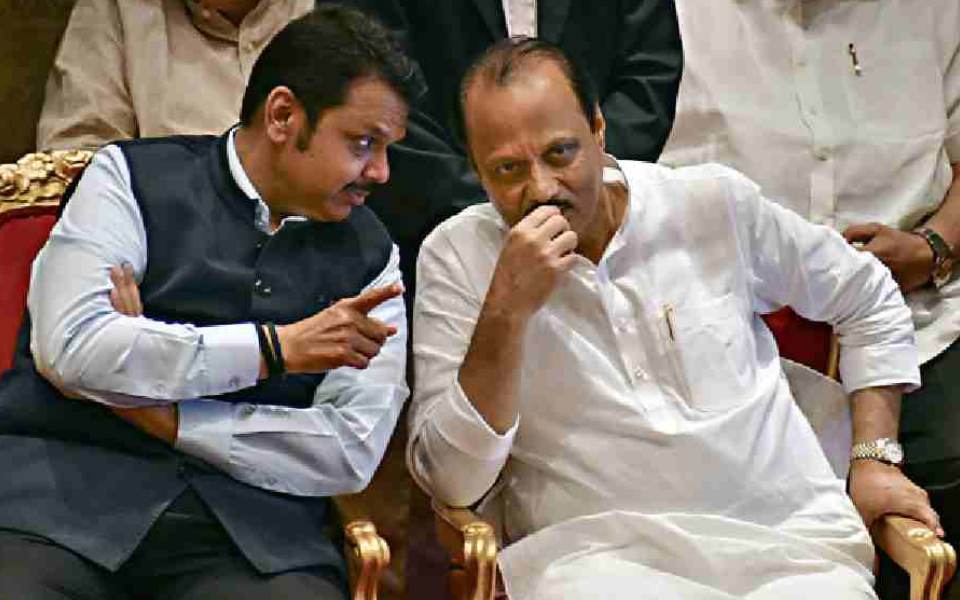
Nagpur, Dec 7: Maharashtra deputy Chief Minister Devendra Fadnavis on Thursday wrote to his cabinet colleague and NCP leader Ajit Pawar expressing opposition to the induction of NCP MLA Nawab Malik, an accused in an Enforcement Directorate case, in the ruling `Maha Yuti' or grand alliance in the state.
Earlier in the day, Shiv Sena (UBT) leaders Ambadas Danve and Sushma Andhare targeted the government over Malik `joining' the treasury benches, even though he himself has not made it clear whether he is affiliated to the Ajit Pawar-led rebel NCP group or the Sharad Pawar-led faction.
Out on medical bail after the ED arrested him in February 2022 in a money-laundering probe linked to the activities of fugitive gangster Dawood Ibrahim and his aides, Malik attended the winter session of the Maharashtra legislature here for the first time on Thursday. He sat on the last bench in the assembly, next to the MLAs of the Ajit Pawar-led faction of the Nationalist Congress Party.
The ruling alliance in the state comprises the BJP, Ajit Pawar-led NCP and Eknath Shinde-led Shiv Sena.
In his letter to Ajit Pawar, who too is a deputy CM, Fadnavis said Malik has the right to attend the assembly as an MLA and added that "we (the BJP) do not harbour any personal animosity or grudge" against him.
"However, considering the kind of allegations he is facing, we are of the opinion that it would not be appropriate to induct him in the Maha Yuti," the BJP leader said while also noting that Malik was out only on medical bail (and not regular bail).
"We agree that it is your prerogative (to decide) who should be inducted in your party. But every constituent party (of the Maha Yuti) has to think as to whether it would harm the alliance. Hence, we are opposed to this," Fadnavis added.
He also said that his party could not be on the same page as the "then chief minister" and the previous Maha Vikas Aghadi (MVA) government which had allowed Malik to continue as a minister even after he was arrested "on the charges of having links with anti-national elements".
Malik was a cabinet minister in the Uddhav Thackeray-led MVA government at the time of his arrest.
Shiv Sena (UBT) leader Sushama Andhare earlier took a jibe at Fadnavis, saying he could put a chameleon to shame so fast he had changed his stand on Malik "against whom you all had taken out protest marches and disrupted the house proceedings several times (during the MVA government)."
Let the Truth be known. If you read VB and like VB, please be a VB Supporter and Help us deliver the Truth to one and all.
TMC will be voted back to power in Bengal: Tejashwi Yadav
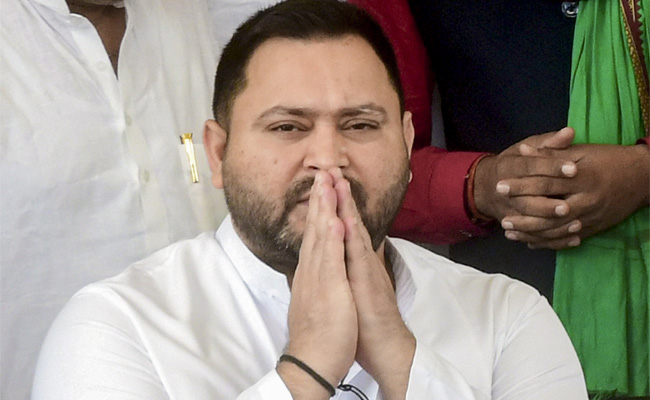
Patna (PTI): Leader of Opposition in Bihar assembly, Tejashwi Yadav, on Tuesday exuded confidence that the Mamata Banerjee-led TMC will again be voted to power in West Bengal.
Yadav returned to Patna after a four-day poll campaign in West Bengal.
“The atmosphere there is euphoric and people want to bring Didi (Mamata Banerjee) back to power. I am fully confident that the TMC will win the election,” he told reporters here.
He said that a large number of people from Bihar living in West Bengal share a lot of love and respect for Mamata Banerjee.
Responding to BJP’s allegations that the TMC had “ruined” West Bengal during its tenure, the RJD leader said the “entire country has been ruined under the Narendra Modi-led government”.
“I want to ask one question to Modi ji – you have been prime minister for more than 11 years, tell me one thing you have done for Bengal,” Yadav said.
The first phase of elections to the 294-member West Bengal assembly was held on April 23, while the second phase will take place on April 29. Votes will be counted on May 4.