Faizal and Shabana Foundation launches 'Nadakkavu Model' school in Kashmir
Kozhikode:
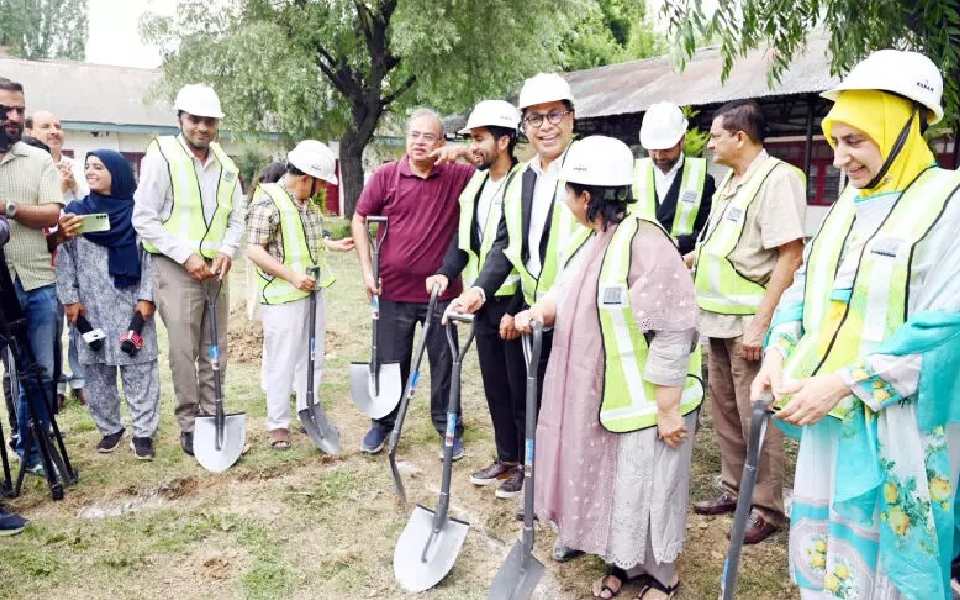
The Faizal and Shabana Foundation, renowned for its exemplary work in the field of education, has expanded its model project, 'Nadakkavu Model' School, to Kashmir. This initiative marks a significant step in the foundation's efforts to elevate educational standards across the country. The project's earlier success in revamping Nadakavu School in Kozhikode had garnered nationwide attention.
The foundation's development efforts are now focused on the Govt Girls Higher Secondary School in Kothibagh, Srinagar. A memorandum of understanding was signed between the Jammu and Kashmir government and the Faizal and Shabana Foundation to formalize this collaboration.
The primary aim of the project is to ensure quality education for girls, continuing the foundation's mission to enhance educational opportunities. The inauguration ceremony in Srinagar was attended by several prominent individuals, including KE Faizal, Chairman of KEF Holdings and Co-Founder and Director of Faizal and Shabana Foundation, and Shabana Faizal, Vice Chairperson of KEF Holdings and Founder and Director of the foundation.
The event also saw the presence of Razzak Faizal, Founder of Peak Mobility, among other top officials.
Founded in 2007, by UAE-based businessman Faizal Kottikollon, founder of KEF Holdings, and his wife Shabana Faizal, the foundation has donated more than INR340m ($4.5m) for the rehabilitation of schools, based on a model of quickly replacing crumbling classrooms with prefabricated structures.
Shabana hails from Mangaluru in Karnataka state of India. She is the only daughter of prominent businessman and socio religious leader Late B Ahmed Haji Mohiudeen who founded the prestigious BA Group of Businesses in Thumbay near Mangaluru.
Faizal believes inequality begins at the school gate and this belief of his decision to turn his attention and wealth towards rebuilding India’s underserved public schools in an effort to level the playing field for poorer students.
The foundation has till date contributed to the renovation of 19 schools in three south Indian states – Kerala, Karnataka and Tamil Nadu. The renovation model of the foundation has been so successful that the Indian government the model to renovate other schools. The practice has played a part in the transformation of nearly 1,000 schools countrywide, with more than 300,000 students benefitting from new classrooms and other facilities.
Today, more than 140 schools in Kerala follow the Nadakkavu model, and hundreds more have been influenced in some way. The foundation has provided direct financial support to 16 schools in Kerala, two in Tamil Nadu and one in Bangalore.
Let the Truth be known. If you read VB and like VB, please be a VB Supporter and Help us deliver the Truth to one and all.
4 workers die after being buried under coal slurry in Jharkhand's Dhanbad
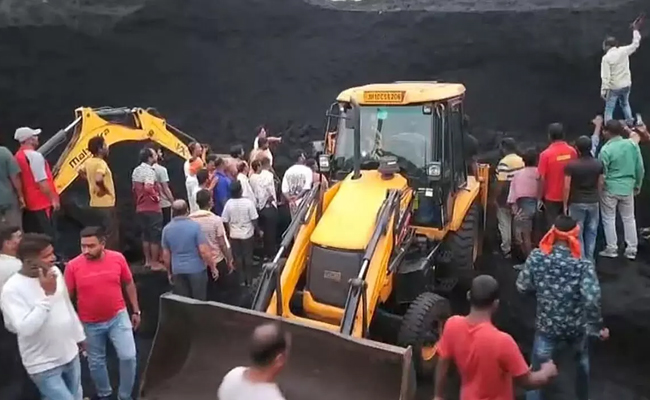
Dhanbad (Jharkhand) (PTI): At least four workers died after being buried under coal slurry in Jharkhand's Dhanbad district on Saturday, a police official said.
The incident took place at Moonidih coal washery in the command area of Bharat Coking Coal Limited (BCCL).
"Bodies of all four workers were dug out of debris during a rescue operation," Putki police station in-charge Waqar Hussain told PTI.
The incident took place when coal slurry was being loaded into trucks by workers, during which a large chunk of slurry fell and trapped several workers underneath, officials said.
The deceased have been identified as Manik Bauri, Dinesh Bauri, Deepak Bauri, and Hemlal Gope.
Meanwhile, the family members of the deceased and local villagers placed the bodies in front of the washery gate and began a protest.
They demanded compensation, jobs for dependents and action against those responsible for the incident.
Police and administration officials are trying to pacify the protesters, an official said.