FIR against Aaditya Thackeray for 'inaugurating' bridge without permission
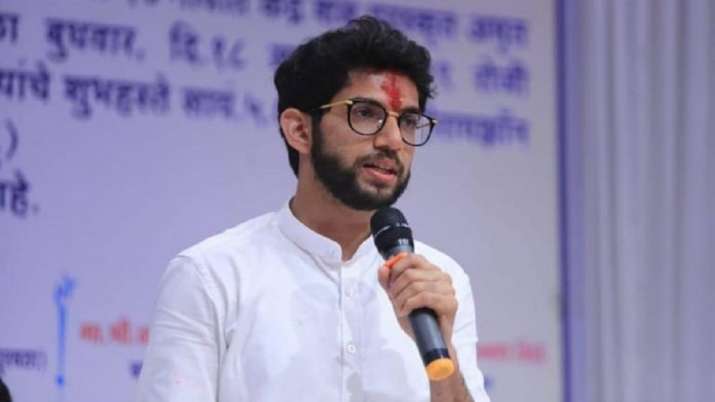
Mumbai, Nov 18: Mumbai Police registered a case against Shiv Sena (UBT) MLA Aaditya Thackeray and a few others on Saturday for allegedly 'inaugurating' a part of a bridge in Lower Parel area of the city without the civic body's permission, an official said.
Thackeray, a former Maharashtra minister, claimed that the construction of the bridge was completed two weeks ago but it was not opened to the public as Maharashtra Chief Minister Eknath Shinde had no time to inaugurate it.
A First Information Report (FIR) was registered against Thackeray based on a complaint lodged by a Brihanmumbai Municipal Corporation (BMC) official.
A police official said that as per the complaint, Aaditya Thackeray, Sena (UBT)'s members of legislative council Sachin Ahir and Sunil Shinde, former mayors Kishori Pednekar and Snehal Ambekar, and 15 to 20 others inaugurated the second carriageway of Delisle Bridge on Thursday night without the BMC administrator's permission.
The bridge is located in Thackeray's Worli constituency.
The Mumbai municipal commissioner currently acts as a state government-appointed administrator as the term of the BMC's general body has expired.
The act of inauguration was illegal as the bridge was still incomplete and not certified safe for use, and its premature use could pose a risk to motorists, the complaint said.
The FIR was registered under Indian Penal Code (IPC) sections 143, 149 (both pertaining to unlawful assembly), 336 (rash or negligent act) and 447 (criminal trespass), the official said.
Later in the day, Aaditya Thackeray alleged at a news conference that the Shinde government delayed the inauguration of Delisle Bridge.
"The 100-120 meter lane was not opened for the public because the chief minister had no time to inaugurate it. The work had got completed 10-15 days ago," he said.
"An FIR was registered against me and my associates for fighting for Mumbai. My grandfather (Sena founder late Bal Thackeray) would have been proud of it as we are fighting for the cause of Mumbai and Maharashtra," Thackeray added.
Governor Ramesh Bais should summon the chief minister and give him an earful about focussing on governance, the Sena (UBT) leader further said.
Eknath Shinde became chief minister in June 2022 after splitting the Uddhav Thackeray-led Shiv Sena.
Let the Truth be known. If you read VB and like VB, please be a VB Supporter and Help us deliver the Truth to one and all.
Three private doctors arrested in illegal scanning case involving 31 minor pregnant girls in KR Pet
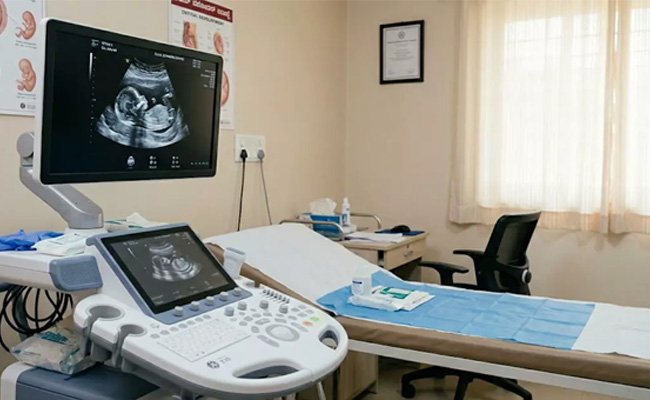
Mandya: Police on Tuesday arrested three private doctors in connection with a case involving alleged illegal scanning of 31 minor pregnant girls at a private diagnostic centre in KR Pet. The accused were later remanded to judicial custody.
The arrested doctors have been identified as Dr. Divyachetan of Chetana Maternity Centre, Dr. Harshit of Navi Diagnostic Centre, and Dr. Harish of Kushal Diagnostic Centre.
Police said Priyanka, a gynaecologist attached to a government hospital, is absconding and efforts are under way to trace her.
The case came to light after Karnataka Lokayukta Police recently conducted raids, during which illegal sex determination tests on minor pregnant girls were allegedly detected at two diagnostic centres in KR Pet town.
Following the raids, District Health and Family Welfare Officer Dr. Mohan, Deputy Director of the Women and Child Development Department P.S. Asha, and District Child Protection Officer Rashmi inspected several diagnostic centres and filed cases at KR Pet Town and Rural police stations.
According to the allegations, Navi Diagnostic Centre conducted scans on 24 minor pregnant girls, including 19 cases in 2024 and five in 2025. Kushal Diagnostic Centre is accused of conducting scans on seven minor pregnant girls.
Meanwhile, Deputy Commissioner Dr. Kumar has directed taluk vigilance committees to inspect all 63 ultrasound scanning centres in the district and submit reports within 10 days.
Officials said the Tahsildar of each taluk has been appointed chairperson of the respective committee.