Gadkari claims Congress workers in Nagpur support him
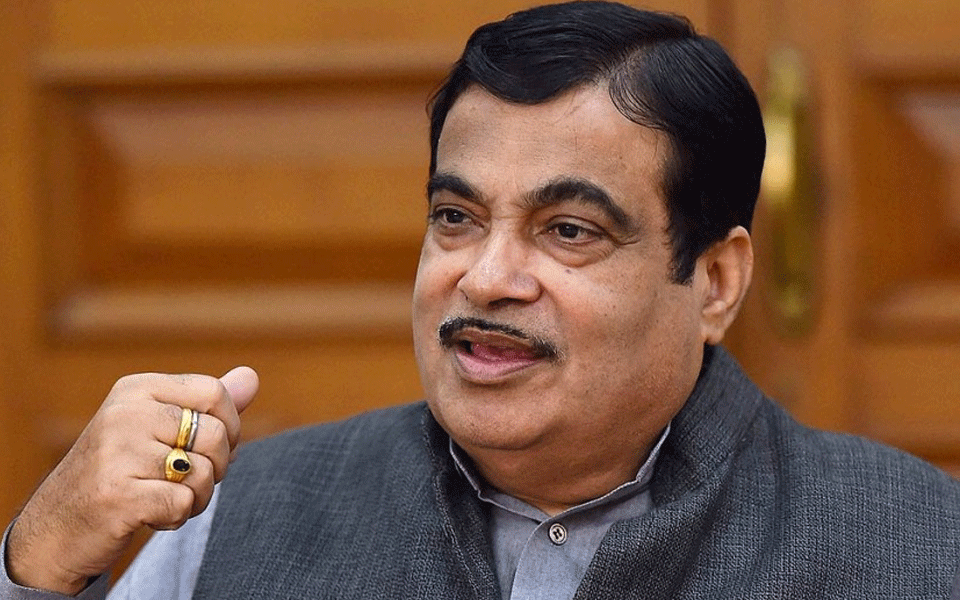
Nagpur: Union minister and BJP candidate from the Nagpur Lok Sabha seat Nitin Gadkari Wednesday claimed that he is getting phone calls from Congress workers pledging support to him.
The BJP stalwart kick-started his campaigning and said he will seek votes on the basis of development work done by him in the constituency, which will vote on April 11.
Gadkari said he is getting best wishes from non-BJP parties, including the opposition Congress.
"I have worked for all irrespective of their caste, religion, language and party affiliation. A huge number of Congress workers and office-bearers phone me and tell me not to worry," claimed Gadkari.
"They say though we are physically there (in the Congress), our hearts are with you (Gadkari) and hence I have support from all," he added.
He asked the BJP workers to reach out to the people with confidence and advised them to be humble in their conduct.
He also told them to understand the difference between confidence and arrogance.
"One should have confidence but not arrogance. Hence, reach out to the public with humility and tell them about the work done by the party," he said.
Seeking re-election from Nagpur, Gadkari said he will win the upcoming poll with a bigger margin than in 2014 and announced that he had initiated developmental projects worth Rs 70,000 crore in the constituency.
"I have decided not to take the name of opposition candidates and not criticise any party. I will tell the people about the work that I have done and will seek the votes on the basis of work done by me," said Gadkari.
"We have completed the works promised in the last manifesto. We should not give false assurance to public. We will do what we have assured. We will say what we have done," said the Union minister.
The Union minister inaugurated the Central Election Campaigning Office of the Bharatiya Janata Party (BJP) and its allies in Nagpur and asked the workers not to comment on anyone's statements.
"The public is intelligent and knows everything. We have done our work and won the trust of people. People love us irrespective of caste, religion, community and party and this love for us will ensure our victory," said Gadkari
Let the Truth be known. If you read VB and like VB, please be a VB Supporter and Help us deliver the Truth to one and all.
Maharashtra sets up state vaccination task force to strengthen immunisation programme

Mumbai (PTI): The Maharashtra government has set up a State Vaccination Task Force to strengthen the regular immunisation programme and review the progress of related campaigns, a health department official said on Monday.
The State Vaccination Task Force will comprise at least 29 members and will be headed by the administrative head of the health department, he informed.
The government has also constituted separate district-level and municipal vaccination task forces to improve implementation and address challenges at the grassroots level, he said.
Municipal task forces, chaired by respective civic commissioners, have been constituted in view of the vast urban population in Maharashtra and the role of civic bodies in implementing different health programmes.
The district-level task forces will function under the chairmanship of collectors.
"Complete immunisation of children at the appropriate age is an extremely simple, cost-effective and highly effective measure to reduce child mortality and the prevalence of diseases among kids. Immunisation is a powerful tool for reducing illness in children," maintained the official.
To ensure full vaccination of all children, the state government implements various campaigns from time to time as per the central government guidelines, he pointed out.
"Active participation and cooperation of other relevant government departments are essential (in making these campaigns successful)," according to the official.
The state-level body will review the regular immunisation programme, associated campaigns and vaccine-preventable diseases in detail. It will also conduct focused assessments of high-risk districts and municipal corporations, including vacancies at district, municipal and sub-district levels, availability of cold chain equipment, resource gaps and training requirements, he noted.
The state task force will review allocation and utilisation of funds for immunisation and ensure timely action by officers concerned based on reports from district and municipal task forces and state-level monitoring mechanisms, the official said.
It will also ensure active coordination and participation of other government departments in immunisation drives, while district and municipal task forces will carry out similar functions at their respective levels, the official added.