Goa CM faces flak for asking parents of rape victims why were their daughters out so late

Panaji, Jul 29: Under pressure from the opposition over the gang rape of two minor girls on a beach, Goa Chief Minister Pramod Sawant is facing flak for remarking in the state Assembly that parents need to introspect on why their children were on the beach late at night.
When 14-year-olds stay on the beach the whole night, the parents need to introspect. Just because children don't listen, we cannot put the responsibility on the government and police, Sawant had said on Wednesday, during a debate on a calling attention notice in the House.
Sawant, who also holds the home portfolio, had said parents have a responsibility to ensure the safety of their children and hinted that they should not let their children, particularly minors, out at night.
Goa Congress spokesperson Altone D'Costa on Thursday said the law and order situation in the coastal state has deteriorated. Why should we fear while moving around at night? Criminals should be in jail and law abiding citizens should be out freely moving around, he said.
Goa Forward Party MLA Vijai Sardesai said it is disgusting that the chief minister is making such statements. The safety of citizens is the responsibility of police and state government. If they can't provide it to us, the CM has no right to sit in the post, he added.
It is shocking that @goacm is blaming parents for allowing their children to venture out in the night claiming that it is not safe. if State govt can't assure us our security, who can give it? Goa has a history of being safe state for women, that tag is being lost in @BJP4Goa rule, tweeted Independent MLA Rohan Khaunte.
We directly blame police, but I want to point out that of the 10 youth who went to the beach for a party, four stayed on the beach the whole night and the remaining six went home, Sawant had said in the House.
They were on the beach the whole night, two boys and two girls, said Sawant. Teens, particularly minors, should not be spending the nights on beaches," he added.
Four men, one of them a government employee (a driver with the agriculture department), posed as policemen and raped the two girls after beating up the boys who were with the girls on Benaulim beach, around 30 km south of Goa's capital, on Sunday.
All the four accused have been arrested, Sawant told the Assembly.
During the discussion in the House yesterday, an MLA had claimed that an influential person was trying to protect the accused, while another opposition member had alleged that a minister was calling the police and trying to influence the investigation. Speaker Rajesh Patnekar had expunged the remarks from the proceedings.
Let the Truth be known. If you read VB and like VB, please be a VB Supporter and Help us deliver the Truth to one and all.
Bihar: Over 150 children fall ill after consuming 'mid-day meal' in Saharsa
Saharsa (PTI): More than 150 children were taken ill after allegedly consuming food that was part of the mid-day meal in a school in Bihar’s Saharsa district, a senior official said on Thursday.
The incident occurred at a middle school in Baluaha village of the district.
The official said that 115 children were undergoing treatment at the Sadar Hospital, while around 50 students were admitted to Mahishi Public Health Centre.
“We received information that several children fell ill after consuming the mid-day meal in Baluaha. The children were initially treated at the primary health centre, but later, many were referred to the Sadar Hospital,” Saharsa District Magistrate Deepesh Kumar told reporters.
“According to doctors, the health condition of the children has improved, but they will be kept under observation for some time. There is no need to panic. Some kids are having mild fever. They are being treated accordingly,” Kumar said.
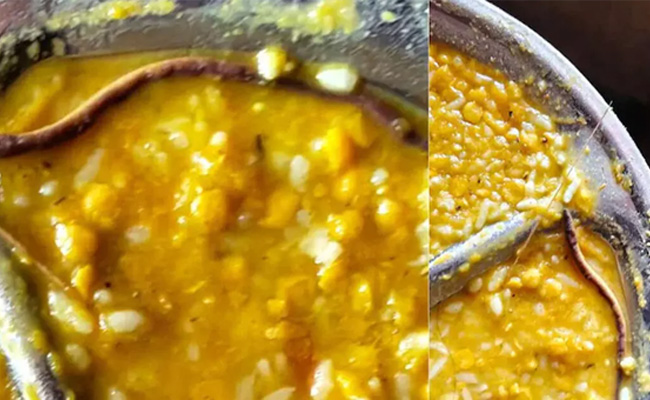
Meanwhile, family members of some children claimed that a snake was found in the container in which cooked pulses was stored at the school.
Of the 545 students present in the school, 200 had already eaten their meals by the time the snake was spotted, and later complained of stomach ache and vomiting, they said.
Regarding the claims, the DM said food samples have been collected from the school.
“We will be able to comment on this only after the results of the tested samples arrive,” he said.