Govt approves 8 high-speed road corridor projects of Rs 50,655 cr
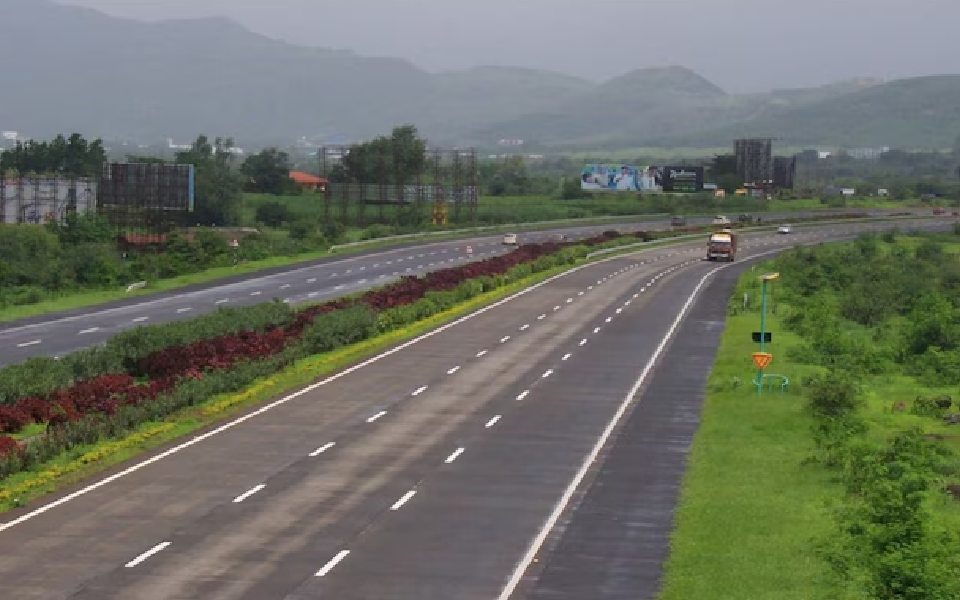
New Delhi, Aug 3: The government on Friday approved eight national high-speed road corridor projects of length 936 km entailing investment of Rs 50,655 crore to improve logistics efficiency and connectivity across the country, an official statement said.
The implementation of these eight important projects will generate an estimated 4.42 crore mandays of direct and indirect employment, it said.
The projects approved by the Cabinet Committee on Economic Affairs include 6-Lane Agra-Gwalior National High-Speed Corridor, 4-Lane Kharagpur-Moregram National High-Speed Corridor, 6-Lane Tharad-Deesa-Mehsana-Ahmedabad National High-Speed Corridor, 4-lane Ayodhya Ring Road, 4-Lane Section between Pathalgaon and Gumla of Raipur-Ranchi National Highspeed Corridor, and 6-Lane Kanpur Ring Road.
On the new projects, Prime Minister Narendra Modi in a tweet on X said: “'Tranformative' boost to India’s infrastructure landscape!
"The Cabinet's approval of 8 National High-Speed Road Corridor Projects at an expenditure of over Rs 50,000 crore will have a ‘multiplier’ effect on our economic ‘growth’ and boost ‘employment’ opportunities. It also underlines our commitment to a futuristic and connected India.”
According to the release, the 88 km Agra-Gwalior National High-Speed Corridor will be developed on build-operate- transfer (BOT) mode as a fully access-controlled 6-lane corridor at a total capital cost of Rs 4,613 crore.
The project will supplement the existing 4-lane National Highway to increase the traffic capacity by more than two times in the Agra-Gwalior section of the North South Corridor (Srinagar-Kanyakumari), it said.
The corridor will enhance connectivity to key tourist destinations in Uttar Pradesh (Taj Mahal, Agra Fort, etc) and Madhya Pradesh (Gwalior Fort, etc). It will reduce the distance between Agra and Gwalior by 7 per cent and the travel time by 50 per cent, thereby bringing in a substantial reduction in logistics cost.
The 231-km Kharagpur-Moregram National High-Speed Corridor will be developed in Hybrid Annuity Mode (HAM) at a total capital cost of Rs 10,247 crore.
The new corridor will supplement the existing 2-lane National Highway to increase the traffic capacity by about five times between Kharagpur and Moregram, the release said. It will provide efficient connectivity for traffic between states such as West Bengal, Odisha, Andhra Pradesh etc. on one end and North-Eastern part of the country on the other, the release said.
The 214-km Tharad - Deesa - Mehsana - Ahmedabad National High-Speed Corridor will be developed in build - operate - transfer (BOT) mode at a total capital cost of Rs 10,534 crore.
The Tharad - Ahmedabad corridor will provide connectivity between two key National Corridors in the state of Gujarat, viz., Amritsar - Jamnagar Corridor and Delhi - Mumbai Expressway, thereby providing seamless connectivity for the freight vehicles originating from industrial regions of Punjab, Haryana, and Rajasthan to the major ports in Maharashtra (JNPT, Mumbai and newly- sanctioned Vadhavan port).
The 68-km access-controlled Ayodhya Ring Road will be developed in Hybrid Annuity Mode (HAM) at a total capital cost of Rs. 3,935 crore. The ring road will reduce congestion on National Highways passing through the city, thereby enabling fast movement of pilgrims visiting the Ram Mandir.
The 137-km Pathalgaon and Gumla of Raipur-Ranchi National Highspeed Corridor will be developed in Hybrid Annuity Mode (HAM) at a total capital cost of Rs 4,473 crore to complete the whole corridor.
It will enhance connectivity between mining areas in Gumla, Lohardaga, Raigarh, Korba and Dhanbad and industrial and manufacturing zones located in Raipur, Durg, Korba, Bilaspur, Bokaro, and Dhanbad.
The 47-km Kanpur Ring Road will be developed in Engineering, Procurement and Construction Mode (EPC) at a total capital cost of Rs 3,298 crore. This section will complete the 6-lane National Highway Ring around Kanpur.
The 121-km Northern Guwahati Bypass and Widening/Improvement of Existing Guwahati Bypass will be developed in build operate toll (BOT) mode at a total capital cost of Rs 5,729 crore in three sections. A major bridge over river Brahmaputra will also be constructed as a part of the project.
The 30-km elevated Nashik Phata - Khed Corridor near Pune will be developed on Build-Operate-Transfer (BOT) at a total capital cost of Rs 7,827 crore.
The elevated corridor will provide seamless high-speed connectivity for traffic originating from/ heading to industrial centres of Chakan, Bhosari etc. on NH-60 between Pune and Nashik. The corridor will also alleviate serious congestion around Pimpri- Chinchwad.
Infrastructure development is the foundation for a country's economic prosperity and is critical for improving the quality of life of its citizens. Every rupee spent on infrastructure development has a multiplier effect of about 2.5-3.0 times on GDP.
The release said that the government has adopted a corridor-based highway infrastructure development approach with focus on ensuring consistent standards, user convenience and logistics efficiency, as compared to the earlier project-based development approach, focused on addressing stretches of local congestion.
"This corridor approach has led to the identification of a network of 50,000 km of High-Speed Highway Corridors through a scientific transport study based on GSTN and toll data to support India's transformation into a USD 30+ trillion economy by 2047," it said.
Let the Truth be known. If you read VB and like VB, please be a VB Supporter and Help us deliver the Truth to one and all.
Ordinance issued to increase number of Supreme Court judges from 34 to 38

New Delhi (PTI): The government has promulgated an ordinance to increase the strength of the Supreme Court from the present 34 judges to 38, including the Chief Justice of India.
The law ministry notified the ordinance on Saturday, which amended the Supreme Court (Number of Judges) Act, 1956, to increase the sanctioned strength of the top court.
So far, the sanctioned strength of the top court was 34, including the Chief Justice of India (CJI). Now, the number of judges has been increased by four, taking the sanctioned strength to 38.
The top court will now have 37 judges, other than the CJI.
With the apex court having two vacancies at present, and the ordinance coming into force immediately, the Supreme Court Collegium will now have to recommend six names for appointment as judges in the top court.
A bill will be brought in the Monsoon Session of Parliament to convert the ordinance – an executive order – into a law passed by Parliament.
The Union Cabinet had cleared a draft bill on May 5 to increase the number of apex court judges.
The strength of the Supreme Court was last increased from 30 to 33 (excluding the CJI) in 2019.
The Supreme Court (Number of Judges) Act, as originally enacted in 1956, put the maximum number of judges (excluding the CJI) at 10.
This number was increased to 13 by the Supreme Court (Number of Judges), Amendment Act, 1960, and to 17 by another amendment to the law.
The Supreme Court (Number of Judges) Amendment Act, 1986, augmented the strength of judges from 17 to 25, excluding the CJI.
A fresh amendment in 2009 further increased the strength from 25 to 30.
Article 124(3) of the Constitution lists the qualifications required to become a Supreme Court judge.
An Indian citizen who has either served as a high court judge for at least five years, or as an advocate for 10 years, or is a distinguished jurist, can be appointed to the top court.
The strength of the Supreme Court is increased based on the recommendations of the CJI, who writes to the Union law minister. After consulting the finance ministry, the Department of Justice under the law ministry moves the Cabinet with a draft bill.