Govt supplies food, medicine to 41 workers trapped in Uttarkashi tunnel: Official
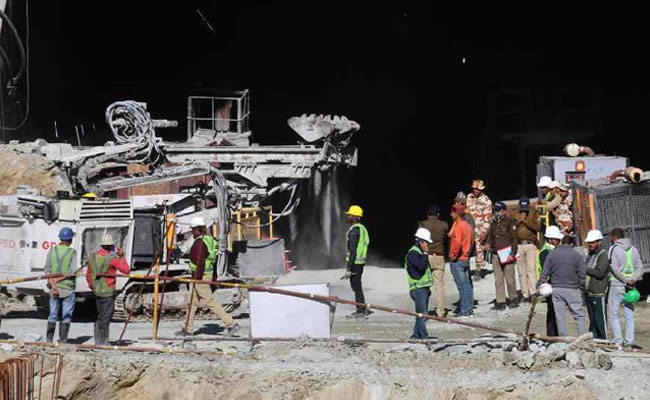
New Delhi (PTI): The government is sending multivitamins, antidepressants and dry fruits to 41 workers trapped for the past seven days in an under-construction tunnel that collapsed in the Uttarkashi district of Uttarakhand, Road, Transport and Highways Secretary Anurag Jain said on Sunday.
"Fortunately, there is light inside because the electricity is on. There is a pipeline, and thus water is available. There is a 4-inch pipe, which was used for compression. Through that, we are sending food from day 1," he said.
Jain, in a video brief update on the Uttarkashi tunnel collapse rescue operation, further said there is water and electricity in two km portion inside the tunnel, which is the finished part of the 4.531-kilometre two lane bi-directional tunnel at Silkyara in Uttarkashi.
"We are sending multivitamins, antidepressants and dry fruits to workers who have been trapped inside the under-construction tunnel at Silkyara in Uttarkashi," he said.
The Silkyara tunnel, about 30 km from the district headquarters of Uttarkashi and a seven-hour drive from the Uttarakhand capital Dehradun, is part of the ambitious Char Dham all-weather road project of the central government.
The tunnel is being constructed under the National Highways and Infrastructure Development Corporation Limited (NHIDCL).
The tunnel collapsed around 5.30 am last Sunday. The rescue operation was suspended on Friday afternoon when a US-made auger machine deployed to drill and push in pipes through the rubble to prepare an escape passage for the workers developed a snag that exacerbated the anxiety.
By the time drilling was halted, the auger machine had drilled up to 24 metres through the rubble, spread over a 60-metre area inside the tunnel.
The Union government also held a high-level meeting on Saturday where five options to rescue the workers were discussed with different agencies assigned with specific alternatives to work on.
NHIDCL MD Mahmood Ahmed has been made in charge of coordination with all the central agencies and has been stationed in Silkyara.
ONGC, RVNL, Satluj Jal Vikas Nigam Ltd, BRO and state PWD, besides NHIDCL, will be the agencies carrying out different responsibilities to establish early access to the trapped workers.
Rescue operations stalled around 2.45 pm on Friday. During the positioning of a fifth pipe, a big cracking sound was heard in the tunnel, after which rescue operation was suspended immediately, a statement from NHIDCL -- tasked with the construction of the tunnel -- said on Friday night.
The sound created panic among the rescue team. An expert involved with the project warned about the possibility of further collapse in the vicinity. Subsequently, the pipe-pushing activity was stopped.
Let the Truth be known. If you read VB and like VB, please be a VB Supporter and Help us deliver the Truth to one and all.
Three private doctors arrested in illegal scanning case involving 31 minor pregnant girls in KR Pet
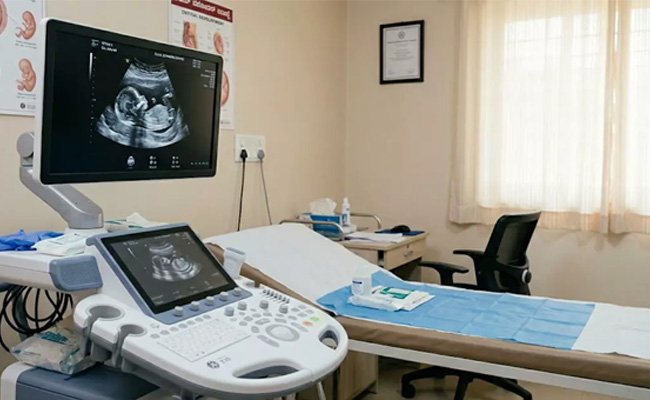
Mandya: Police on Tuesday arrested three private doctors in connection with a case involving alleged illegal scanning of 31 minor pregnant girls at a private diagnostic centre in KR Pet. The accused were later remanded to judicial custody.
The arrested doctors have been identified as Dr. Divyachetan of Chetana Maternity Centre, Dr. Harshit of Navi Diagnostic Centre, and Dr. Harish of Kushal Diagnostic Centre.
Police said Priyanka, a gynaecologist attached to a government hospital, is absconding and efforts are under way to trace her.
The case came to light after Karnataka Lokayukta Police recently conducted raids, during which illegal sex determination tests on minor pregnant girls were allegedly detected at two diagnostic centres in KR Pet town.
Following the raids, District Health and Family Welfare Officer Dr. Mohan, Deputy Director of the Women and Child Development Department P.S. Asha, and District Child Protection Officer Rashmi inspected several diagnostic centres and filed cases at KR Pet Town and Rural police stations.
According to the allegations, Navi Diagnostic Centre conducted scans on 24 minor pregnant girls, including 19 cases in 2024 and five in 2025. Kushal Diagnostic Centre is accused of conducting scans on seven minor pregnant girls.
Meanwhile, Deputy Commissioner Dr. Kumar has directed taluk vigilance committees to inspect all 63 ultrasound scanning centres in the district and submit reports within 10 days.
Officials said the Tahsildar of each taluk has been appointed chairperson of the respective committee.