Graduates to be architects of Viksit Bharat, their degrees commitment to nation, says VP
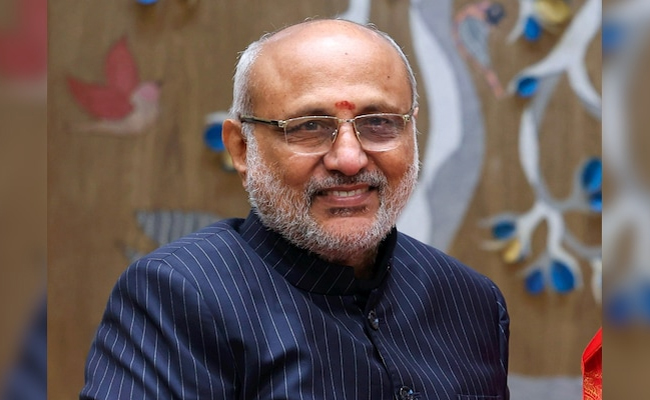
New Delhi (PTI): Describing graduates as architects of the vision of a 'Viksit Bharat', Vice President C P Radhakrishnan on Saturday said universities must drive research and innovation that are not just rooted in Indian realities but are also globally competitive.
Addressing the 102nd convocation of Delhi University (DU) here, the vice president noted the growing enrolment of women in higher education and said that more than 70 per cent of the gold medallists this year were women.
More than 1.2 lakh students were conferred with degrees at the convocation ceremony, where Radhakrishnan was the chief guest. The ceremony was presided over by DU Vice-Chancellor (V-C) Yogesh Singh.
ALSO READ: Nine cheetahs from Botswana arrive at MP's Kuno National Park
Radhakrishnan said DU started with three colleges, two faculties and eight departments.
"Today, the university has grown to 16 faculties, 86 departments, 90 colleges, 20 halls and hostels, over 30 centres and institutes, 34 libraries and more than 6 lakh students," he said.
He credited the collective efforts of teachers, administrators and students for this achievement.
On the cut-throat competition for admissions to the university, the vice president said V-C Singh informed him that seats are filled without any delay and cut-offs touch 98 per cent.
Though DU is already among India's distinguished institutions, it should aim for higher global rankings, Radhakrishnan said.
"In the next two years, we should move into the top 300, then 200, then 100 and ultimately become the number one university in the world," he said, adding that students worldwide should aspire to come to Delhi.
He said the convocation is both an ending and a beginning.
In a rapidly changing world shaped by artificial intelligence, climate challenges and pressures on democracies, he said, "your degree is not just a certificate but a commitment to humanity and to the nation".
He urged students to treat learning as a lifelong process, stay away from narcotic drugs and ensure their achievements bring pride to their families, the university and the nation.
He said graduates would be the architects of the vision for a 'Viksit Bharat' by 2047.
Universities must drive research, entrepreneurship and innovation that are not just rooted in Indian realities but are also globally competitive, he added.
Radhakrishnan noted that more than 70 per cent of the gold medallists this year were women and that women graduates outnumbered men. This, he said, is a sign of the country's educational progress.
According to DU, degrees were awarded to 1,20,408 students from undergraduate, postgraduate and FYUP programmes who completed their courses in 2025. Around 750 PhD scholars also received their doctorates.
A total of 132 gold and silver medals and awards were presented at the ceremony, the university said.
Let the Truth be known. If you read VB and like VB, please be a VB Supporter and Help us deliver the Truth to one and all.
What is Iran’s 10-point plan? Key demands ahead of US talks in Islamabad
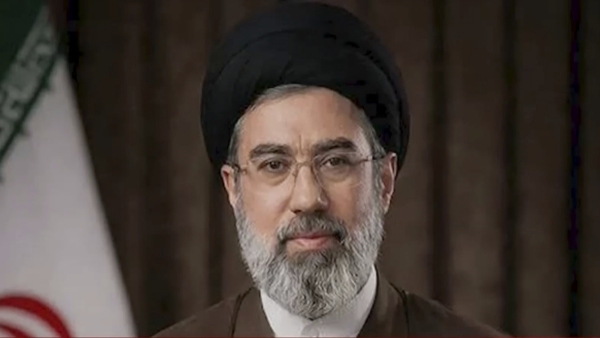
Tehran/Islamabad: Iran has outlined a 10-point plan as the basis for upcoming talks with the United States, expected to begin in Islamabad on April 11, according to a statement from the Iranian Supreme National Security Council.
The plan lays out Tehran’s key political, military and economic demands, and is being seen as a framework for negotiations following the recent escalation in the region.
Strait of Hormuz at the centre
A major focus of the plan is the Strait of Hormuz, a critical global shipping route. Iran has proposed “controlled passage through the Strait of Hormuz in coordination with the Iranian armed forces,” which it says would give the country a unique economic and geopolitical position.
The plan also calls for the “establishment of a safe transit protocol” in the Strait that would guarantee Iran’s dominance under an agreed mechanism.
Call to end conflict
Iran has demanded “the necessity of ending the war against all elements of the axis of resistance,” signalling its expectation that hostilities should stop not only in Iran but also involving allied groups in the region.
US troop withdrawal
Another key demand is the “withdrawal of US combat forces from all bases and deployment points in the region,” indicating Tehran’s long-standing position against American military presence in West Asia.
Sanctions relief and compensation
The plan places strong emphasis on economic measures. It calls for “full payment of Iran’s damages according to estimates,” along with “the lifting of all primary and secondary sanctions and resolutions of the Board of Governors and the Security Council.”
It also seeks “the release of all Iranian assets and properties frozen abroad,” which have been a major point of contention for years.
Binding global guarantee
Finally, Iran has demanded that all these terms be formally recognised through “a binding Security Council resolution,” suggesting it wants international legal backing to ensure enforcement.
What this means
The 10-point plan reflects Iran’s broader push for security guarantees, economic relief and regional influence. The upcoming talks in Islamabad are expected to test how far both sides are willing to negotiate on these demands.