GST Council approves overhaul of GST, slashes tax on common use items
New Delhi (PTI): GST tax rates on common use items ranging from hair oil to corn flakes, TVs, and personal health and life insurance policies were slashed after the all-powerful GST Council approved a complete overhaul of the tangled goods and services tax regime.
Almost all personal use items will see rate cuts as the government looks to boost domestic spending and cushion the economic blow of the US tariffs.
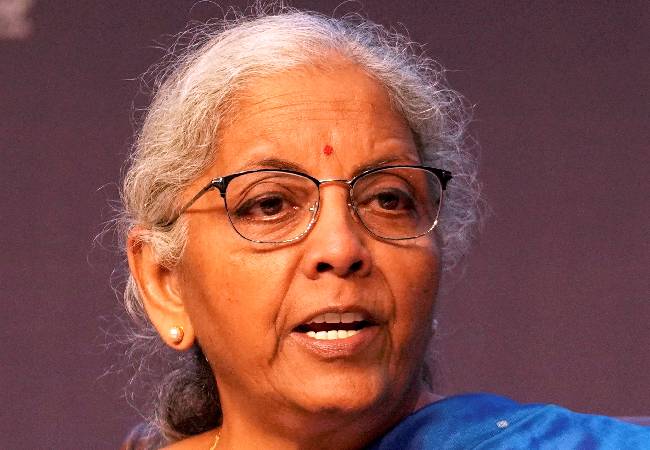
Briefing reporters after a marathon daylong GST Council meeting, Union Finance Minister Nirmala Sitharaman said all decisions were taken unanimously, with no disagreement with any state.
The panel approved simplifying the goods and services tax (GST) from the current four slabs -- 5, 12, 18 and 28 per cent -- to a two-rate structure -- 5 and 18 per cent. A special 40 per cent slab is also proposed for a select few items such as high-end cars, tobacco and cigarettes.
The new rates for all products, except gutkha, tobacco and tobacco products and cigarettes, will be effective September 22 -- the first day of Navratri, she said.
While daily use food items will continue to attract nil tax rate, common use food and beverages ranging from butter and ghee to dry nuts, condensed milk, sausages and meat, sugar boiled confectionery, jam and fruit jellies, tender coconut water, namkeen, drinking water packed in 20-litre bottles, fruit pulp or fruit juice, beverages containing milk, ice cream, pastry and biscuits, corn flakes and cereals, and sugar confectionery are likely to see a cut in tax rate to 5 per cent from the current 18 per cent.
All forms of chapati and paratha will be charged nil tax, down from the current rate of 5 per cent.
Consumer goods such as tooth powder, feeding bottles, tableware, kitchenware, umbrellas, utensils, bicycles, bamboo furniture and combs will see rate cut from 12 per cent to 5 per cent. The rates on shampoo, talcum powder, toothpaste, toothbrushes, face powder, soap and hair oil has been cut down to 5 per cent from 18 per cent.
She said all individual life and health insurance policies will now attract nil tax in a bid to boost coverage.
Cement will cost less with the tax rate coming down from 28 per cent to 18 per cent. Petrol, LPG and CNG vehicles of less than 1,200 cc and not more than 4,000 mm length and diesel vehicles of up to 1,500 cc and 4,000 mm length, too, would move to 18 per cent rate from 28 per cent.
All cars larger than 1,200 cc for petrol and 1,500 cc for diesel will be charged at 40 pc, she said.
Motorcycles up to 350 cc, consumer electronics like air-conditioners, dishwashers, and TVs, too, will be taxed at lower GST of 18 per cent as against 28 per cent currently.
All automobiles above 1,200 cc and longer than 4,000 mm as well as motorcycles above 350 cc, yachts and aircrafts for personal use, and racing cars will be attract a 40 per cent levy.
EVs will continue to be charged at 5 per cent GST.
The move to simplify the tax regime -- first announced by Prime Minister Narendra Modi in his Independence Day speech -- comes as India's exports to the US face a 50 per cent tariff -- the highest in the world.
The Indian economy is heavily reliant on consumption with private consumption accounting for 61.4 per cent of the nominal GDP last fiscal.
The GST reforms are likely to boost the economy by up to 0.5 percentage points by the second year of its implementation, effectively neutralising the full impact of the US tariff, economists said.
Tobacco, gutkha, tobacco products and cigarettes will continue to be charged at current 28 per cent plus a compensation cess till such time that loans taken to pay states for revenue loss is fully paid back, Sitharaman added.
Let the Truth be known. If you read VB and like VB, please be a VB Supporter and Help us deliver the Truth to one and all.
Karnataka School Edu Dept prohibits children from being made to dance to obscene songs
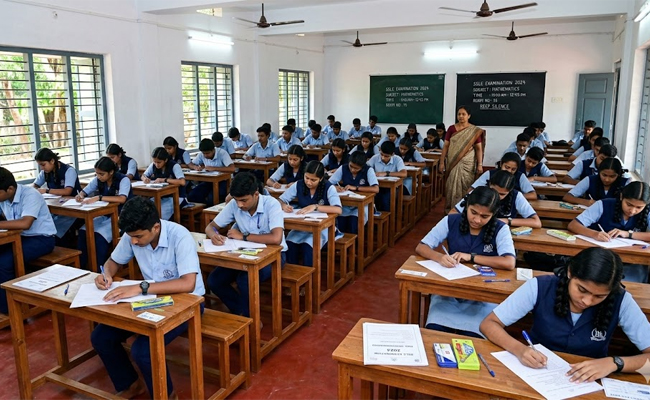
Bengaluru (PTI): The Karnataka School Education Department has issued a circular strictly prohibiting children from being made to dance to obscene songs in educational and cultural programmes.
It stated that such dances would negatively impact students' mental health and moral values. It will create indiscipline and harm the sanctity of education.
"All the Deputy Directors (Administration) of the state's School Education Department have been asked to take strict measures to prevent children or students from dancing to obscene songs in all government, aided and unaided schools in the state," the office of the commissioner of the School Education Department said in a recent circular.
"If it is found that children are being made to dance to obscene songs, appropriate action will be taken against the headmaster or management of such school," it added.
The department also listed certain measures in this regard, which include: strictly prohibiting children from being made to dance to obscene songs during educational and cultural programmes; selecting songs that are inspiring, positive, instilling national pride in children and reflecting the greatness, dignity, values, culture, and morality of the state.
Stating that the school headmaster and management are responsible for selecting songs and dances for cultural programmes, it said, they should also ensure that students wear decent clothes in dance or cultural programmes.