GST has become bad word in business: Chidambaram
New Delhi, July 1 : The Congress on Sunday attacked the Modi government on the first anniversary of the Goods and Services Tax (GST), saying it has become a bad word among business persons.
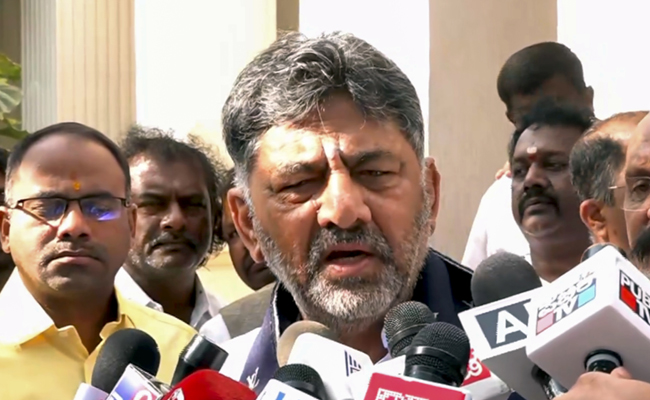
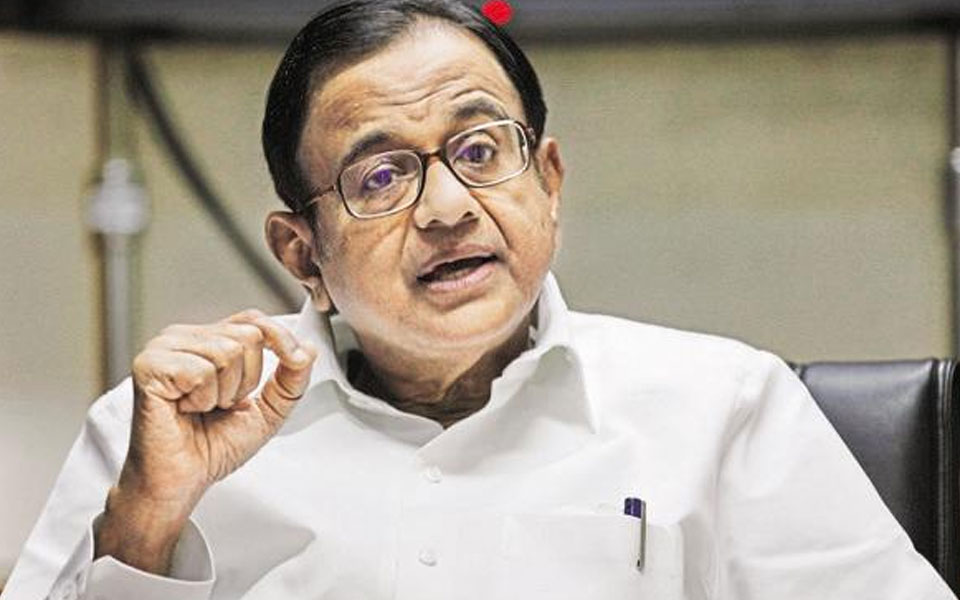
"The design, structure, infrastructure backbone, rate or rates and implementation of GST were so flawed that GST has become a bad word among business persons, traders, exporters and common citizens," former Finance Minister and Congress leader P. Chidambaram told the media.
He said the only section that appeared to be happy about the GST was the tax administration that had acquired extraordinary powers that frighten the average business person and the common citizen.
"Beginning with the GST Constitution Amendment Bill, every step taken by the BJP government with regard to the GST was deeply flawed.
"The net result is that what we have today is a very different animal and not a true GST," he said.
Chidambaram also stressed that the multiple rates, going up to 40 per cent, and arbitrary cess on top of the rates had completely "distorted the idea of GST".
"An intolerable compliance burden had been put on the average business firm, especially on the SMEs (small and medium sized enterprises), by requiring the assessee to file three returns a month in every state where the assessee carries on business. That means that an all-India business is required to file over 1,000 returns a year," he said.
Chidambaram said: "Gross delay in refunds has blocked crucial working capital of firms. It is widely perceived that GST has increased the tax burden of the common citizen; it has certainly not reduced the tax burden as was promised.
"The truth is that GST was thrust upon an unprepared nation," he said. The Congress leader also said that the tax administrators were untrained.
"The GST Network (GSTN) was untested. Proof lies in the fact that GSTR Form-2 and GSTR Form-3 have not ben notified even after a year. The system is being run on GSTR Form-1 and the temporary (and perhaps illegal) GSTR Form-3B.
"It is an undeniable fact that GST has not yet had a positive impact on economic growth," the Congress leader said.
He said that because of the flawed design and hasty implementation, according to the statement of the Minister of Industry in the Tamil Nadu Legislative Assembly, 50,000 SME units in that state were closed in 2017-18 and 5 lakh jobs were lost.
Chidambaram advised the government to bring petroleum products and electricity under GST.
Let the Truth be known. If you read VB and like VB, please be a VB Supporter and Help us deliver the Truth to one and all.
EC dismisses scope for wrongdoing at strongrooms; prohibitory orders around Kolkata counting centres
Kolkata (PTI): A day after West Bengal Chief Minister Mamata Banerjee spent hours at the EVM strongroom of her Bhabanipur constituency alleging possibilities of malpractices, Chief Electoral Officer (CEO) Manoj Agarwal on Friday asserted there is no scope for wrongdoing at the counting centres.
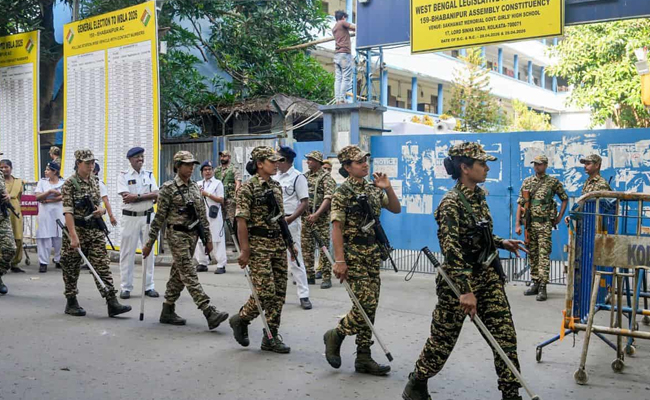
Following tensions around two counting centres in Kolkata late on Thursday, police clamped prohibitory orders on gatherings outside all seven strongrooms in the city.
Stating that round-the-clock CCTV monitoring of strongrooms was in place, Agarwal dismissed the allegations as "baseless".
TMC spokesperson and Beleghata constituency candidate Kunal Ghosh said that party workers and poll aspirants were keeping a strict vigil at the counting centres, where the EVMs are stored in strongrooms, upon directions of party supremo Mamata Banerjee.
"There is no scope for any wrongdoing given the arrangements made to secure the EVMs. The Centres have been kept under thorough CCTV coverage and their live-streamed footage can be seen from outside," Agarwal told reporters.
"One should have reason and evidence for making allegations," he said, maintaining that there were no grounds for levelling charges of EVM tampering or pre-counting malpractice.
Two counting centres in Kolkata witnessed high drama late on Thursday evening after TMC leaders alleged a lack of transparency and possible malpractice at the strongrooms housing sealed EVMs of the assembly polls, which concluded on April 29.
Mamata Banerjee herself landed up at the Sakhawat Memorial School counting centre and stayed put there for about four hours. She emerged from the premises past midnight and warned against any attempts to tamper with the counting process, demanding greater transparency.
TMC leaders and candidates Sashi Panja and Kunal Ghosh held a sit-in outside the Khudiram Anushilan Kendra counting centre on Thursday evening, alleging unauthorised activities inside the strongroom amid the absence of TMC agents.
Matters came to a head after a large number of supporters from both TMC and BJP camps gathered outside the venue, shouting slogans till they were dispersed by security forces.
The EC, however, dismissed the claim, clarifying that poll officials were engaged in the task of segregating postal ballots as per due process and the strongrooms remained secure, asserting all political parties for the mandatory segregation activity were duly notified.
On Friday, Kolkata Police imposed prohibitory orders under Section 163 of the BNSS around all seven designated strong rooms in the city.
As per the order issued by Police Commissioner Ajay Nand, the restrictions prohibited the assembly of five or more persons within a 200-metre radius of each strongroom, along with a ban on processions, demonstrations, and carrying of weapons or explosive materials.
The measure, which aims to prevent any breach of peace, violence, or disturbance during the storage of ballot papers and polled EVMs, will remain in force until the commencement of counting on May 4.
Besides the two counting centres in question, the prohibitory orders were also clamped around the Hastings House complex, APC Polytechnic College, St. Thomas Boys' High School, Ballygunge Government High School and the David Hare Training College counting premises.
A senior police officer said enhanced security arrangements have been made at Khudiram Anushilan Kendra, the counting centre for several assembly seats in north and east Kolkata housing EVM strong rooms.
"Additional CAPFs and armed police forces have also been deployed under the supervision of an additional commissioner and a deputy commissioner of police," Joint Commissioner of Police (Traffic), Kolkata, Rupesh Kumar, told reporters after visiting the area.
Expressing apprehension that unauthorised movements might occur when a section of postal ballots is brought in the evening, Kunal Ghosh said on Friday morning that the party's polling agents and candidates have been alerted about the matter.
Minister Shashi Panja, who also arrived at Khudiram Anushilan Kendra in the morning, maintained that "transparency" should be ensured for all strongroom activities.
Ghosh told reporters on Friday that though they had seen some movement in a strongroom that allegedly stored postal ballots, there was no such movement on Friday morning.
Meanwhile, Banerjee's challenger at Bhabanipur and BJP leader Suvendu Adhikari took a dig at the chief minister for her late-night visit to the counting centre.
"I want to reassure the people of Bhabanipur and of West Bengal that the TMC candidate and outgoing chief minister was prevented from taking any additional advantage. Despite her best intentions to the contrary, she wasn't allowed to act in violation of rules," Adhikari wrote on social media platforms, posting a picture of Banerjee sitting at what appeared to be an area outside the counting centre strong room.
"Till such time she was present there, my election agent, advocate Surjyanil Das personally positioned himself at the spot keeping a tight watch on her so that she isn't able to take recourse to improper means," he added.
Security forces kept a strict vigil in and around counting centres and strongrooms in Kolkata and other districts where EVM machines used in the state assembly elections are stored, an official said.
Sakhawat Memorial School in south Kolkata's Bhabanipur, which saw high drama till the early hours of Friday with the chief minister spending several hours at the counting centre, wore a peaceful look in the morning with security personnel guarding the area.