Gujarat: Dalit man thrashed for calling OBC shop owner's son 'beta' dies; kin refuse to claim body

Amreli, May 23 (PTI): A 20-year-old Dalit man who was thrashed on May 16 in Gujarat's Amreli district over a trivial issue along with three others by a mob has died while undergoing treatment at a hospital in Bhavnagar, a police official said on Friday.
Nilesh Rathod died on Thursday night, and the nine held after registration of FIR on the day of the incident will now face murder charges, informed Deputy Superintendent of Police Nayna Goradia.
The youth was reportedly thrashed by 13 persons after he addressed a shop owner's son as "beta" (son) while buying wafers.
Dalit leader and Congress MLA Jignesh Mevani, following Rathod's death, met the latter's family and announced they will not claim the body till certain demands are met, including a government job or four acres of land to each of the four victims as well as arrest of all those involved.
"The accused must be booked under Gujarat Control of Terrorism and Organised Crime Act and a public prosecutor of the family's choice must be appointed. If our demands are not met, the family will not claim Rathod's body," said Mevani.
Deputy SP Goradia said the district administration was trying to convince the family to claim's Rathod's body.
"Of the 13 accused, we have arrested nine. Efforts are on to nab the remaining four. While Rathod succumbed to injuries, the other three who were thrashed are out of danger," Goradia said.
The incident took place on May 16 when Dalit youths Lalji Chauhan, Bhavesh Rathod, Suresh Vala and Nilesh Rathod proceeded to buy wafers from a shop before having lunch at an eatery along Savarkundla road in Amreli town.
The wafers shop owner Chotha Bharwad got angry when Nilesh addressed his teenage son as "beta" and hurled casteist abuses on finding out that the latter was a Dalit, as per the FIR. The main accused belongs to the Other Backward Classes.
When three others went to the shop to understand what happened, Bharwad and one Vijay Tota started thrashing them and also called around 9-10 others at the spot. These men, armed with sticks and axes, started hitting these youths in an indiscriminate manner and forced them to run for cover in the fields. They stopped only after an elderly man intervened.
Based on a complaint given by Lalji Chauhan, who was admitted to a hospital in Amreli, police lodged an FIR and arrested nine men, including Bharwad, on charges of assault, rioting and unlawful assembly. Now, they will face murder charges, police said.
Let the Truth be known. If you read VB and like VB, please be a VB Supporter and Help us deliver the Truth to one and all.
Ordinance issued to increase number of Supreme Court judges from 34 to 38
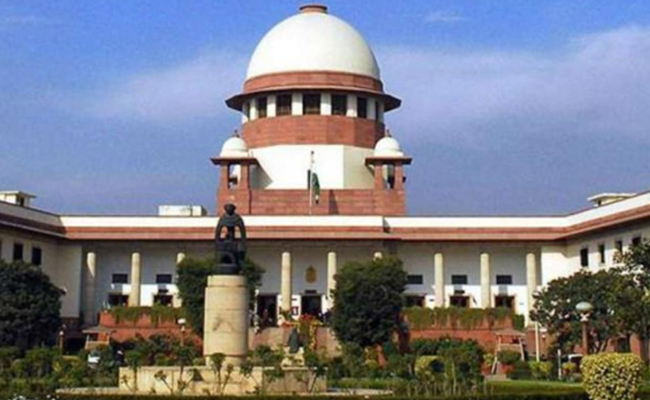
New Delhi (PTI): The government has promulgated an ordinance to increase the strength of the Supreme Court from the present 34 judges to 38, including the Chief Justice of India.
The law ministry notified the ordinance on Saturday, which amended the Supreme Court (Number of Judges) Act, 1956, to increase the sanctioned strength of the top court.
So far, the sanctioned strength of the top court was 34, including the Chief Justice of India (CJI). Now, the number of judges has been increased by four, taking the sanctioned strength to 38.
The top court will now have 37 judges, other than the CJI.
With the apex court having two vacancies at present, and the ordinance coming into force immediately, the Supreme Court Collegium will now have to recommend six names for appointment as judges in the top court.
A bill will be brought in the Monsoon Session of Parliament to convert the ordinance – an executive order – into a law passed by Parliament.
The Union Cabinet had cleared a draft bill on May 5 to increase the number of apex court judges.
The strength of the Supreme Court was last increased from 30 to 33 (excluding the CJI) in 2019.
The Supreme Court (Number of Judges) Act, as originally enacted in 1956, put the maximum number of judges (excluding the CJI) at 10.
This number was increased to 13 by the Supreme Court (Number of Judges), Amendment Act, 1960, and to 17 by another amendment to the law.
The Supreme Court (Number of Judges) Amendment Act, 1986, augmented the strength of judges from 17 to 25, excluding the CJI.
A fresh amendment in 2009 further increased the strength from 25 to 30.
Article 124(3) of the Constitution lists the qualifications required to become a Supreme Court judge.
An Indian citizen who has either served as a high court judge for at least five years, or as an advocate for 10 years, or is a distinguished jurist, can be appointed to the top court.
The strength of the Supreme Court is increased based on the recommendations of the CJI, who writes to the Union law minister. After consulting the finance ministry, the Department of Justice under the law ministry moves the Cabinet with a draft bill.